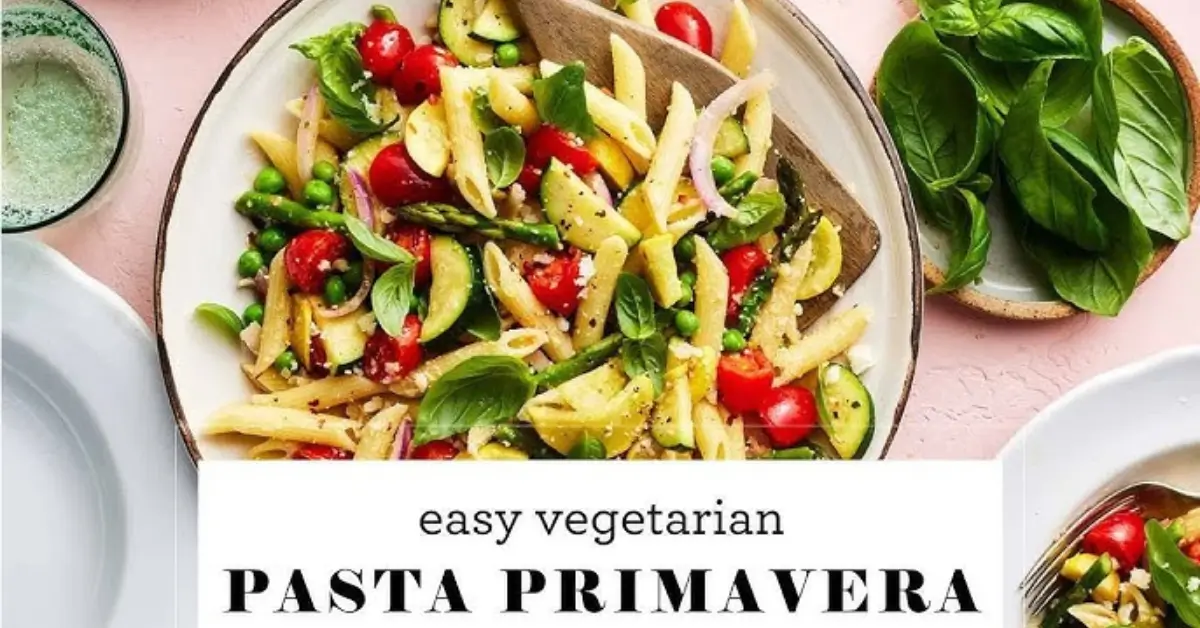
Pasta Primavera Recipe – Easy, Fresh & Ready in 30 Min
No heavy cream, no complicated techniques. Just fresh ingredients, one pan, and a pot of pasta.
What Is Pasta Primavera?
The name “pasta primavera” means spring pasta in Italian — but the dish itself is actually American. It’s said to have originated at the famous New York restaurant Le Cirque in the 1970s, where it was made with spaghetti and a rich butter cream sauce.
Over the decades, the recipe evolved. Today, pasta primavera refers to any pasta dish loaded with fresh seasonal vegetables — lighter, brighter, and more flexible than the original. This version keeps things simple and lets the vegetables shine.
Why You’ll Love This Pasta Primavera Recipe
- Ready in 30 minutes – Perfect for busy weeknights
- One pan for the vegetables – Less mess, less cleanup
- Flexible ingredients – Use whatever vegetables are in season
- Light and fresh – No heavy cream sauce, just lemon and pecorino
- Naturally vegetarian – Satisfying without any meat
Ingredients You’ll Need
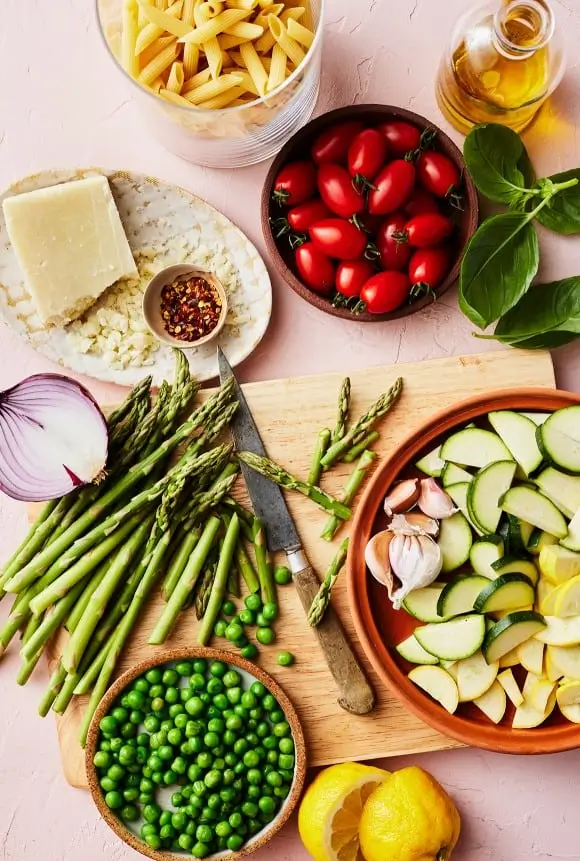
Here’s everything that goes into this pasta primavera recipe. Each ingredient plays a role, so let’s go through them one by one:
For the pasta:
- 10 oz penne pasta – Penne works best because its size matches the chopped vegetables, giving you a bit of everything in each forkful
- Salt – For the pasta water; this is your only chance to season the pasta itself
For the vegetables:
- 4 garlic cloves, sliced – The flavor base of the entire dish
- 1 red onion, thinly sliced – Adds savory sweetness
- 1 yellow squash – Mild, buttery flavor and beautiful color
- 1 zucchini – Tender and slightly earthy; use just one if you can’t find both
- 1 bunch asparagus, chopped into 1-inch pieces – Adds crunch and complexity
- 1 cup cherry tomatoes, halved – They burst as they cook and lightly coat the pasta in their juices
- ½ cup frozen peas, thawed – Sweet and bright; fresh shell peas work great too
For the sauce and finishing:
- 2 tbsp extra-virgin olive oil – For sautéing and richness
- ¾ cup grated pecorino cheese – Melts into a light creamy coating; parmesan works too
- 3 tbsp fresh lemon juice – Brightens everything up
- Red pepper flakes – A gentle kick of heat
- 1 cup fresh basil – Essential for that fresh, summery flavor
- ¼ cup fresh tarragon (optional but highly recommended) – Takes this recipe to another level
- Salt and black pepper – To taste
How to Make Pasta Primavera – Step by Step
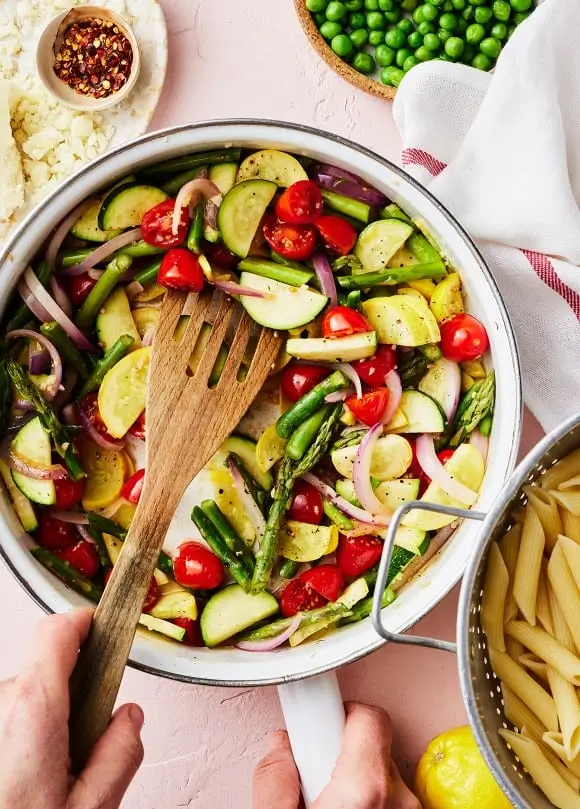
Making this pasta primavera recipe takes just 30 minutes from start to finish. Follow these four simple steps:
Step 1: Cook the Pasta
Bring a large pot of well-salted water to a boil. Cook the penne according to package directions until just al dente — it will continue cooking slightly when tossed with the hot vegetables, so don’t overcook it now.
Drain the pasta and immediately toss it with a drizzle of olive oil to prevent sticking. Set aside.
Step 2: Sauté the Vegetables
Heat 2 tablespoons of olive oil in a large deep skillet over medium heat. Add the garlic, red onion, zucchini, yellow squash, asparagus, cherry tomatoes, salt, and several grinds of black pepper.
Sauté for 3 to 4 minutes, stirring occasionally, until the vegetables are just tender. You want them to still have a little bite — not mushy.
Step 3: Combine Everything
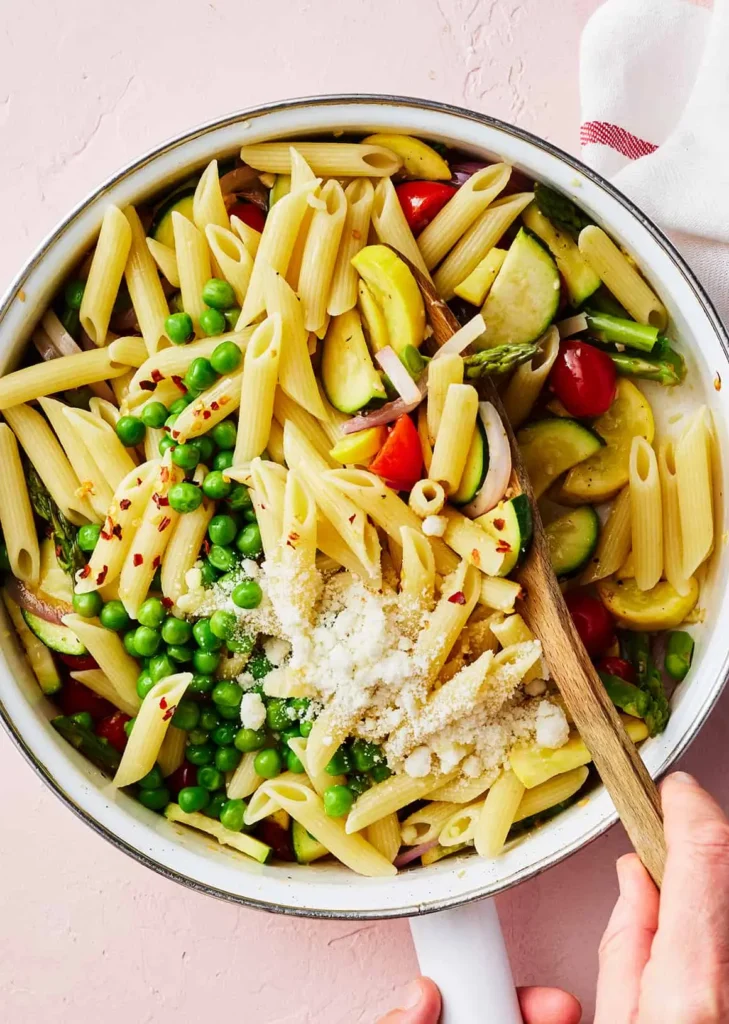
Add the drained pasta, thawed peas, pecorino cheese, lemon juice, and a pinch of red pepper flakes to the skillet. Toss everything together until the cheese melts and coats the pasta in a light, creamy sauce.
Stir in the fresh basil and tarragon if using.
Step 4: Season and Serve
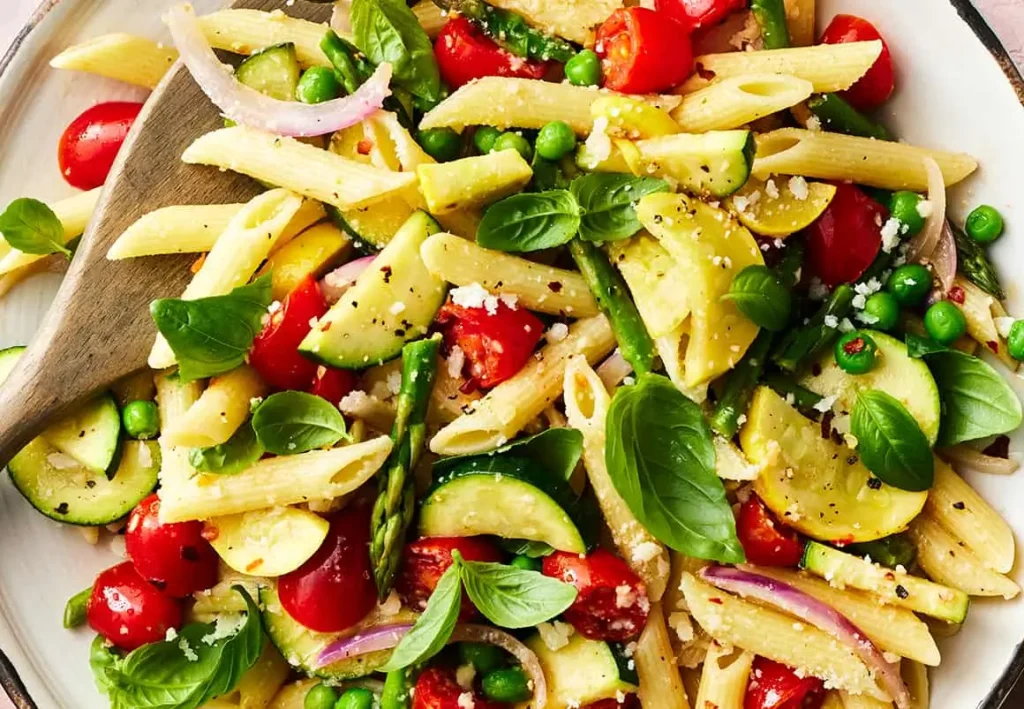
Taste and adjust the seasoning — more salt, pepper, lemon juice, or red pepper flakes as needed. Plate the pasta, garnish with extra basil leaves, and serve immediately.
Tips for the Best Pasta Primavera Recipe
These tips will make sure your pasta primavera recipe turns out perfect every single time:
Don’t overcook the pasta. Pull it out when it’s still slightly firm. It finishes cooking in the pan and absorbs the flavors of the vegetables and cheese.
Use whatever vegetables you have. This recipe is extremely flexible. Bell peppers, broccoli, spinach, mushrooms, or green beans all work beautifully here.
Don’t skip the lemon juice. It seems like a small detail but it transforms the dish. The acidity lifts all the other flavors and keeps the pasta tasting fresh.
Use freshly grated cheese. Pre-shredded cheese contains anti-caking agents that prevent it from melting smoothly. Freshly grated pecorino or parmesan melts into a much creamier sauce.
Add the herbs at the end. Heat destroys the delicate flavor of fresh basil and tarragon. Always stir them in off the heat or right before serving.
Variations to Try
One of the best things about this pasta primavera recipe is how flexible it is. Here are some easy variations:
Add protein – Grilled chicken, sautéed shrimp, or white beans make this a more filling meal.
Make it vegan – Skip the cheese or use a dairy-free parmesan alternative. The lemon and olive oil still create a delicious light coating.
Add a creamy sauce – Stir in 2 to 3 tablespoons of cream cheese or a splash of heavy cream for a richer version.
Try different pasta shapes – Farfalle, fusilli, or rigatoni all work well with chunky vegetable sauces.
Use roasted vegetables instead – Roast the vegetables at 425°F for 20 minutes before tossing with the pasta for a deeper, caramelized flavor.
What to Serve with Pasta Primavera
This pasta primavera recipe is a complete meal on its own, but it pairs beautifully with:
- Garlic bread – Buttery and crispy, perfect for scooping up any sauce left in the bowl
- Simple green salad – A light vinaigrette balances the richness of the cheese
- Italian chopped salad – Hearty and flavorful alongside the pasta
- Arugula salad with lemon vinaigrette – The peppery arugula complements the fresh vegetables perfectly
How to Store and Reheat
Refrigerator: Store leftovers in an airtight container for up to 3 days. The pasta will absorb some of the moisture as it sits.
Reheating: Warm in a skillet over medium-low heat with a splash of water or olive oil to loosen the sauce. Stir frequently to prevent sticking. Avoid the microwave if possible — it makes the vegetables soggy.
Freezing: This dish is not ideal for freezing. Fresh vegetables lose their texture when frozen and thawed.
Frequently Asked Questions : pasta primavera recipe
Can I use a different type of pasta? Absolutely. Penne is recommended because it matches the size of the chopped vegetables, but farfalle, fusilli, rigatoni, or even spaghetti all work well.
Can I make this gluten-free? Yes. Simply substitute your favorite gluten-free pasta. The rest of the recipe stays the same.
Can I use dried herbs instead of fresh? Fresh herbs are strongly recommended here — they are a key part of what makes this dish taste so bright and seasonal. If you must use dried, use one-third of the amount and add them during the sauté step, not at the end.
Is pasta primavera healthy? Yes, this pasta primavera recipe is one of the lighter pasta dishes you can make. It’s packed with vegetables, uses olive oil instead of butter or cream, and the cheese adds just enough richness without being heavy.
Can I make this ahead of time? You can prep the vegetables and cook the pasta ahead of time, storing them separately. When ready to serve, sauté the vegetables and toss everything together fresh for the best texture and flavor.
Final Thoughts: pasta primavera recipe
This pasta primavera recipe is proof that the best meals don’t have to be complicated. Fresh vegetables, good olive oil, a squeeze of lemon, and quality cheese — that’s really all you need for an incredible pasta primavera recipe you’ll come back to again and again.
It’s the kind of dish that feels special enough for guests but easy enough for a Tuesday night. Make it once during peak vegetable season and it’ll become a permanent part of your dinner rotation.
| Pin to Pinterest | Share on Facebook
Follow us On : Facebook and Pinterest