Easy Sourdough Focaccia Recipe (+ Sourdough Discard Option)
If you have been searching for the perfect sourdough focaccia recipe, your search ends here. This homemade version delivers a golden, shatteringly crisp crust, an open and airy crumb, and that subtle tangy depth that only real sourdough can provide. Whether you are a seasoned baker nurturing a lively starter or someone staring at a jar of sourdough discard wondering what to do with it, this easy sourdough focaccia recipe has you covered.
We will walk you through every step, from mixing to stretching to topping, plus a fast sourdough discard focaccia option that skips the long fermentation and still delivers incredible flavor. It is the kind of homemade sourdough focaccia that looks bakery-level impressive but is surprisingly forgiving to make at home.
Why You Will Love This Sourdough Focaccia Recipe
- Crispy bottom, pillowy interior: The high-hydration dough and olive oil bath create that signature texture contrast everyone wants in a great sourdough focaccia recipe.
- Flexible timing: Make it same-day or let it cold-proof overnight for deeper flavor.
- Discard-friendly: Got leftover discard? There is a dedicated shortcut version below.
- Endless toppings: From classic rosemary and sea salt to roasted garlic and cherry tomatoes.
- No-knead friendly: Let time do the work instead of your arms.
What Is Sourdough Focaccia?
Focaccia is an Italian flatbread known for its dimpled surface, generous olive oil coating, and chewy-yet-tender bite. When you make it with a sourdough starter, the natural fermentation adds a gentle tang and helps the dough develop a more complex flavor and a better shelf life. Unlike yeasted focaccia that can sometimes taste one-note, homemade sourdough focaccia has real depth.
If you are new to sourdough baking, this easy sourdough focaccia recipe is actually one of the best places to start. It is far more forgiving than a boule or batard, and the results are just as satisfying.
Ingredients for This Sourdough Focaccia Recipe
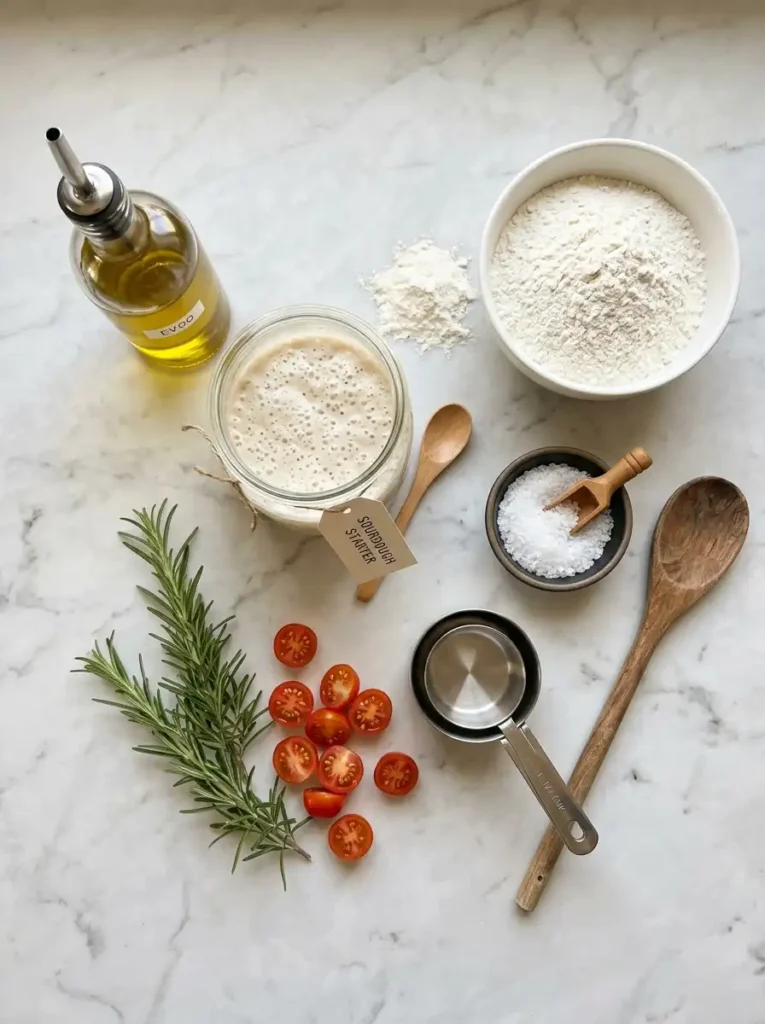
These are simple pantry staples, but the quality matters. Use a good extra-virgin olive oil you enjoy drizzling on a salad; you will taste it in the final sourdough focaccia recipe.
For the Dough
- 500g bread flour (or all-purpose, but bread flour gives better structure)
- 375g warm water (75% hydration)
- 100g active sourdough starter (fed and bubbly, 100% hydration)
- 10g fine sea salt
- 25g extra-virgin olive oil (plus more for the pan)
For the Topping
- 3 to 4 tablespoons extra-virgin olive oil
- Fresh rosemary leaves
- Flaky sea salt (Maldon or similar)
- Optional: halved cherry tomatoes, thinly sliced garlic, olives, or caramelized onions
How to Make This Sourdough Focaccia Recipe
1. Mix the Dough (Autolyse Optional)
In a large bowl, combine the flour and water. Mix until no dry flour remains. Let it rest for 30 minutes to 1 hour if you have time; this step, called autolyse, helps hydrate the flour and makes the final dough easier to handle. If you are in a rush, you can skip it and still get a great homemade sourdough focaccia.
2. Add Starter, Salt, and Oil
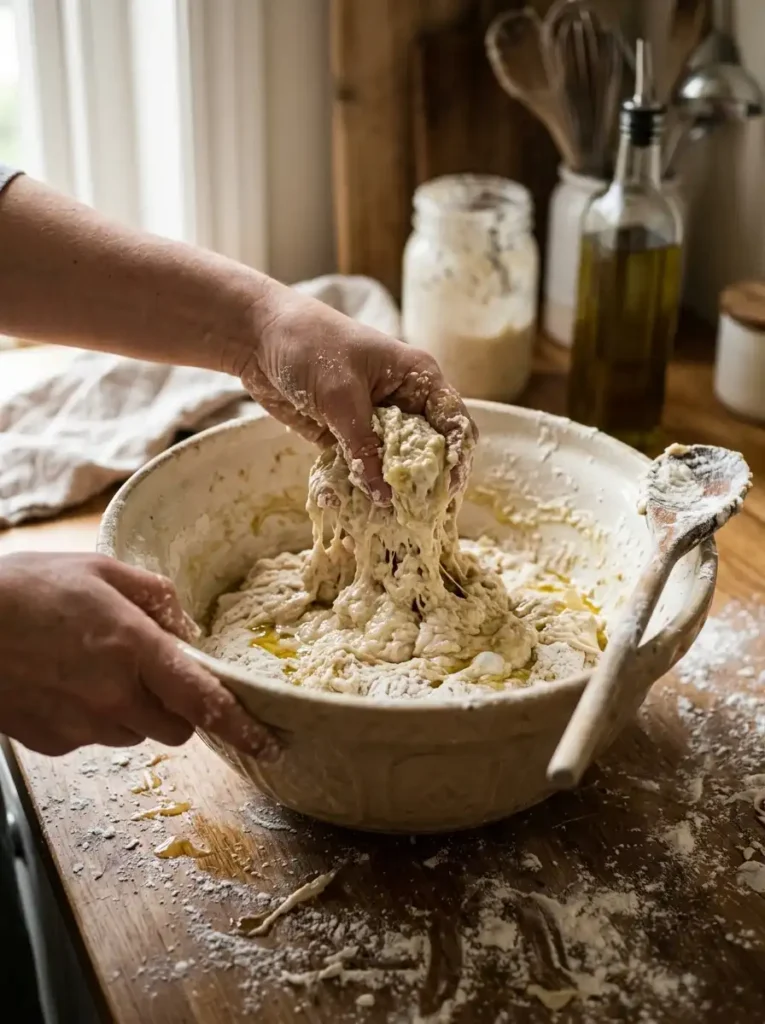
Add the active sourdough starter, salt, and olive oil to the flour mixture. Use your hands or a sturdy spoon to work everything together until a shaggy, sticky dough forms. It should look messy and rough. That is exactly right. Cover the bowl and let it rest for 30 minutes.
3. Stretch and Folds (Build Strength)
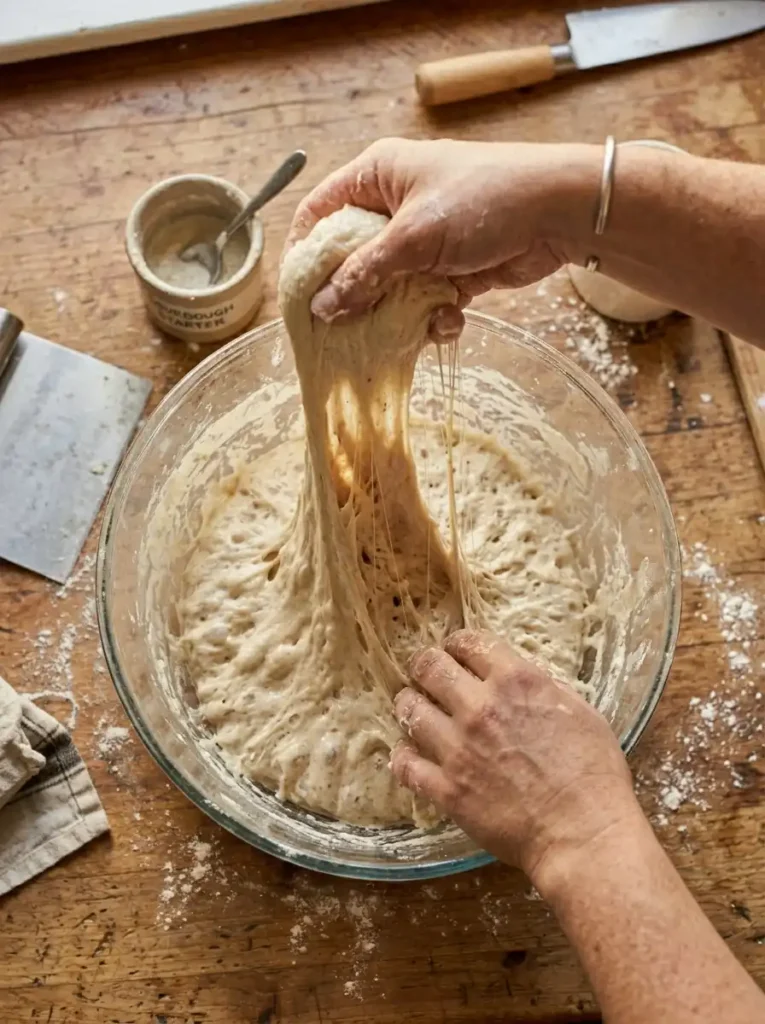
Over the next 2 hours, perform 3 to 4 sets of stretch and folds. Wet your hand to prevent sticking, grab one side of the dough, stretch it up, and fold it over the center. Rotate the bowl and repeat on all four sides. Do this every 30 minutes. You will feel the dough transform from a slack blob into a smoother, more elastic mass. This is how you build structure without kneading in this sourdough focaccia recipe.
4. Bulk Fermentation
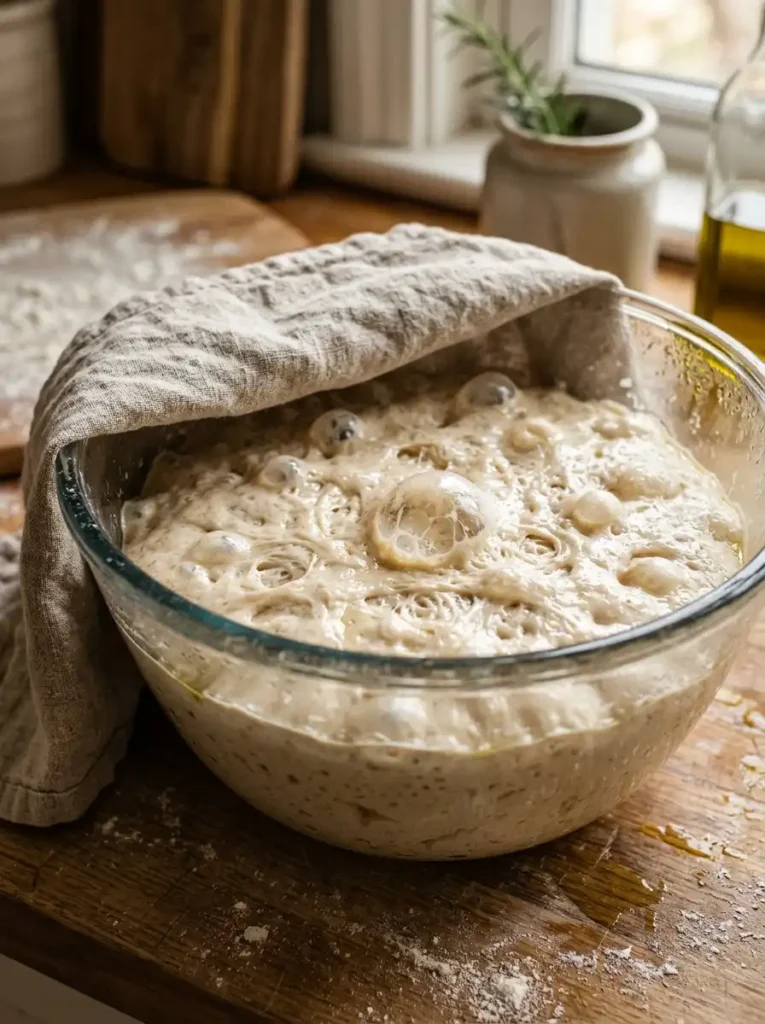
Let the dough rise at room temperature (around 70 to 75°F / 21 to 24°C) for 4 to 6 hours, or until it has increased in volume by about 50 to 60%. If your kitchen is warm, check earlier. The dough should feel airy and light, and you should see some bubbles forming on the surface.
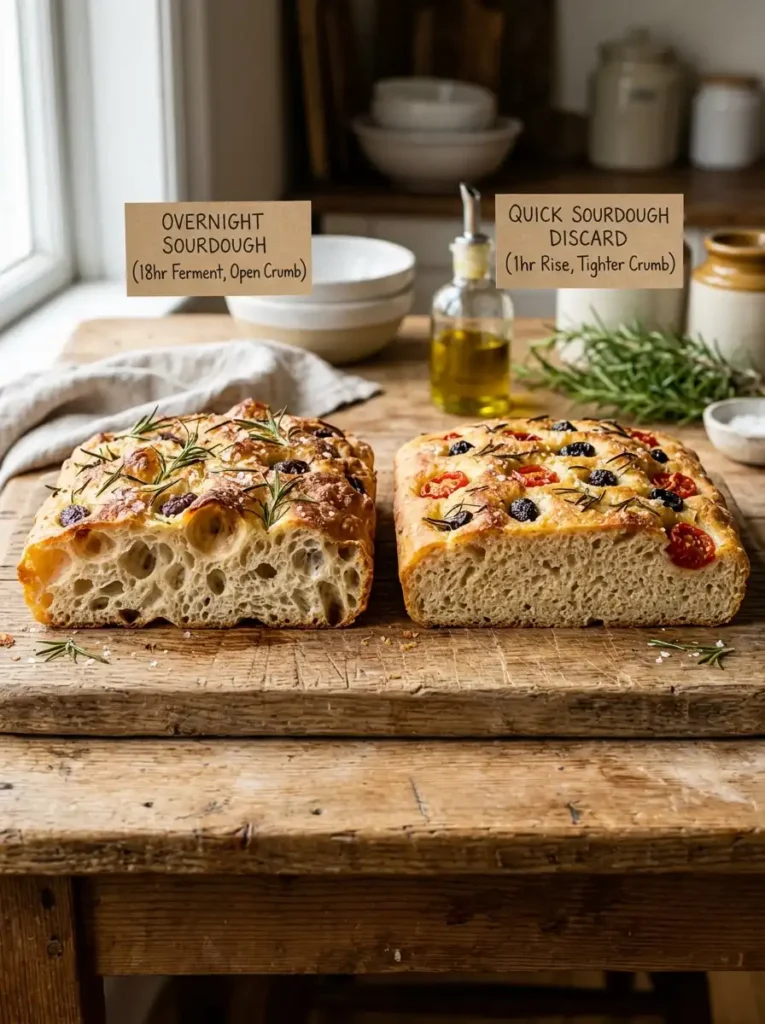
For an overnight sourdough focaccia: After the stretch-and-folds, cover the bowl tightly and refrigerate for 8 to 16 hours. The cold slow-fermentation develops incredible flavor. Bring it back to room temperature for about 1 hour before shaping.
5. Prepare the Pan and Shape
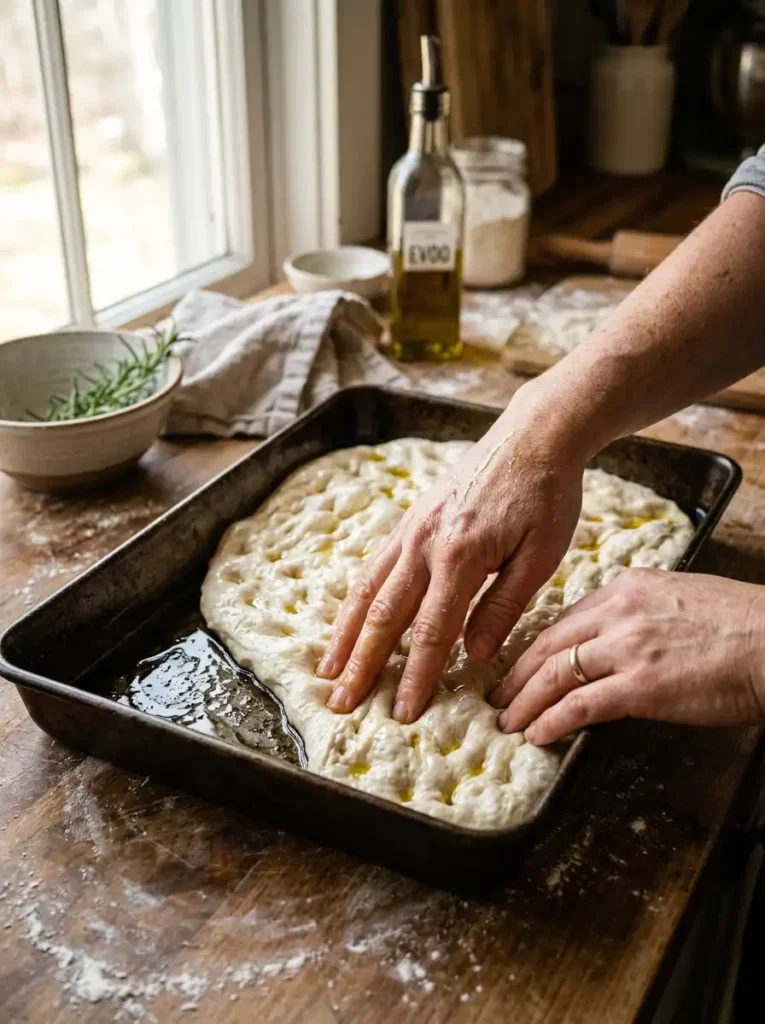
Pour a generous 2 to 3 tablespoons of olive oil into a 9×13-inch (23x33cm) metal or glass baking pan. Tilt the pan to coat the bottom and up the sides. Gently scrape the dough out into the pan. Do not punch it down. Use oiled fingertips to gently press and stretch the dough toward the corners. If it keeps springing back, let it rest for 10 minutes and try again.
6. Second Rise (Proofing)
Cover the pan and let the dough proof for 1.5 to 2.5 hours at room temperature. It should look puffy and fill most of the pan. The exact time depends on your room temperature and starter strength.
7. Dimple and Top
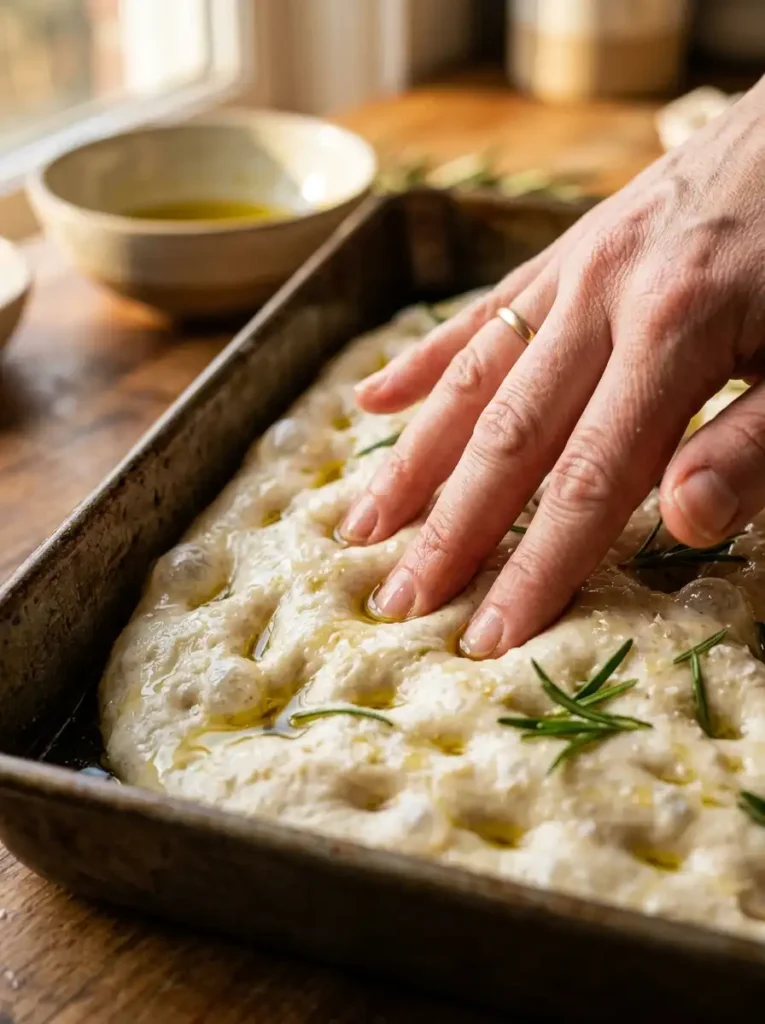
Drizzle another 1 to 2 tablespoons of olive oil over the surface. Now comes the fun part: use your oiled fingertips to press firmly into the dough all the way to the bottom of the pan, creating those classic focaccia dimples. The indentations should be deep; they are what catch the oil and toppings.
Scatter fresh rosemary, flaky salt, and any other toppings you like. For a classic look, press halved cherry tomatoes cut-side up into the dimples so they roast into the bread.
8. Bake Until Golden
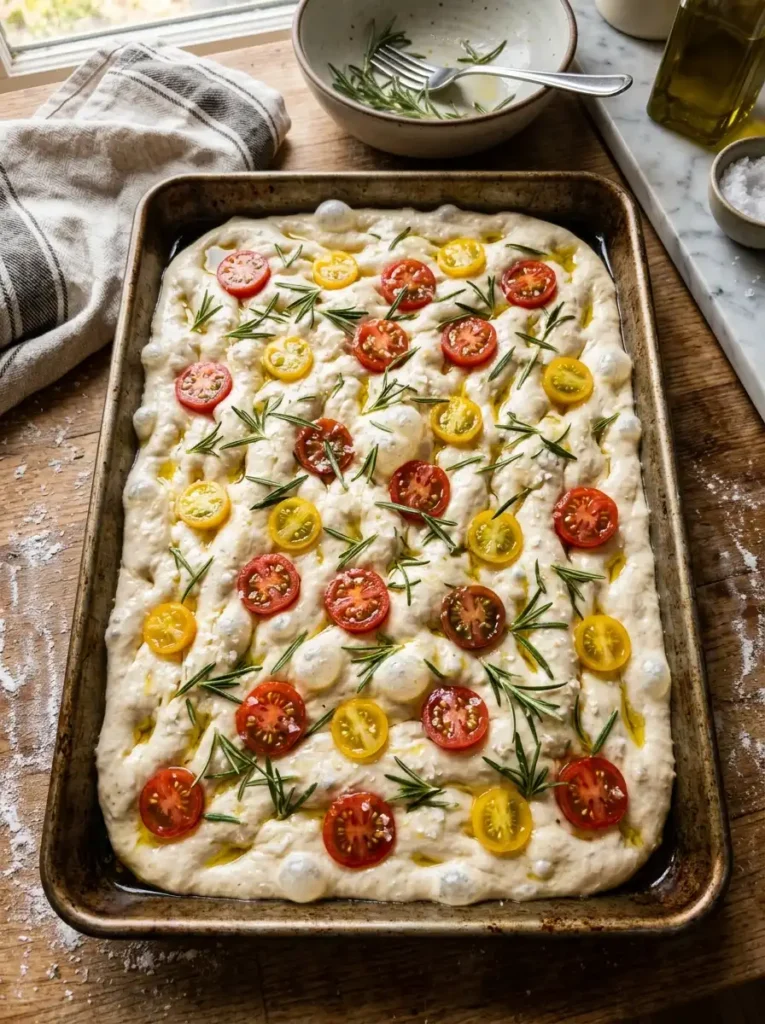
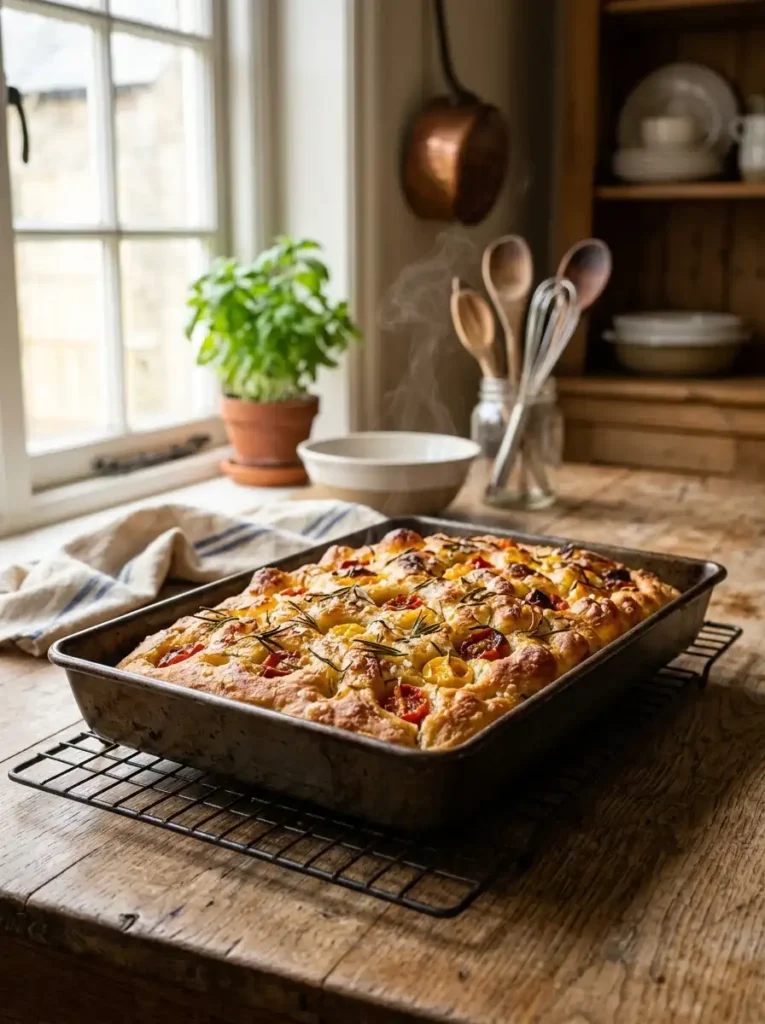
Preheat your oven to 425°F (220°C). Bake for 25 to 30 minutes, rotating the pan halfway through, until the top is deeply golden and the bottom sounds hollow when tapped. Remove from the oven and immediately drizzle with a final touch of olive oil. Let it cool in the pan for 5 minutes, then transfer to a wire rack.
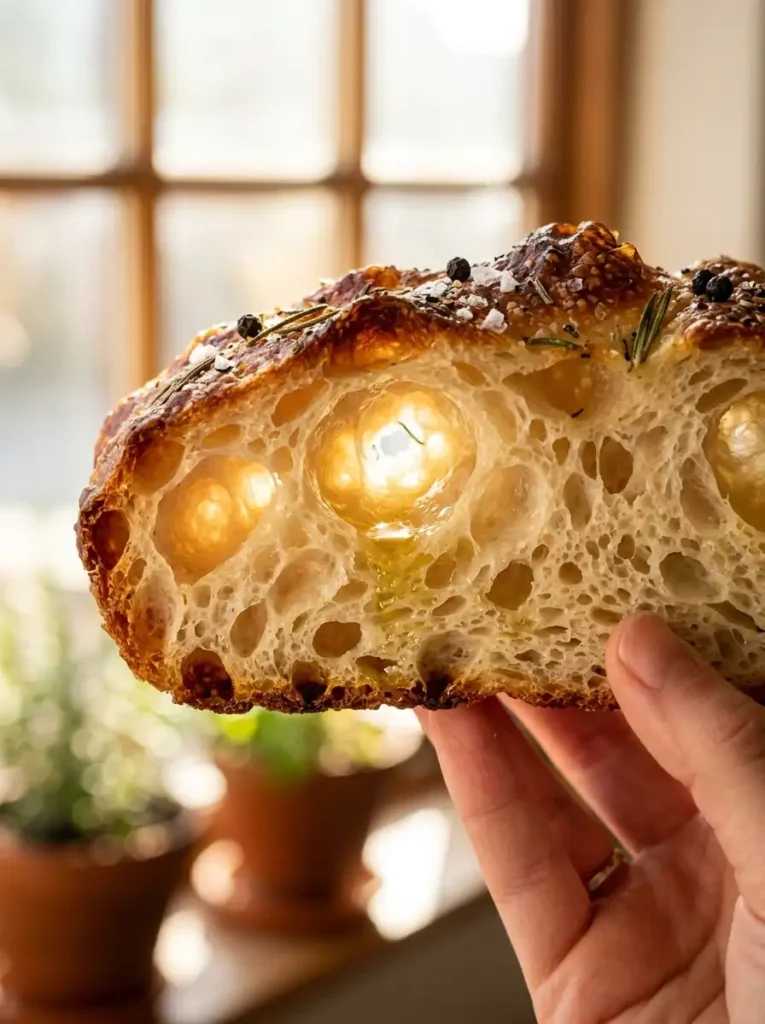
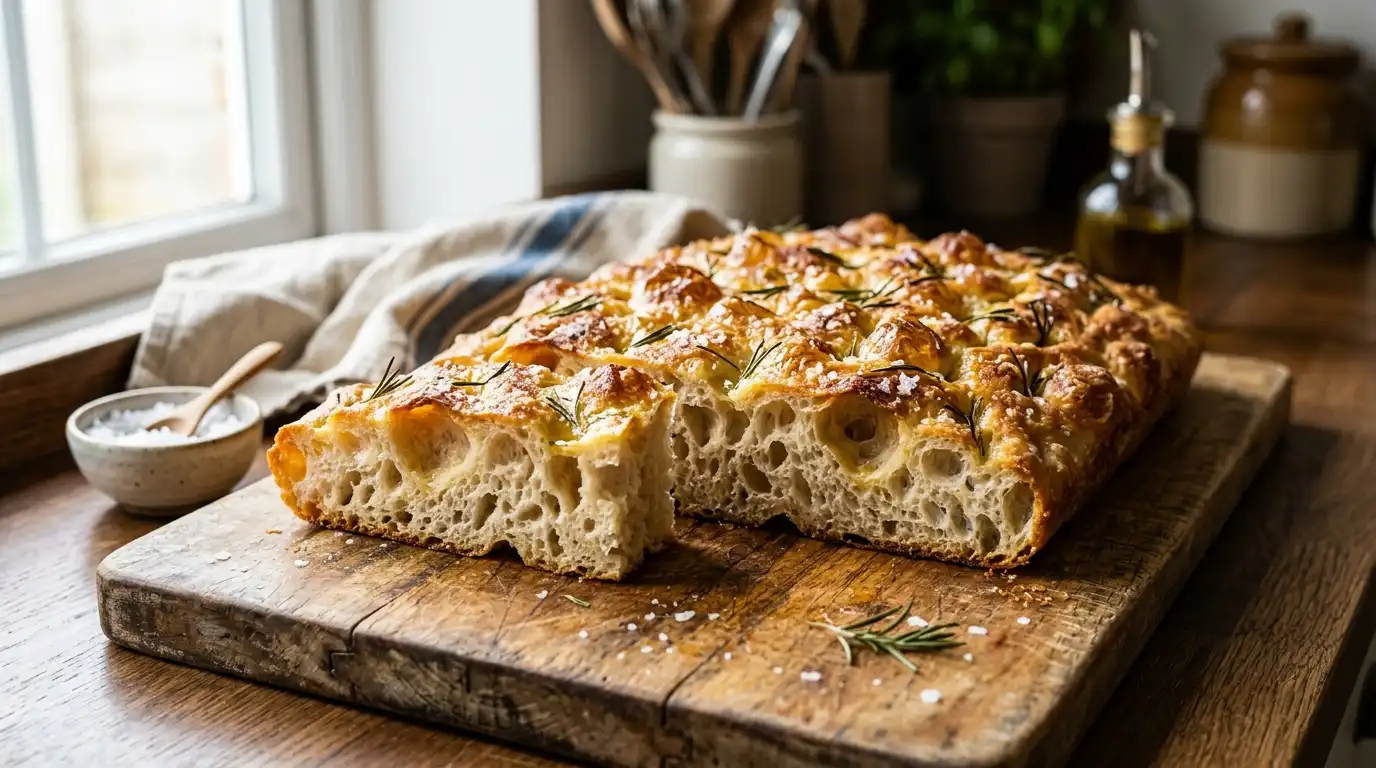
Result: A crispy sourdough focaccia with a crackling crust and a soft, open crumb inside. This is exactly what a proper sourdough focaccia recipe should deliver.
Sourdough Discard Focaccia Shortcut
Have a jar of sourdough discard in the fridge? This version is faster and skips the long bulk fermentation. The discard adds flavor and reduces food waste, which is a win on all counts.
We have an entire collection of sourdough discard recipes on the site if you want more ways to use it up, but this sourdough discard focaccia shortcut is one of the easiest.
Discard Version Ingredients
- 500g all-purpose or bread flour
- 375g warm water
- 150g unfed sourdough discard (straight from the fridge is fine)
- 10g salt
- 25g olive oil (plus more for the pan)
- 1/2 teaspoon instant yeast (optional, for insurance if your discard is very inactive)
Instructions
- Mix flour, water, discard, salt, and oil in a bowl until combined. No autolyse needed.
- Let rest 10 minutes, then do one quick set of stretch and folds.
- Cover and let rise at room temperature for 2 to 3 hours. It will not double, but it will look puffy and relaxed.
- Oil your pan, transfer the dough, rest 10 minutes, then stretch to fit.
- Proof 1 hour, dimple, top, and bake at 425°F (220°C) for 25 to 30 minutes.
The texture is slightly less open than the fully fermented version, but the flavor is still excellent, and this easy sourdough focaccia recipe shortcut is ready in under 4 hours.
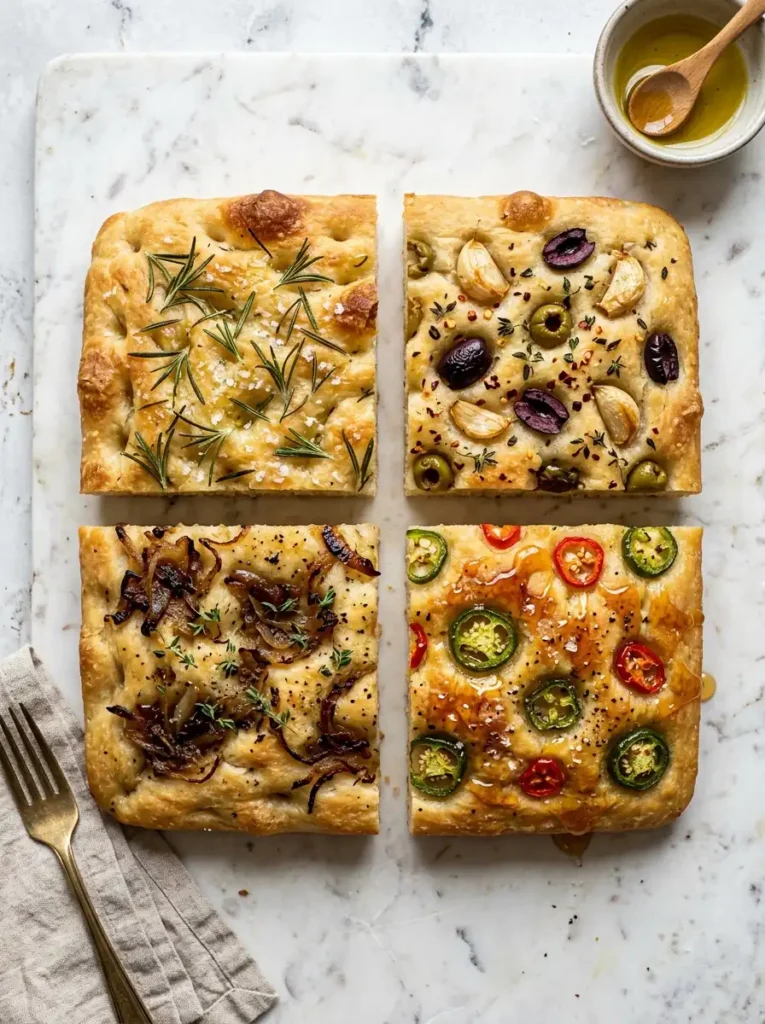
Best Toppings for This Homemade Sourdough Focaccia
Once you master the base, the topping combinations are endless. Here are our favorite sourdough focaccia toppings:
- Classic: Fresh rosemary, flaky sea salt, and extra olive oil.
- Mediterranean: Roasted garlic cloves, olives, sun-dried tomatoes, and oregano.
- Sweet Onion: Thinly sliced caramelized onions and thyme.
- Cheesy: Shredded parmesan or mozzarella added in the last 10 minutes of baking.
- Spicy: Sliced jalapeños and a drizzle of hot honey after baking.
- Everything Bagel: Sprinkle everything bagel seasoning over the top before baking.
If you love bold toppings, our streusel topping recipe technique works beautifully on sweet breads, but for focaccia, keep it savory and oil-forward.
Pro Tips for the Perfect Sourdough Focaccia Recipe
- Use a metal pan if possible: It conducts heat better and gives you a crisper bottom crust than glass or ceramic.
- Do not skimp on the oil: Olive oil is not just a topping here; it fries the bottom of the dough slightly in the pan, creating that signature crunch.
- Wet your hands: The dough is sticky. Water on your fingertips prevents it from clinging to you during stretch-and-folds and dimpling.
- Under-proofing is better than over-proofing: If the dough collapses when you dimple it, it has gone too far. It should feel airy but still have some structure.
- Bake hot and fully: Pale focaccia is sad focaccia. Wait for that deep golden color in your sourdough focaccia recipe.
How to Store and Reheat
Store leftover focaccia in an airtight container at room temperature for up to 2 days. For longer storage, wrap tightly and freeze for up to 1 month.
To reheat and restore the crispiness, place slices directly on the oven rack or a baking sheet at 375°F (190°C) for 5 to 8 minutes. Avoid the microwave; it will make the crust chewy instead of crisp.
Frequently Asked Questions
Can I make sourdough focaccia without a Dutch oven?
Yes. Focaccia is baked in a standard baking pan, not a Dutch oven. The pan and the olive oil do the work of creating steam and crust. This makes any easy sourdough focaccia recipe very accessible.
Can I use all-purpose flour instead of bread flour?
Yes, but the crumb will be slightly less chewy. Bread flour has more protein, which helps create that classic focaccia texture.
Why is my focaccia dense and not airy?
This usually means the dough was either under-fermented (not enough time for the starter to create gas) or over-proofed (the gluten structure collapsed). Make sure your starter is active and bubbly before starting this sourdough focaccia recipe, and watch the dough, not the clock.
Is sourdough focaccia healthier than regular focaccia?
The natural fermentation in sourdough can break down some of the phytic acid in flour, which may make certain nutrients more available and potentially easier to digest for some people. It also has a lower glycemic index compared to rapid-yeast breads.
Can I double this sourdough focaccia recipe?
Absolutely. Use two pans or one very large sheet pan. You may need to add a few minutes to the baking time.
More Sourdough Discard Recipes to Try
If this sourdough focaccia recipe got you excited about baking with your starter, here are more ways to use both active starter and discard:
- Sourdough Discard Pancakes — The fluffiest, most flavorful pancakes with crispy caramelized edges.
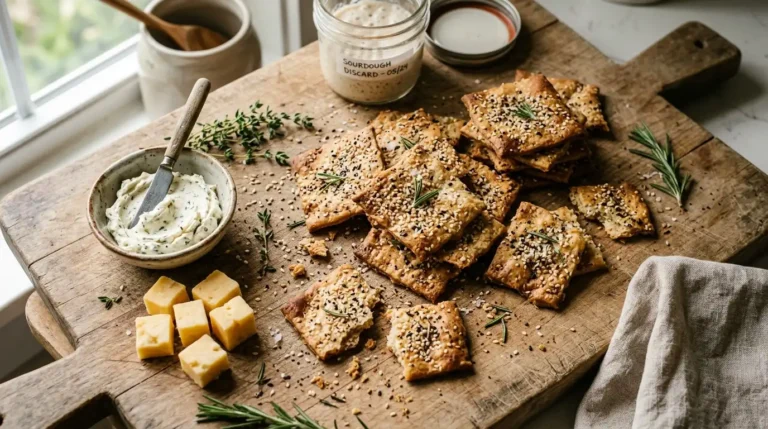
- Sourdough Discard Crackers — Crispy, savory, and ready in under an hour. Perfect with cheese.
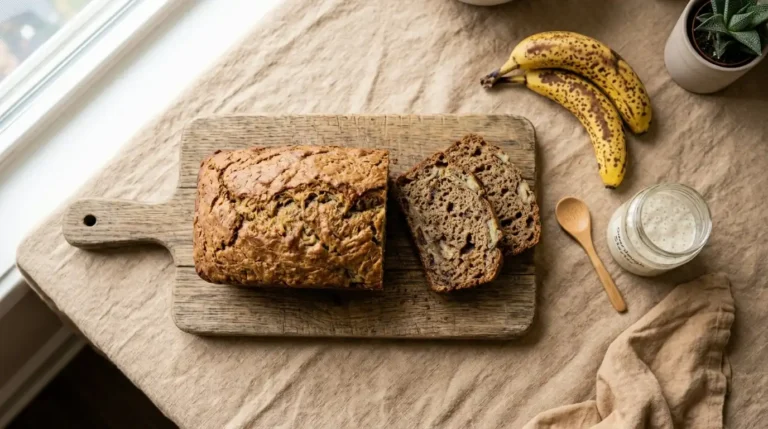
- Sourdough Banana Bread — The ultimate way to rescue brown bananas and sourdough discard in one bake.
- Pistachio Croissant — If you want a project, this viral Middle Eastern-inspired pastry is worth the effort.
- Dubai Chocolate Brownies — Fudgy brownies layered with pistachio filling and crispy kataifi.
- Bakery Style Butter Cookies — Simple, elegant, and a great side project while your focaccia proofs.
Final Thoughts
This easy sourdough focaccia recipe is the kind of recipe that earns a permanent spot in your kitchen rotation. It is forgiving enough for beginners, flavorful enough for sourdough enthusiasts, and versatile enough to dress up or down depending on what is in your pantry. Whether you go the slow-fermented route or whip up the sourdough discard focaccia shortcut, the result is a pan of golden, dimpled, olive oil-kissed homemade sourdough focaccia that will make your kitchen smell like a bakery.
If you make it, let us know your favorite topping combination in the comments below. And if you are looking for more viral bakes and trending desserts, do not miss our Dubai chocolate brownies or the internet-famous pistachio croissant.
Looking for more trending bakes? Check out our complete guide to the viral baking trends 2026 — from Dubai chocolate brownies and pistachio croissants to matcha tiramisu and more. LINK ANCHOR: viral baking trends 2026 LINK URL: https://www.totaltastes.com/viral-baking-trends-2026/
Easy Sourdough Focaccia Recipe (+ Sourdough Discard Option)
Ingredients
Equipment
Method
- In a large bowl, combine 500g bread flour and 375g warm water. Mix until no dry flour remains. Let rest 30-60 minutes (autolyse) if you have time.
- Add 100g active sourdough starter, 10g sea salt, and 25g olive oil. Mix until a shaggy, sticky dough forms. Cover and rest 30 minutes.
- Perform 3-4 sets of stretch and folds over the next 2 hours, every 30 minutes. Wet your hand to prevent sticking. The dough will transform from slack to smooth and elastic.
- Let dough rise at room temperature (70-75°F / 21-24°C) for 4-6 hours, or until volume increases by 50-60%. For overnight flavor, refrigerate 8-16 hours after folds, then bring to room temp 1 hour before shaping.
- Pour 2-3 tbsp olive oil into a 9×13-inch metal pan. Gently scrape dough into the pan. Use oiled fingertips to press and stretch toward corners. Rest 10 minutes if it springs back.
- Cover and proof 1.5-2.5 hours at room temperature until puffy and filling most of the pan.
- Drizzle 1-2 tbsp olive oil on top. Press fingertips firmly into dough all the way to the bottom, creating deep dimples. Scatter rosemary, flaky salt, and any other toppings. Press cherry tomatoes cut-side up into dimples.
- Preheat oven to 425°F (220°C). Bake 25-30 minutes, rotating halfway, until deeply golden. Drizzle with olive oil immediately after removing. Cool in pan 5 minutes, then transfer to wire rack.
Notes
• Use a metal pan for the crispiest bottom crust.
• Don’t skimp on olive oil — it fries the bottom slightly for signature crunch.
• Wet your hands during stretch-and-folds and dimpling to prevent sticking.
• Under-proofed is better than over-proofed; if dough collapses when dimpling, it’s gone too far.
• Pale focaccia is sad focaccia — wait for deep golden color.
• Store airtight at room temp up to 2 days, or freeze up to 1 month. Reheat at 375°F (190°C) for 5-8 min to restore crispiness. DISCARD SHORTCUT:
The discard version is ready in under 4 hours total. Texture is slightly less open than the fully fermented version, but flavor is still excellent. Optional instant yeast adds insurance if your discard is very inactive.