Easy Almond Flour Cookie Recipe (Soft & Chewy)
This almond flour cookie recipe is being developed for soft centers, lightly set edges, and chocolate chips in each bite. It uses finely ground blanched almond flour, brown sugar, one whole egg plus an extra yolk, and a short chill before baking. Almond flour has no gluten and contains natural fat, so it cannot replace all-purpose flour cup for cup in a standard cookie recipe. For readers searching for an almond flour cookies recipe, the key point is that almond flour is the only flour in this formula, not a wheat-flour conversion.
Test-draft note: The formula, bake time, texture, yield, and storage guidance are provisional and have not been kitchen-tested. The times below are starting points for testing, not verified results.
Why this almond flour cookie recipe needs its own balance
Almond flour behaves differently from wheat flour. Without gluten, the cookies rely on egg for binding, while the natural fat in the almonds affects spread and tenderness. A direct flour swap can make a cookie greasy, fragile, or sandy. For a more dependable almond flour cookie recipe, weigh the flour and use superfine blanched almond flour rather than coarse almond meal.
The ratios below are the starting test formula, with almond flour set to 100%. They are not a conversion formula for wheat-flour cookies.
| Ingredient | Test weight | Baker’s percentage |
|---|---|---|
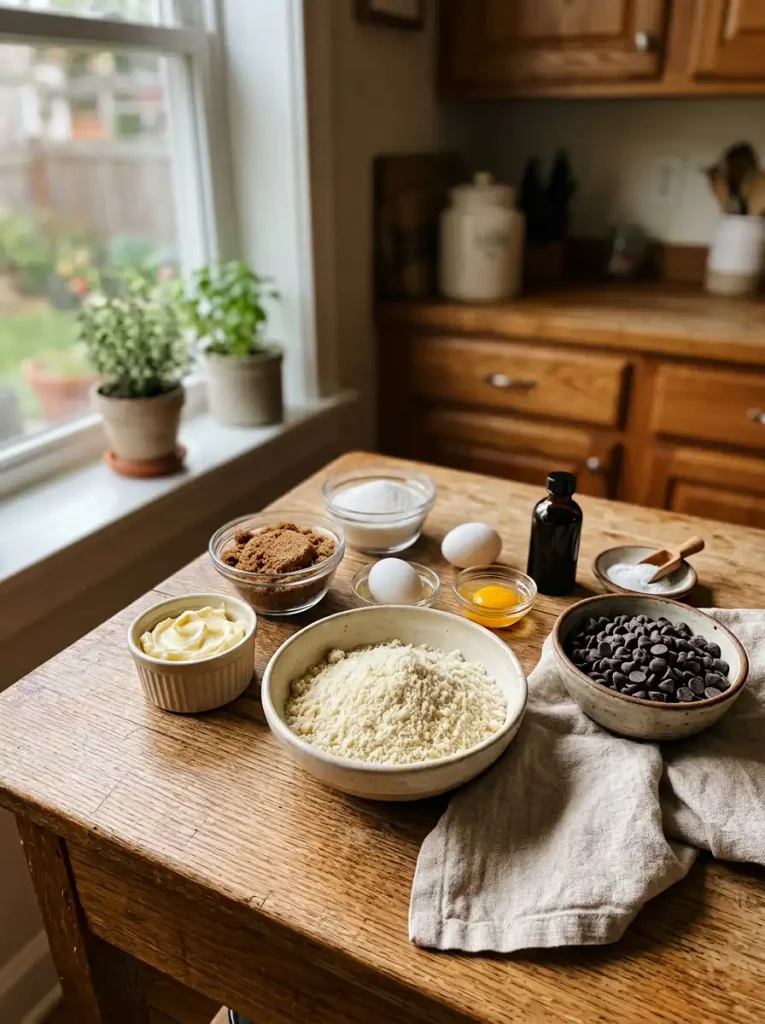
| Superfine blanched almond flour | 224 g | 100% |
| Unsalted butter | 56 g | 25% |
| Brown and granulated sugar | 117 g | 52% |
| Whole egg and yolk | 68 g | 30% |
| Semisweet chocolate chips | 85 g | 38% |
Keep these weights fixed during the first almond flour cookie recipe test; the percentages show ingredient balance, not a cup-for-cup conversion.
Ingredients that matter
- Superfine blanched almond flour: Use a finely ground flour made from blanched almonds. Almond meal is coarser and may include the skins, which can make the cookies grainier. Weigh the flour for this almond flour cookie recipe; cup measurements vary by brand and how the flour is packed.
- Butter and sugars: Softened butter is the test target, not melted butter. Brown sugar adds moisture, while granulated sugar helps balance the texture. Keep the proportions unchanged for the first test.
- Egg and extra yolk: The whole egg and yolk are intended to bind the dough and support a tender center. Do not remove the yolk or use an egg substitute without testing it separately.
- Baking soda, salt, and vanilla: Baking soda provides lift; salt balances sweetness. Vanilla rounds out the almond flavor.
- Chocolate chips: Semisweet chips are the starting mix-in. Test the listed formula first before changing the amount or using a different type of chocolate.
How to make this almond flour cookie recipe
- Prepare the oven and pans. Heat the oven to 350°F (175°C). Line two light-colored baking sheets with parchment paper.
- Mix the dry ingredients. Whisk the almond flour, baking soda, and salt in a medium bowl. Break up any lumps so the leavener is evenly distributed.
- Mix the butter and sugars. In a large bowl, beat the softened butter with the brown and granulated sugars until creamy. Mix in the egg, extra yolk, and vanilla just until combined.
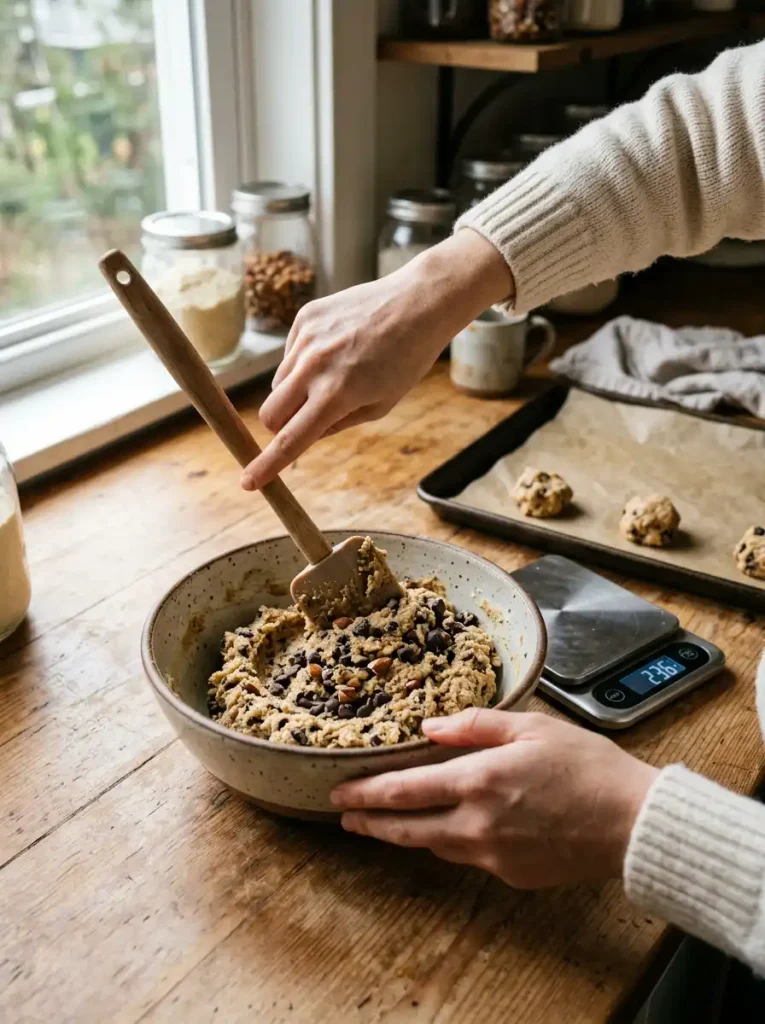
- Finish the dough. Add the dry mixture to the wet ingredients and stir just until no dry pockets remain. Fold in the chocolate chips. The dough should be thick; cover it and chill for 30 minutes as a test target.
- Portion and shape. Divide the dough into 16 portions of about 35 g each. Roll into balls and gently press each to about ½ inch thick, leaving about 2 inches between cookies. Almond flour dough may not spread as much as wheat-flour dough. For the first almond flour cookie recipe test, keep all portions the same weight so you can compare spread and doneness.
- Bake and rotate. Bake both sheets for a provisional 10–12 minutes, swapping their rack positions and rotating them front to back halfway through. Look for set edges and centers that still appear soft. Record the actual time and spread during the test.
- Cool before judging. Leave the cookies on the sheets for 10 minutes, then move them to a rack. Let them cool fully before assessing the centers; the texture can change as they set.
For a different gluten-free cookie texture, try our gluten-free shortbread cookies. If the test cookies spread more than expected, our guide to why cookies turn out flat covers common causes. For another chocolate-chip option, see our peanut butter chocolate chip cookies.
Troubleshooting this almond flour cookie recipe
- The cookies spread too far: Check that the butter was softened, not melted, and chill the dough for the full test interval. Use cool baking sheets for a second batch. If this almond flour cookie recipe still spreads, record the result before changing an ingredient. For the next almond flour cookie recipe test, adjust one factor at a time—such as chill time or portion thickness—not both.
- The cookies are dry or crumbly: The flour may have been over-measured, the cookies may have baked too long, or they may have been moved before cooling. Weigh the flour and judge the texture only after the cookies cool.
- The texture is gritty: Use superfine blanched almond flour rather than almond meal. Different grinds are not interchangeable in this almond flour cookie recipe.
- The cookies barely spread: Press the portions to the specified thickness before baking. Do not add liquid or reduce the flour until the first test is evaluated.
- The centers seem too soft: Let the cookies cool completely before judging them. If they remain under-set after cooling, test another minute of bake time rather than extending the whole batch by several minutes.
For every almond flour cookie recipe test, record the dough weight, chill time, pan temperature, cookie spread, and fully cooled texture. That makes the next adjustment easier to evaluate.

Frequently asked questions
Can I use almond meal for this almond flour cookie recipe?
Not as a direct swap. Almond meal is usually coarser and may include the skins, so it can change the cookie’s color and texture. Test it separately rather than assuming the same bake time will work.
Can I replace almond flour with all-purpose flour?
No. Almond flour and wheat flour behave differently, and this almond flour cookie recipe is formulated around almond flour’s fat and lack of gluten. Use a recipe written for all-purpose flour if that is the flour you have.
Is this almond flour cookie recipe gluten-free?
Almond flour itself does not contain wheat gluten, but check every packaged ingredient and prevent cross-contact from shared equipment. Only label the finished recipe gluten-free if the ingredients and handling meet your requirements.
How should I store the cookies?
Storage time has not been established because the recipe is still untested. After the final test, cool the cookies completely, check their texture the next day, and add storage instructions based on the actual result.

Easy Almond Flour Cookies
Ingredients
Equipment
Method
- Heat the oven to 350°F (175°C). Line two light-colored baking sheets with parchment paper.
- In a medium bowl, whisk together the superfine blanched almond flour, baking soda, and salt, breaking up any lumps.
- In a large bowl, beat the softened butter, light brown sugar, and granulated sugar until creamy.
- Mix in the egg, egg yolk, and vanilla just until combined.
- Add the dry ingredients to the wet ingredients and stir just until no dry pockets remain. Fold in the semisweet chocolate chips.
- Cover the dough and chill for a provisional 30 minutes. Divide into 16 portions of about 35 g each. Roll into balls and gently flatten each to about 1/2 inch thick, leaving about 2 inches between cookies.
- Bake both sheets at 350°F (175°C) for a provisional 10–12 minutes, swapping their rack positions and rotating them front to back halfway through. Record the exact bake time and spread. The edges should look set while the centers still look soft.
- Cool the cookies on the baking sheets for 10 minutes, then transfer them to a wire rack. Let them cool completely before judging the final texture.