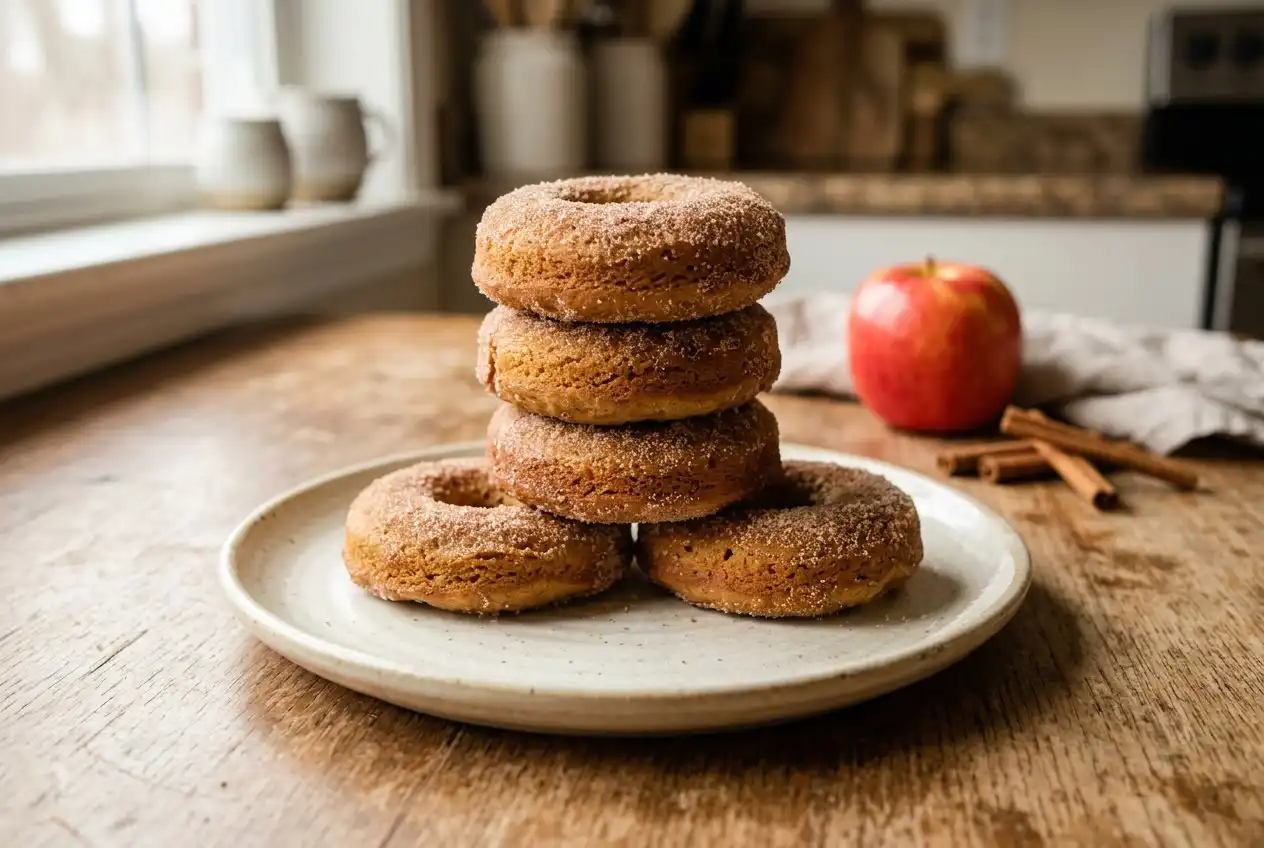
Easy Apple Cider Donuts Recipe: Baked Cinnamon-Sugar Treats
An apple cider donuts recipe should taste like more than a plain cinnamon cake. This baked, cake-style version uses reduced apple cider for concentrated apple flavor, warm spices in the batter, and a cinnamon-sugar coating. The recipe below is a first test formula, not a finished or verified recipe, so check the notes as you bake and adjust the final card after testing.
Why reduce apple cider?
Apple cider adds moisture, but using a large amount without concentrating it can dilute the flavor and make a donut batter too loose. For this test batch, simmer the cider until it measures about ½ cup (120 ml), then cool it before mixing. Record the starting amount, final amount, and reduction time; stovetops and pans can change how quickly liquid evaporates.
Use nonalcoholic, US-style apple cider—not hard cider. The flavor and sweetness of cider vary by brand, so note the one used during testing.
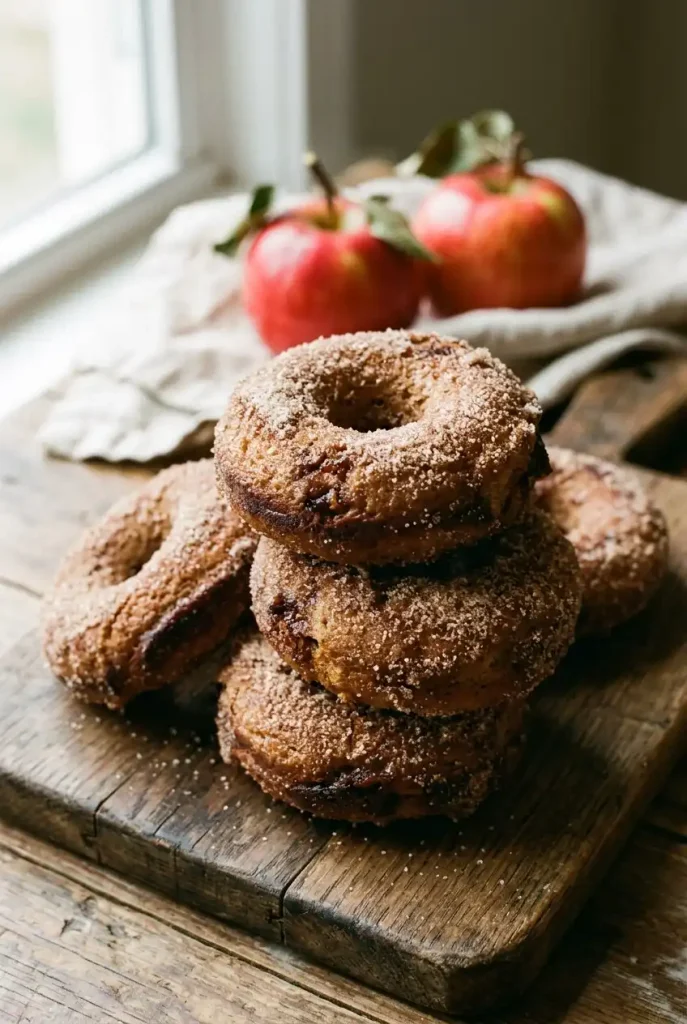
Ingredients for this apple cider donuts recipe (provisional batch)
This is an untested starting formula. Confirm the yield and texture with your donut pan before publishing.
Reduced cider
- 2 cups (480 ml) nonalcoholic apple cider, reduced to about ½ cup (120 ml)
Donuts
- 2 cups (250 g) all-purpose flour
- ½ cup (100 g) packed light brown sugar
- ¼ cup (50 g) granulated sugar
- 1½ teaspoons baking powder
- ½ teaspoon baking soda
- ½ teaspoon fine salt
- 1 teaspoon ground cinnamon
- ¼ teaspoon ground nutmeg
- 1 large egg, room temperature
- ¼ cup (56 g) unsalted butter, melted and cooled
- ½ cup (120 ml) buttermilk, room temperature
- 1 teaspoon vanilla extract
- The cooled reduced apple cider
Cinnamon-sugar coating
- ½ cup (100 g) granulated sugar
- 1 teaspoon ground cinnamon
- 2 tablespoons unsalted butter, melted, for brushing
How to make this apple cider donuts recipe
- Reduce the cider. Pour the cider into a small saucepan and bring it to a gentle simmer. Cook, stirring occasionally, until about ½ cup remains. Measure the reduction after it cools; record the actual amount and time for the final tested version.
- Prepare the pan and oven. Heat the oven to 350°F (175°C). Grease a standard 12-cavity donut pan. The temperature and bake time are test starting points, not confirmed values.
- Whisk the dry ingredients. In a medium bowl, whisk together the flour, brown sugar, granulated sugar, baking powder, baking soda, salt, cinnamon, and nutmeg. Break up any brown-sugar lumps.
- Mix the wet ingredients. In a second bowl, whisk the egg, melted butter, buttermilk, vanilla, and cooled cider reduction until combined.
- Make the batter. Add the wet mixture to the dry ingredients. Fold just until no dry flour remains; avoid beating the batter. Note whether it is thick enough to pipe neatly into the pan.
- Fill the pan. Spoon or pipe the batter into the donut cavities. Start with each cavity about two-thirds full, then record the amount that gives the best shape without overflowing.
- Bake and check. Begin checking at 10 minutes. The donuts should look set and spring back lightly when touched; a tester inserted into a donut should come out without wet batter. Record the actual bake time and appearance. Do not treat 10–12 minutes as final until the test batch confirms it.
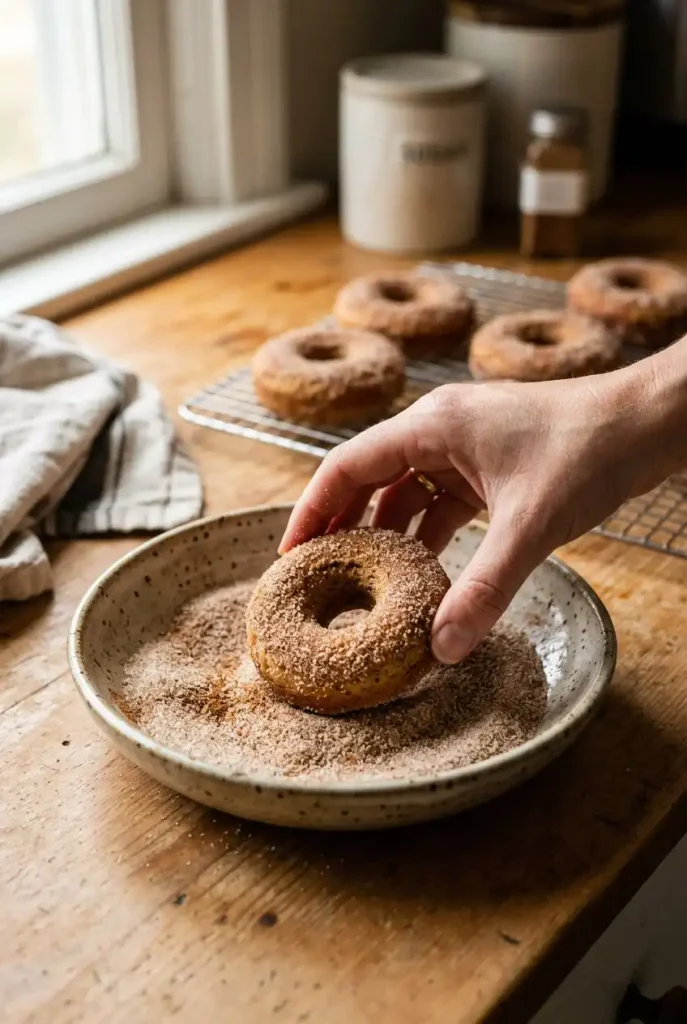
- Cool and coat. Let the donuts rest in the pan briefly, then transfer them to a rack. Mix the cinnamon and sugar in a shallow bowl. Brush a donut lightly with melted butter and turn it in the cinnamon sugar. Test whether the coating adheres best while the donuts are warm or after they cool slightly.
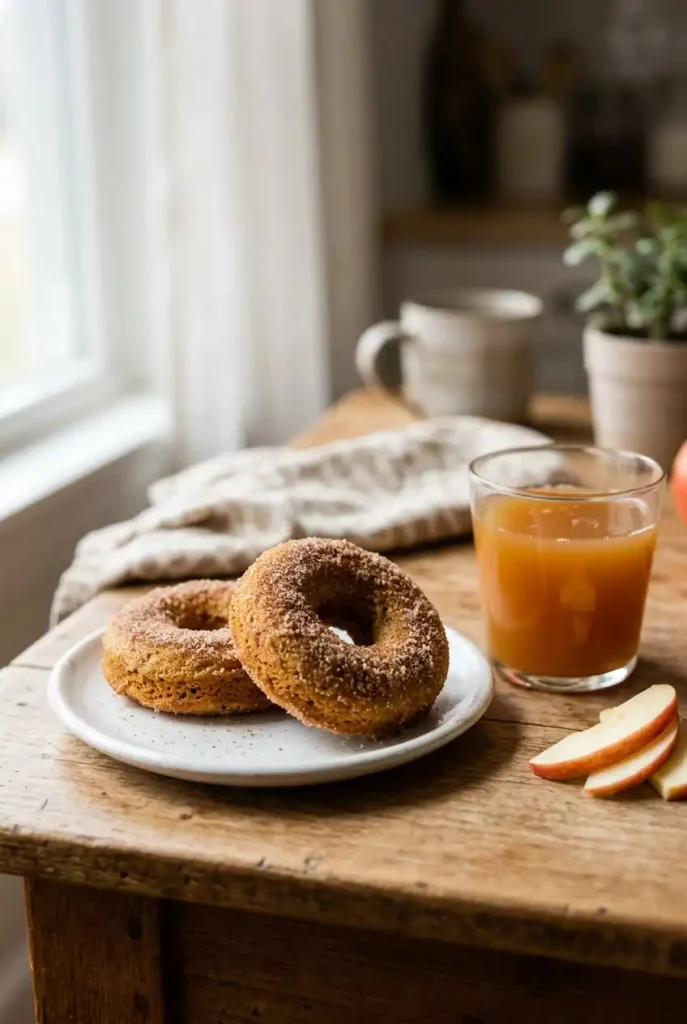
Baked or fried apple cider donuts?
This provisional formula is designed for a donut pan and an oven; it is not a frying formula. Fried cider donuts use a different dough and method, so do not deep-fry this batter as written. The baked version may be convenient, but that does not by itself prove it is healthier. Add nutrition comparisons only after calculating the finished recipe and defining what it is being compared with.
Tips to check during the test
- Apple flavor: If the cider flavor is faint, first check that the reduction reached the intended amount. Change only one variable at a time when adjusting the formula.
- Batter consistency: If the batter is difficult to pipe or spreads too much, record the texture and change the formula in the next batch rather than adding flour by guesswork.
- Even baking: Fill the cavities consistently and rotate the pan only if the oven heats unevenly. Record whether the donuts brown at the same rate.
- Cinnamon-sugar coating: Compare coating the donuts while warm versus slightly cooled. Use the method that gives an even coating without greasy patches.
Frequently asked questions
How do I make apple cider donuts at home?
This apple cider donuts recipe test version starts by reducing nonalcoholic apple cider, then mixing it into a spiced cake-style batter, baking the batter in a donut pan, and finishing the cooled donuts with cinnamon sugar. The exact formula and timing still need kitchen testing before they can be treated as final instructions.
Can I make apple cider donuts without a donut pan?
A donut pan is required for the current test formula. A muffin pan would change the shape, portion size, and bake time; test that variation separately before adding it as an alternative.
Can I fry this baked donut batter?
No. This formula is designed for baking in a pan, not for frying. A fried version needs its own tested dough and instructions.
How should I store the donuts?
The storage period and next-day texture have not been verified for this formula. During testing, record how the coating and crumb change after cooling and storage; add specific storage directions only after checking them.
For another style, see the old-fashioned donut recipe or sour cream doughnuts. Those are fried doughs with different methods; do not use their directions for this baked batter.
Final recipe-test checklist
Before publishing this apple cider donuts recipe, repeat the chosen formula in a confirmation batch. Verify the ingredient weights, pan capacity, yield, reduction endpoint, oven temperature, bake time, coating method, and storage guidance. Add a recipe card only after those details have been checked; do not describe the recipe as tested until that work is complete.
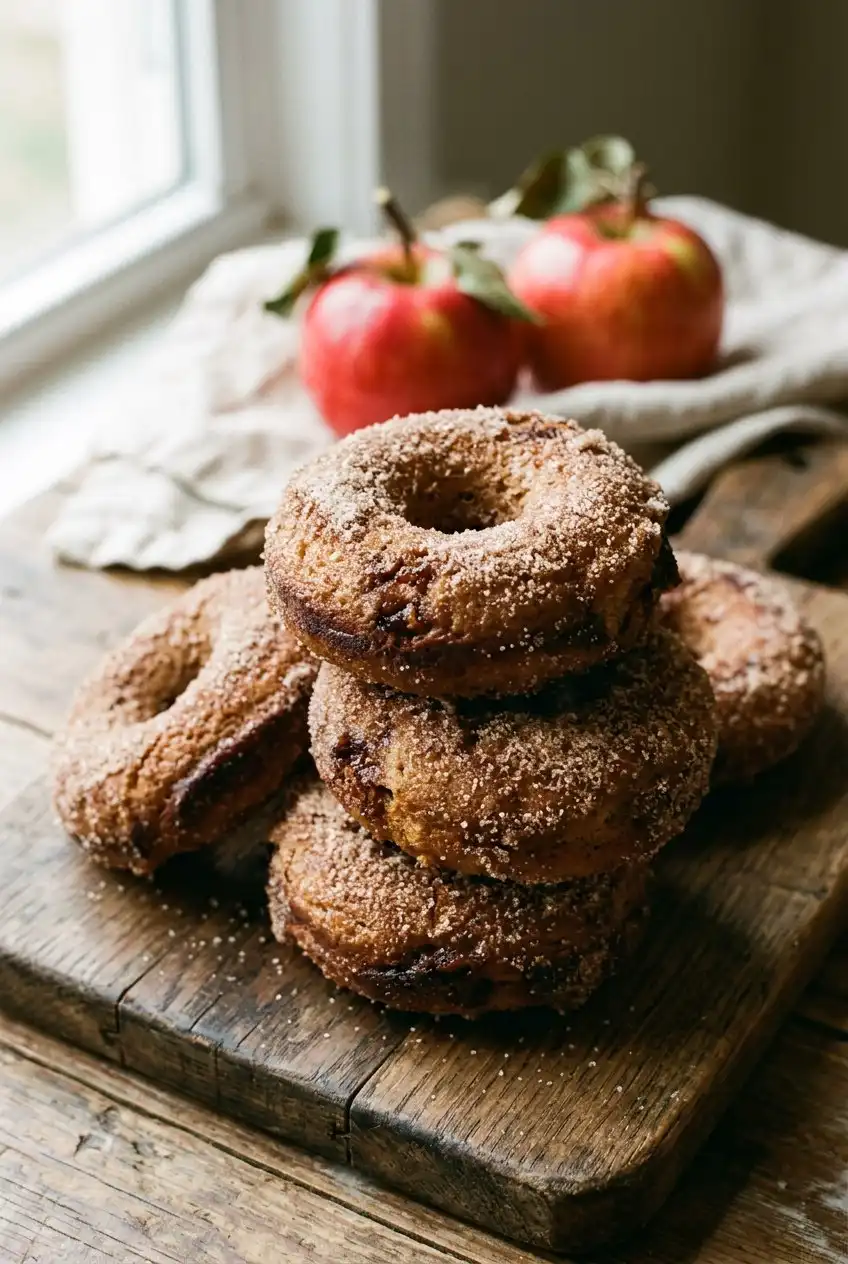
Apple Cider Donuts
Ingredients
Equipment
Method
- Reduce the cider: Simmer 2 cups (480 ml) nonalcoholic apple cider until about 1/2 cup (120 ml) remains. Cool it, measure the final amount, and record the actual reduction time.
- Prepare the oven and pan: Preheat the oven to 350°F (175°C) as a test starting point. Grease a standard 12-cavity donut pan. Confirm the temperature and pan size during testing.
- Mix the dry ingredients: Whisk the flour, brown sugar, granulated sugar, baking powder, baking soda, salt, cinnamon, and nutmeg in a bowl.
- Mix the wet ingredients: Whisk the egg, melted butter, buttermilk, vanilla, and cooled cider reduction in a second bowl.
- Make the batter: Fold the wet ingredients into the dry ingredients just until no dry flour remains. Record the batter consistency.
- Fill the pan: Pipe or spoon batter into the cavities, starting at about two-thirds full. Record the amount per cavity and the final yield.
- Bake: Begin checking at 10 minutes. Check for set tops, light spring-back, and no wet batter on a tester. The 10–12 minute range is unverified; record the actual bake time.
- Cool and coat: Rest the donuts briefly in the pan, then transfer them to a rack. Mix cinnamon and sugar. Brush with melted butter and coat; record the cooling point that gives the best coating adhesion.