Blueberry Waffles (Crispy Outside, Fluffy Inside)
If you’ve ever pulled blueberry waffles off the iron only to find purple streaks through the batter instead of whole berries, this blueberry waffles guide fixes that with one simple trick most recipes skip.
Blueberry waffles are a buttermilk waffle batter studded with whole blueberries, cooked until the outside is crisp and golden and the inside stays soft and fluffy. The most common mistake is folding blueberries straight into the batter, which causes them to sink to the bottom and bleed purple streaks as they cook. Coating the berries in a little flour before folding them in prevents both problems. Most blueberry waffles recipes are ready in under 30 minutes using fresh or frozen berries.
This guide covers the full recipe, the exact technique for keeping blueberries from sinking or bleeding, and answers to the most common questions people have before making them.
Why Do Blueberries Sink or Bleed in Waffle Batter?
Blueberries are denser than waffle batter, so if you fold them in as-is, they naturally settle toward the bottom of the batter and toward the base of the waffle iron. As they cook, the heat also ruptures the berries’ skin, releasing juice that streaks through the batter and turns it purple or gray instead of leaving the batter golden with distinct blueberries.
The fix is simple: toss the blueberries in a tablespoon of flour before folding them into the batter. The thin flour coating does two things — it adds just enough friction to keep the berries suspended in the batter instead of sinking, and it helps seal in some of the juice so the berries hold their shape better during cooking. This one step is the difference between soggy blueberry waffles and ones with clean, distinct berries in every bite.
If you’re using frozen blueberries, there’s an extra step: don’t thaw them first. Frozen berries release much less liquid into the batter than thawed ones, which keeps your blueberry waffles from turning soggy or gray.
Blueberry Waffles (Full Recipe)
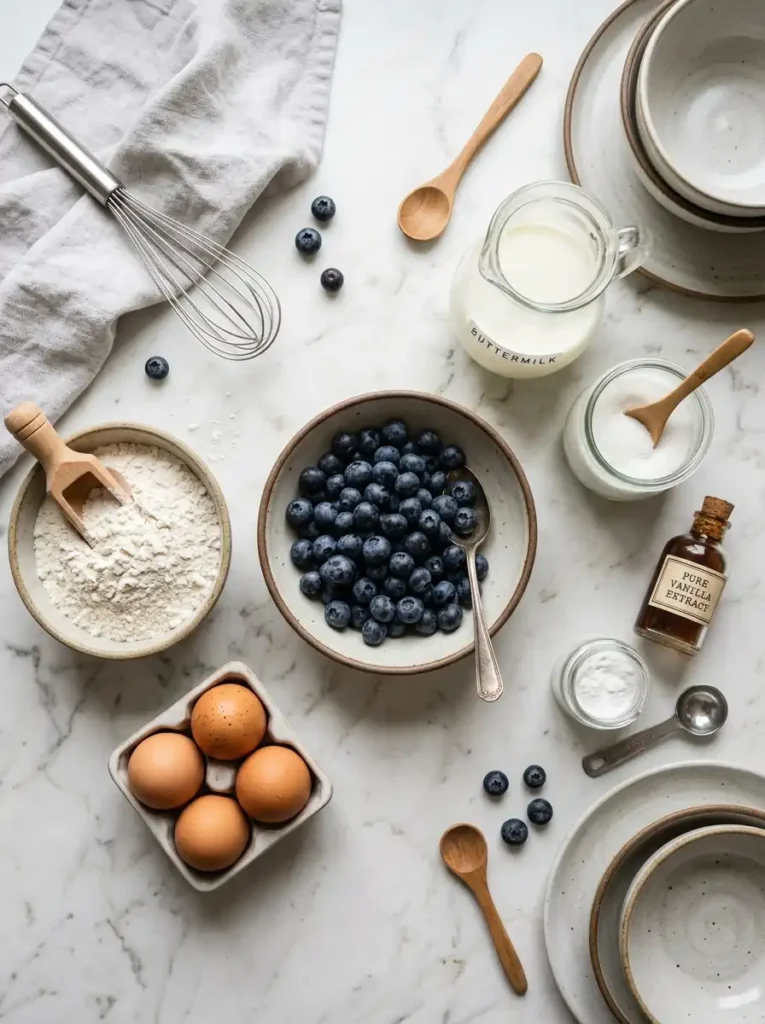
Ingredients
- 2 ¼ cups all-purpose flour, divided
- 2 tablespoons granulated sugar
- 1 tablespoon baking powder
- 1 teaspoon baking soda
- ½ teaspoon salt
- 2 cups buttermilk
- 2 large eggs
- ¼ cup neutral oil (vegetable, canola, or avocado)
- 2 teaspoons vanilla extract
- 1 ½ cups blueberries, fresh or frozen (do not thaw if frozen)
Instructions
Step 1: Mix the dry ingredients.
In a large bowl, whisk together 2 cups of the flour, sugar, baking powder, baking soda, and salt. Set aside.
Step 2: Mix the wet ingredients.
In a separate bowl or large measuring cup, whisk together the buttermilk, eggs, oil, and vanilla extract until fully combined.
Step 3: Combine.
Pour the wet ingredients into the dry ingredients and stir until just combined. The batter should still have a few small lumps — overmixing leads to dense, tough waffles instead of light and fluffy ones.
Step 4: Coat the blueberries.
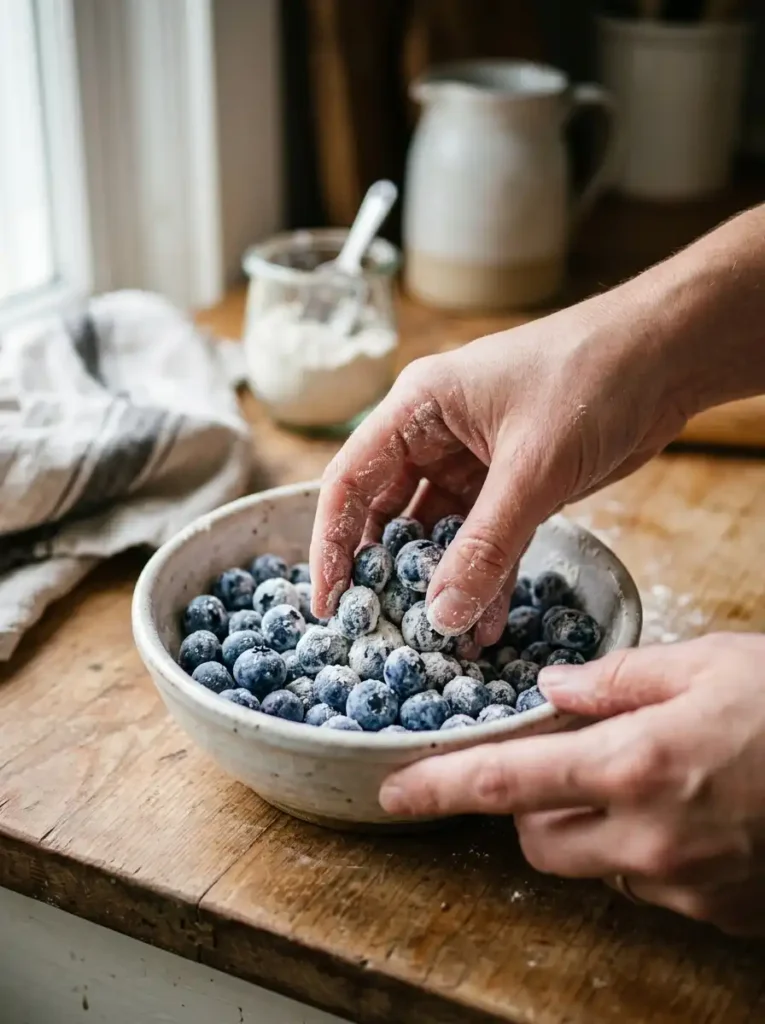
In a small bowl, toss the blueberries with the remaining ¼ cup of flour until lightly and evenly coated. This is the step that keeps the fruit from sinking or bleeding into the batter.
Step 5: Fold in the blueberries.
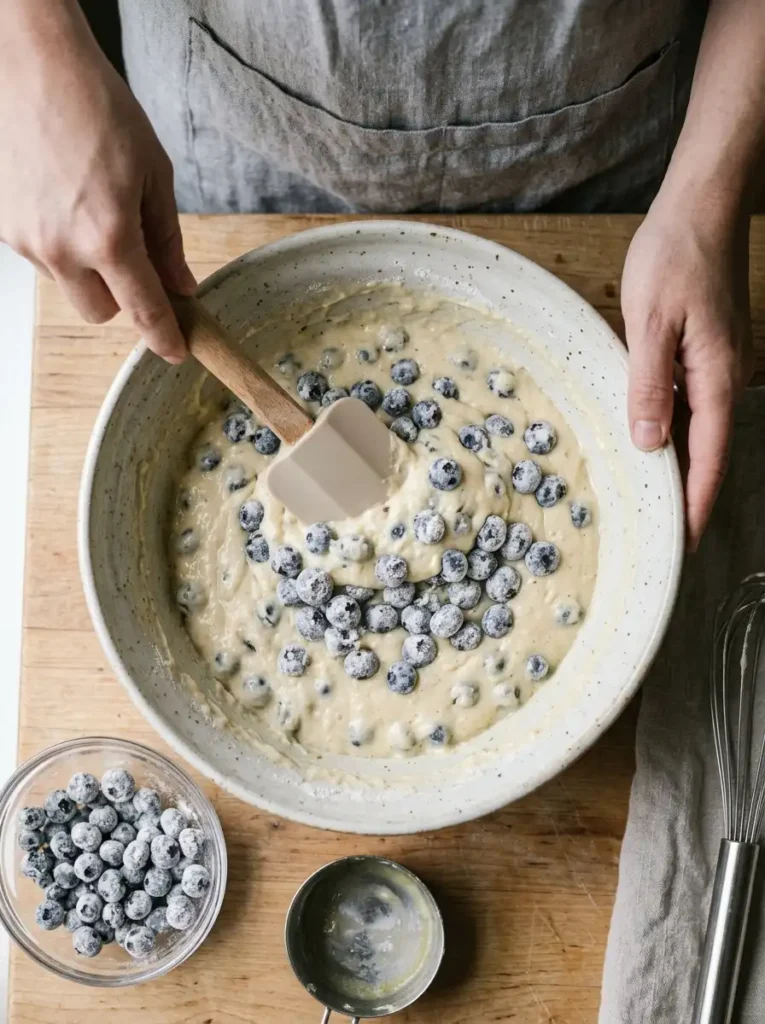
Gently fold the floured blueberries into the batter with a spatula, using as few strokes as possible to avoid crushing the berries.
Step 6: Cook the waffles.
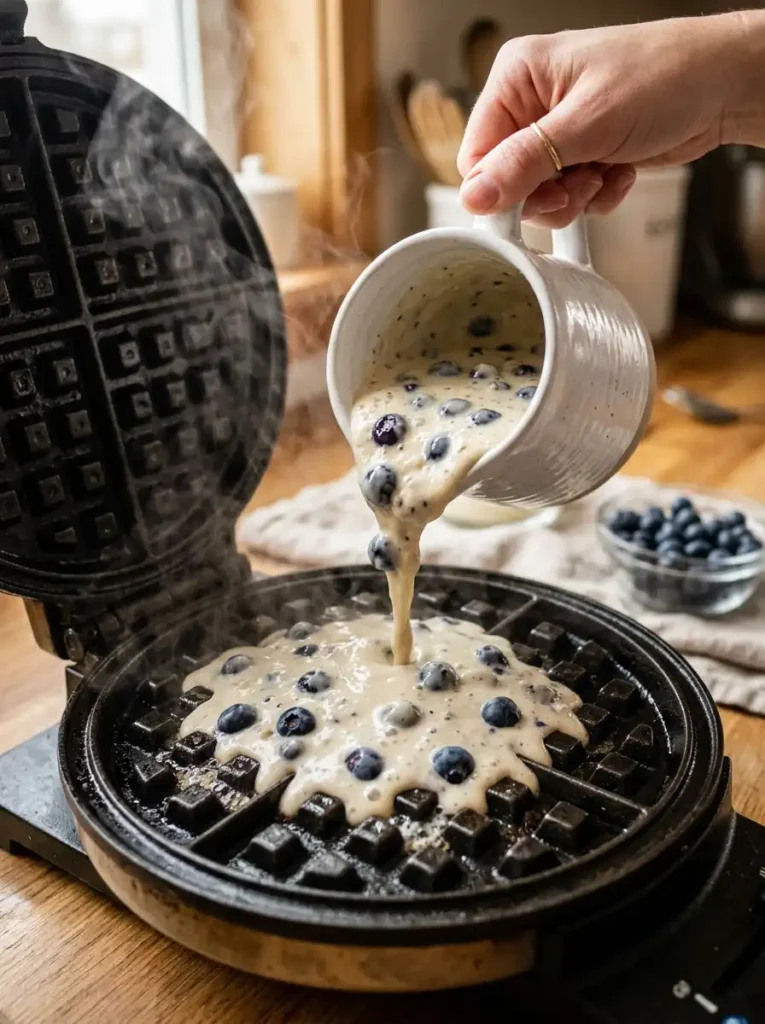
Preheat your waffle iron and lightly grease it. Pour batter according to your waffle iron’s size, close, and cook until golden brown and crisp, about 4-5 minutes depending on your iron. Frozen blueberries may add a minute or two to the cook time since they release moisture as they cook.
Step 7: Keep waffles crisp while you finish the batch.
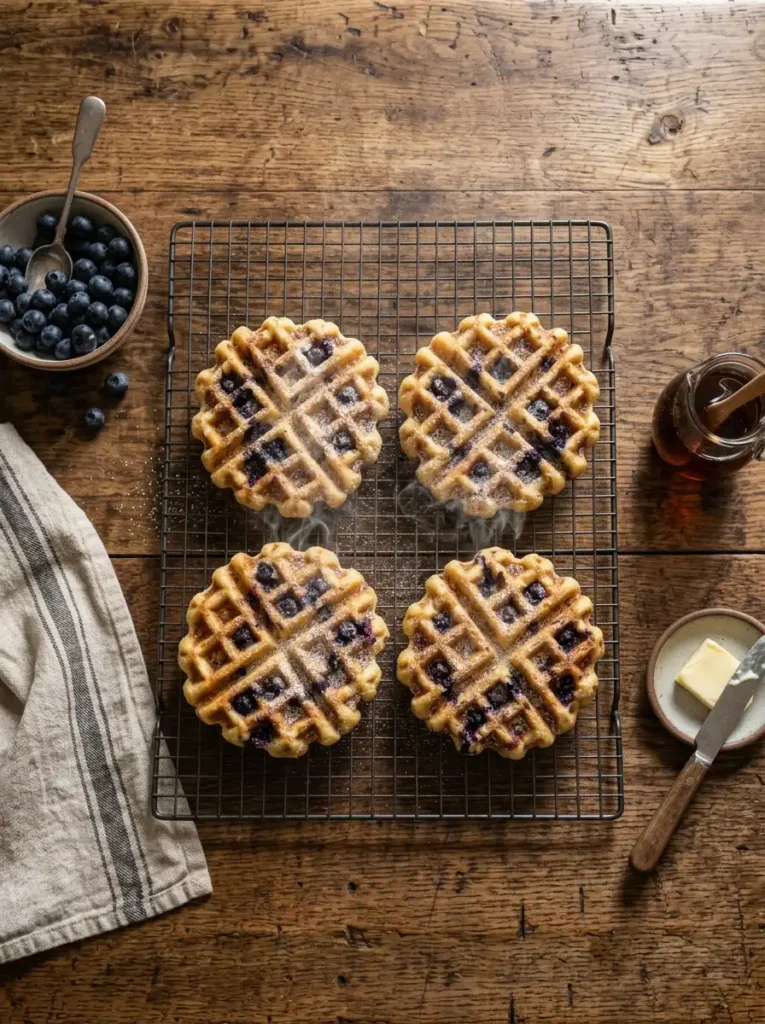
Place cooked waffles directly on a wire rack (not stacked on a plate) while you cook the rest. Stacking traps steam and makes the waffles go soft.
Makes about 6-8 waffles, depending on your waffle iron size.
Fresh vs. Frozen Blueberries: Which Works Best for Blueberry Waffles?
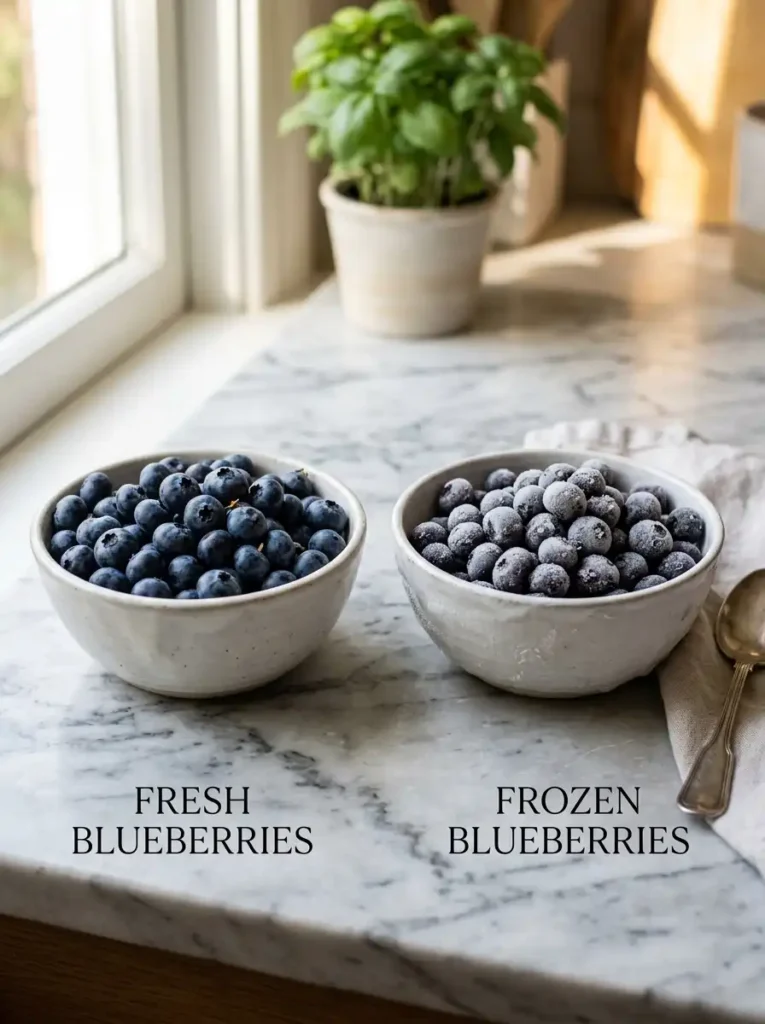
| Fresh Blueberries | Frozen Blueberries | |
|---|---|---|
| Prep | Rinse and pat completely dry before flouring | Use straight from the freezer, do not thaw |
| Texture in waffle | Holds shape best, less bleeding | Slightly more likely to bleed, but still fine if floured and unthawed |
| Cook time | Standard | Add 1-2 extra minutes |
| Best for | Peak summer berries, best appearance | Year-round convenience |
Both work well in this recipe as long as you follow the flour-coating step. If you only have thawed frozen berries, pat them very dry with a paper towel before flouring to remove as much excess liquid as possible.
Common Questions About the Batter
Is it better to use oil or butter for waffles?
Oil generally produces a crispier waffle than melted butter, since butter contains water that can create steam and soften the exterior slightly. If you prefer the flavor of butter, you can substitute it, but expect a slightly less crisp result.
Can I add frozen berries straight to a boxed waffle mix?
Yes. Toss frozen (unthawed) blueberries in a tablespoon of flour before folding them into any boxed mix, using the same technique as the from-scratch recipe above.
What’s the best flour for blueberry waffles?
Standard all-purpose flour works fine for both the batter and for coating the berries. There’s no need for a specialty flour unless you’re making a gluten-free version.
Tips for the Best Blueberry Waffles Texture
- Don’t overmix the batter. A few lumps are normal and actually help keep the waffles tender instead of chewy.
- Preheat the waffle iron fully before adding batter — a cold iron leads to pale, soft waffles instead of crisp ones.
- Use the wire rack trick. Cooling cooked waffles on a rack (instead of stacking them) keeps every batch crisp until serving.
- Don’t overfill the iron. Too much batter causes overflow and uneven cooking, especially once the blueberries start releasing juice.
Storage and Make-Ahead
- Refrigerator: Store cooled waffles in an airtight container for up to 3 days.
- Freezer: Freeze waffles in a single layer on a baking sheet until solid, then transfer to a freezer bag for up to 2 months.
- Reheating: Reheat frozen or refrigerated waffles in a toaster or oven to restore crispness — microwaving will make them soft and slightly chewy.
- Make-ahead tip: This batter doesn’t hold well overnight once the baking soda is activated, so it’s best to bake the full batch and freeze the extras rather than saving raw batter for later.
Blueberry Waffles FAQ
How do you keep blueberries from sinking in waffles?
Toss the blueberries in a light coating of flour before folding them into the batter. This adds enough resistance to keep the berries suspended instead of settling at the bottom of the waffle iron.
Do you need to thaw frozen blueberries before making waffles?
No — using frozen blueberries straight from the freezer actually works better than thawing them first, since thawed berries release more liquid and are more likely to turn the batter soggy or gray.
Can you put fruit in a waffle maker?
Yes, blueberries, sliced bananas, and diced apples can all be folded into waffle batter using a similar technique. Juicier fruits benefit from the same flour-coating trick used for blueberries.
Are blueberry waffles healthy?
They can be part of a balanced breakfast — blueberries add fiber and antioxidants, though the overall nutrition depends on the batter recipe and toppings used. A version made with less added sugar and topped with fresh fruit instead of syrup is the lighter option.
Why did my blueberry waffles turn out soggy in the middle?
This usually means the waffle iron wasn’t fully preheated, too much batter was added, or the berries released excess liquid because they were thawed instead of used frozen. Make sure the iron is hot before pouring and use unthawed berries if using frozen ones for your blueberry waffles.
Looking for more breakfast favorites? Try our blueberry banana muffins or check out our Waffles guide for more variations on this breakfast classic.
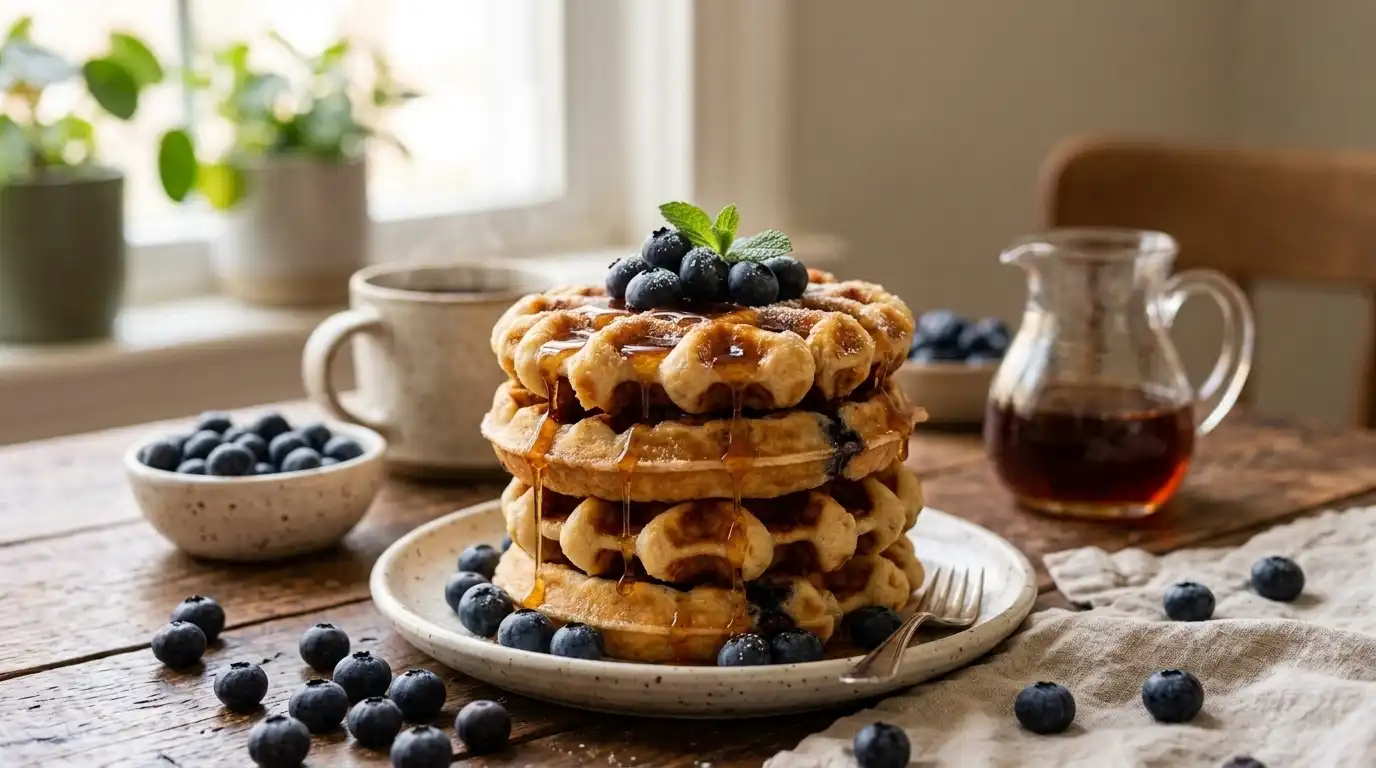
Blueberry Waffles
Ingredients
Equipment
Method
- Mix the dry ingredients: In a large bowl, whisk together 2 cups of the flour, sugar, baking powder, baking soda, and salt. Set aside.
- Mix the wet ingredients: In a separate bowl or large measuring cup, whisk together the buttermilk, eggs, oil, and vanilla extract until fully combined.
- Combine: Pour the wet ingredients into the dry ingredients and stir until just combined. The batter should still have a few small lumps, overmixing leads to dense, tough waffles.
- Coat the blueberries: In a small bowl, toss the blueberries with the remaining 1/4 cup of flour until lightly and evenly coated. This step keeps the fruit from sinking or bleeding into the batter.
- Fold in the blueberries: Gently fold the floured blueberries into the batter with a spatula, using as few strokes as possible to avoid crushing the berries.
- Cook the waffles: Preheat your waffle iron and lightly grease it. Pour batter according to your waffle iron’s size, close, and cook until golden brown and crisp, about 4-5 minutes depending on your iron.
- Keep waffles crisp while you finish the batch: Place cooked waffles directly on a wire rack (not stacked on a plate) while you cook the rest. Stacking traps steam and makes the waffles go soft.