Why Are My Cookies Flat? 10 Reasons and Easy Fixes
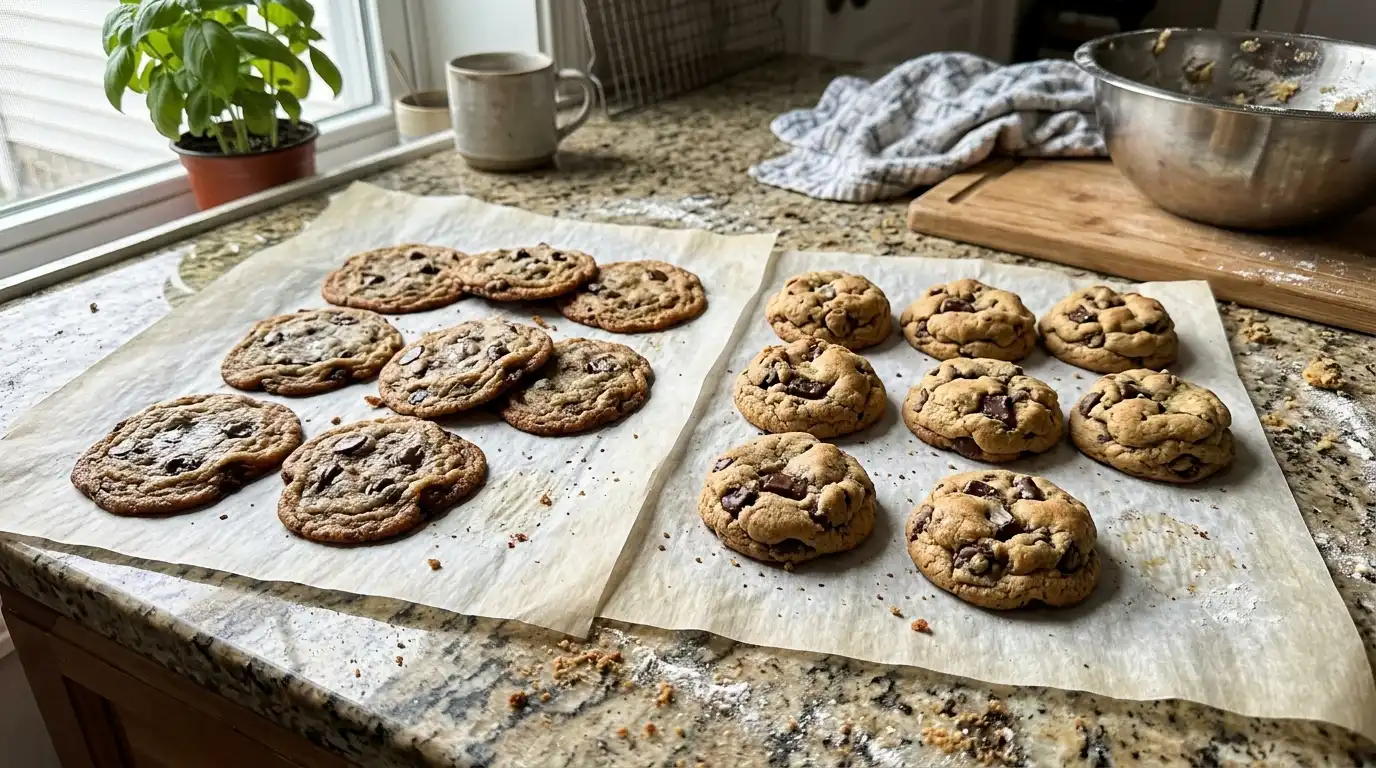
If you keep asking, “Why are my cookies flat?” the most likely causes are warm butter, too little flour, dough that was not chilled, a hot baking sheet, too much sugar, or an oven that is not hot enough. Flat cookies happen when the dough spreads before the edges have time to set.
The good news is that flat cookies are easy to fix once you know what went wrong. Use this guide to troubleshoot your dough before baking the whole batch, especially for soft cookies like fudge cookies, monster cookies, cowboy cookies, and peanut butter chocolate chip cookies.
Cookies usually turn flat because the butter or dough is too warm, the dough has too little flour, the baking sheet is hot, or the oven temperature is too low. If your main question is why are my cookies flat, check butter temperature, flour measurement, dough chill time, and pan temperature first.
For thicker cookies, use softened butter instead of melted butter, measure flour correctly, chill soft dough for 30 minutes, and bake on a cool parchment-lined baking sheet.
If you only remember one thing when asking why are my cookies flat, start by cooling the dough and checking the butter.
Table of Contents
Flat Cookie Fix Chart
| Problem | Likely Cause | Easy Fix |
|---|---|---|
| Cookies spread into puddles | Butter was too warm | Chill dough 30 minutes. |
| Cookies are flat and greasy | Too much fat or warm dough | Use cool softened butter. |
| Cookies are flat and crispy | Too much sugar or overbaking | Bake less and use more brown sugar. |
| Cookies spread on second tray | Baking sheet was hot | Use a cool pan for each batch. |
| Cookies are flat but pale | Oven too cool | Check oven temperature. |
| Cookies spread on the pan | Greased pan or silicone mat | Use parchment paper. |
1. Your Butter Was Too Warm
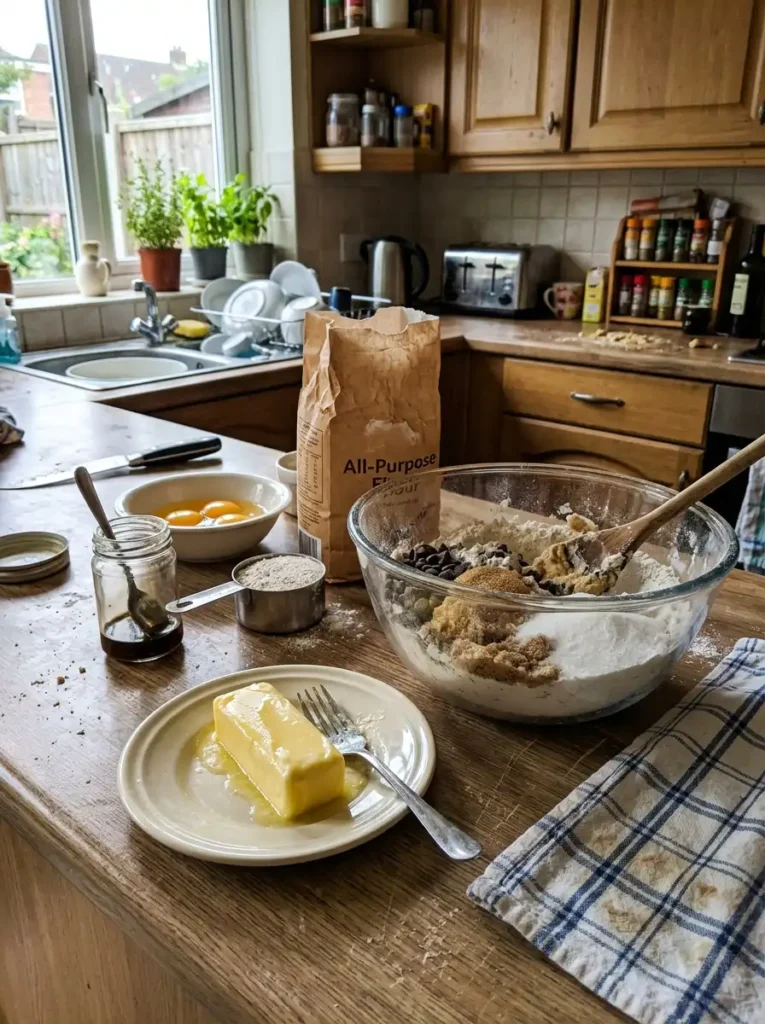
Warm butter is the most common answer to why are my cookies flat. Butter should be softened but still cool. If it looks shiny, greasy, or melted, it will make the dough spread too quickly in the oven.
Fix: Chill the dough for 30 minutes before baking. Next time, soften butter at room temperature instead of microwaving it. Butter should dent when pressed but still hold its shape.
2. You Did Not Use Enough Flour

Flour gives cookie dough structure. If there is too little flour, the butter and sugar melt outward and the cookies become thin.
Fix: Weigh flour if possible. One cup of all-purpose flour is usually about 125 grams. If using cups, fluff the flour, spoon it into the cup, then level it. Do not scoop straight from the bag.
If your first tray spreads too much, mix 1 to 2 tablespoons of flour into the remaining dough, chill it, and bake one test cookie.
3. The Dough Was Too Warm
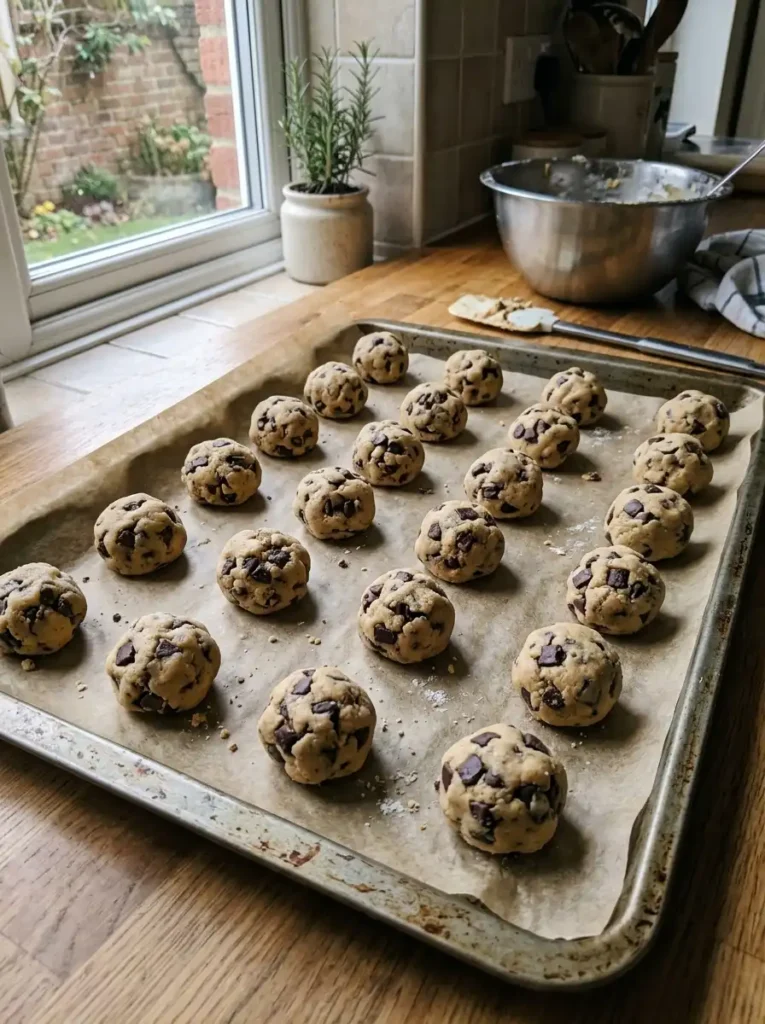
Even if your butter started correctly, the dough can warm up from your hands, a hot kitchen, long mixing time, or sitting near the oven. Warm dough spreads faster.
Fix: Chill soft dough for 30 minutes. This firms the butter and helps the flour absorb moisture. For thick cookies like monster cookies, chilling can make a big difference.
4. You Used a Hot Baking Sheet
A hot baking sheet melts cookie dough before it even reaches the oven. This is why the first tray may look fine, but the second tray spreads badly.
Fix: Always place dough on a cool baking sheet. If you only have one pan, let it cool before adding more dough. Better yet, rotate between two pans.
5. There Was Too Much Sugar
If you wonder why are my cookies flat and crispy, sugar may be part of the problem.
Sugar melts as cookies bake. Too much sugar, especially granulated sugar, can make cookies spread more and bake thinner or crispier.
Fix: Measure sugar carefully. If your cookies are flat and crispy, do not add extra sugar. Choose recipes with more brown sugar if you want soft, chewy cookies.
6. Your Baking Soda or Baking Powder Was Off
Another reason why are my cookies flat is weak or incorrectly measured leavening.
Expired leavening may not help cookies rise. Too much baking soda can also make cookies spread, brown too fast, or taste slightly bitter.
Fix: Check expiration dates and measure with level spoons. Do not swap baking soda and baking powder unless the recipe says it is okay.
7. Your Oven Was Too Cool
If you ask why are my cookies flat even after chilling, your oven may be running too cool.
If the oven is too cool, cookies spread before the edges set. Many ovens run 15°F to 50°F lower than the display says.
Fix: Use an oven thermometer. Most cookies bake well at 350°F, but if your oven runs cool, the dough may melt before it sets.
8. You Greased the Baking Sheet
Greased pans can make cookie dough slide and spread. Silicone mats can also cause more spreading in some recipes.
Fix: Use parchment paper. It gives cookies a better surface to grip and helps the bottoms bake evenly.
9. You Overmixed After Adding Flour
Overmixing after flour goes in can change the dough texture and make cookies tougher or more likely to spread.
Fix: Mix only until the flour disappears. Fold in chocolate chips, oats, candy, or nuts gently.
10. The Recipe Was Built for Thin Cookies
Some recipes are naturally thin and crisp. If a recipe uses lots of butter, lots of sugar, little flour, and no chill time, it may be designed to spread.
Fix: If you want thicker cookies, choose recipes with enough flour, oats, peanut butter, cornstarch, or chilling time. Recipes like fudge cookies and cowboy cookies are built to bake thicker.
How to Fix Flat Cookie Dough Before Baking the Whole Batch
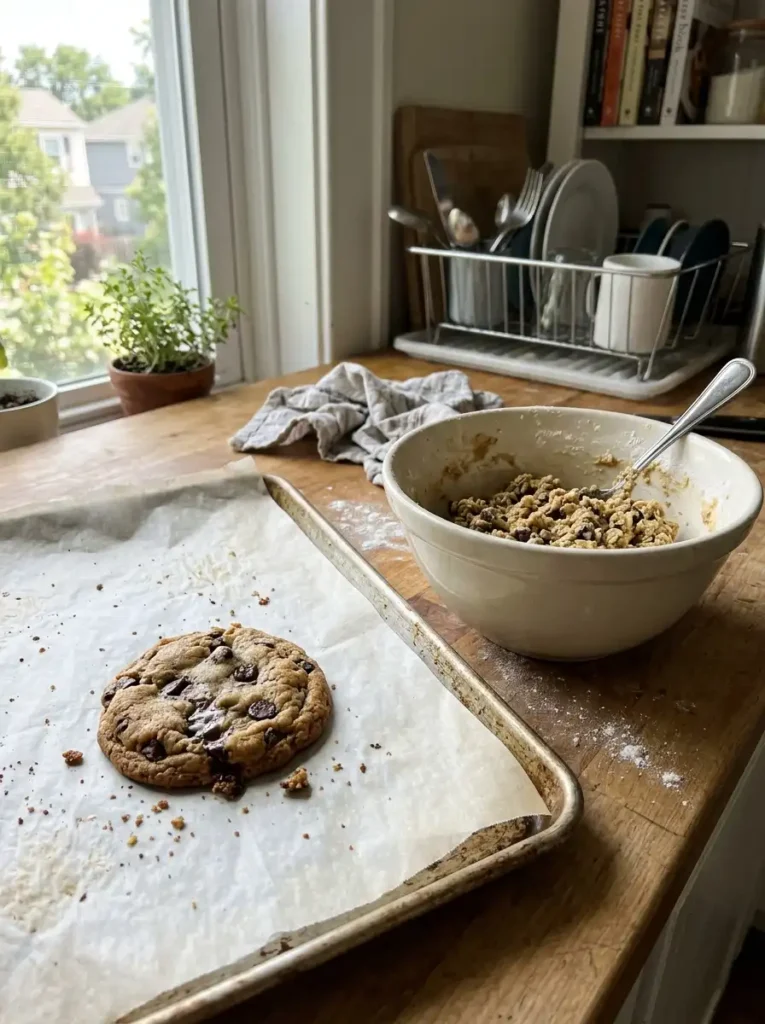
If the first tray comes out flat, do not bake the rest right away. When you think why are my cookies flat, use the remaining dough as a test batch.
- Chill the dough for 30 minutes.
- Bake one test cookie on a cool parchment-lined sheet.
- If it still spreads, add 1 to 2 tablespoons flour.
- Chill again for 15 minutes.
- Bake another test cookie.
This simple test tells you whether the problem was warm dough or not enough flour.
What to Do With Cookies That Are Already Flat
Flat cookies can still be useful. Turn them into ice cream sandwiches, crumble them over ice cream, use them as a pie crust, or sandwich them with frosting. If they taste good, do not throw them away.
How to Keep Cookies from Being Flat Next Time
Once you understand why are my cookies flat, the fix is usually simple: control butter temperature, flour measurement, pan heat, and oven temperature.
To prevent flat cookies, use this checklist:
- Use softened butter, not melted butter.
- Measure flour correctly.
- Chill soft dough.
- Bake on cool baking sheets.
- Use parchment paper.
- Preheat the oven fully.
- Check baking soda and baking powder.
- Do not overmix after adding flour.
- Bake one test cookie first.
For more beginner-friendly help, read my full baking tips guide.
FAQ
Why are my cookies flat even after chilling?
If cookies are flat after chilling, the dough may need more flour, the oven may be too cool, or the recipe may have too much sugar or fat. This is a common why are my cookies flat problem when the dough is cold but the recipe ratio is still too loose.
Does melted butter make cookies flat?
Yes. Melted butter can make cookies flat unless the recipe is designed for it. If the recipe says softened butter, do not melt it.
Will too much sugar make cookies flat?
Yes. Too much sugar can make cookies spread because sugar melts in the oven.
How do I make cookies thicker?
Chill the dough, measure flour correctly, use parchment paper, avoid hot pans, and scoop taller dough balls.
Is it better to bake cookies at 350°F or 375°F?
Most cookies bake well at 350°F, but 375°F can help some thick cookies set faster and spread less.