How to Make Fudge That Doesn’t Stick: 7 Easy Fixes
If you want to know how to make fudge that doesn’t stick, the most important steps are to line the pan with parchment paper, cook the fudge to the right temperature, let it cool fully, and cut it with a sharp warm knife. This guide shows how to make fudge that doesn’t stick to the pan, knife, or your hands without overcomplicating the process. Sticky fudge usually comes from undercooking, too much moisture, a pan that was not lined, or cutting before the fudge has set.
This guide covers both problems people mean when they say fudge “sticks”: fudge sticking to the pan or knife, and fudge staying soft, tacky, or sticky after it sets. Use these fixes before your next batch so your fudge releases cleanly, cuts neatly, and holds its shape.
If you enjoy chocolate desserts, you may also like these soft fudge cookies, homemade fudge rounds, and more candy and snack recipes.
To make fudge that doesn’t stick, line the pan with parchment paper, use a heavy-bottomed saucepan, cook the mixture to the correct stage, dissolve the sugar fully, cool the fudge before cutting, and slice it with a warm sharp knife. If you only remember one rule for how to make fudge that doesn’t stick, start with parchment paper and proper cooling time. If the fudge is sticky after setting, chill it longer or recook it if it was undercooked.
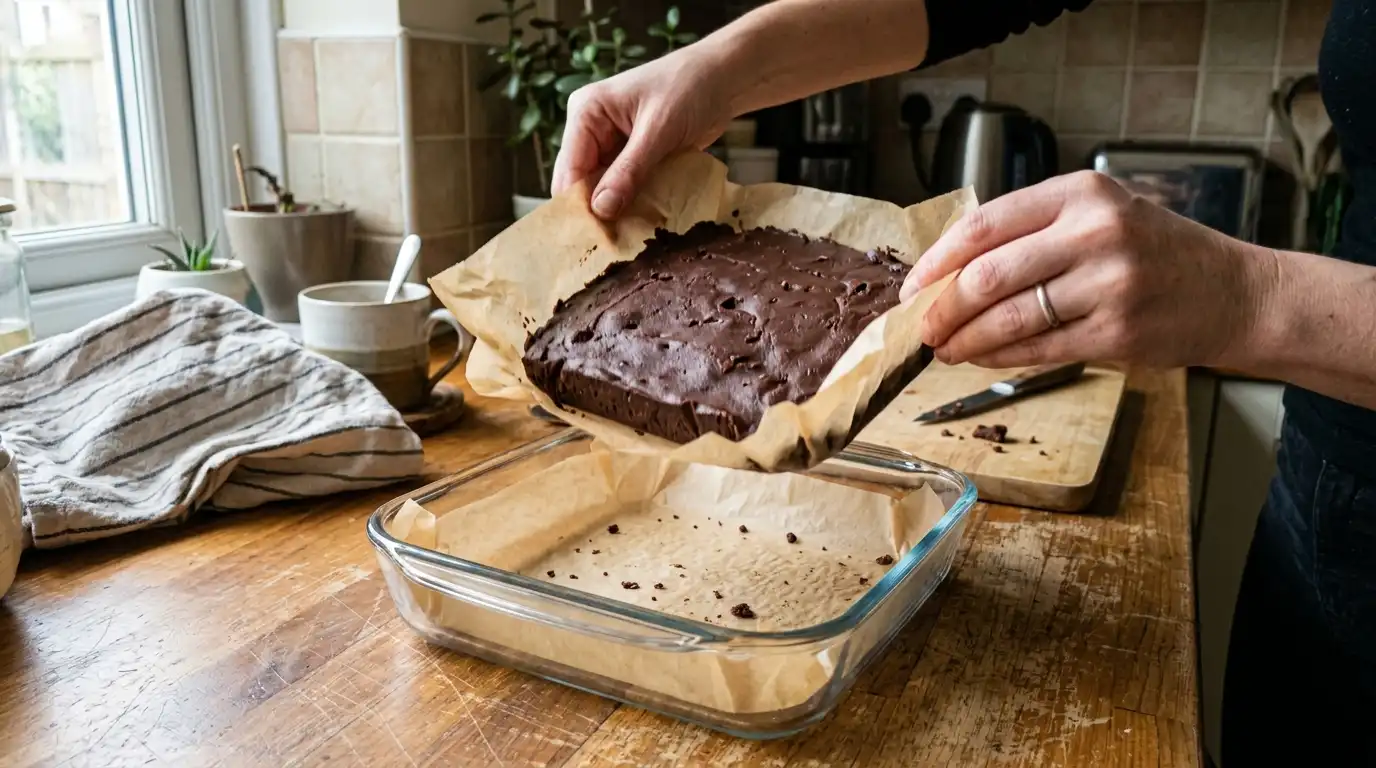
For the cleanest release, leave parchment overhang on two sides of the pan. This lets you lift the whole slab of fudge out before slicing.
Why Fudge Sticks
Fudge sticks when the sugar mixture is too soft, the pan is not lined, the fudge has too much moisture, or it has not cooled long enough. It can also stick to the knife if you cut it while warm or use a dull blade.
The goal is simple: give the fudge a nonstick surface, cook it to the right stage, and let it firm before handling. That is the basic formula for how to make fudge that doesn’t stick consistently.
1. Line the Pan with Parchment Paper
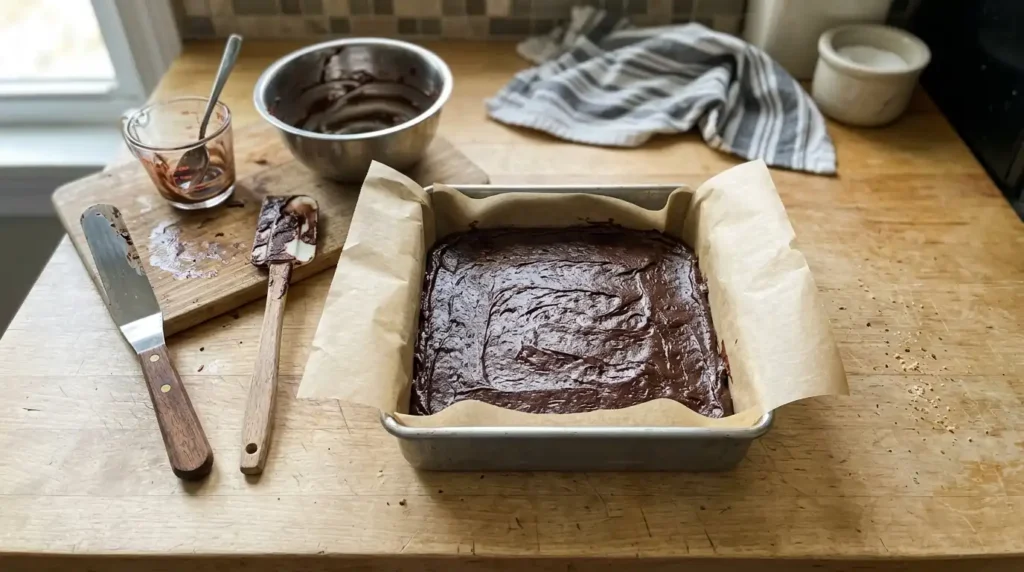
The easiest way to stop fudge from sticking to the pan is to line the pan with parchment paper. When learning how to make fudge that doesn’t stick, parchment is more reliable than greasing the pan alone. Greasing the pan helps a little, but parchment gives you a clean lift and protects the sides.
Use a sheet of parchment that covers the bottom and goes up two sides of the pan. Leave extra parchment hanging over the edges so you can lift the fudge out after it sets. This is the simplest step in how to make fudge that doesn’t stick at home.
Easy fix: Lightly grease the pan first, press in the parchment, then lightly grease the parchment. This keeps the paper from sliding while you pour the fudge.
2. Use a Heavy-Bottomed Saucepan
A thin pan can scorch fudge or make the sugar cook unevenly. Scorched spots become sticky, grainy, or hard to scrape from the bottom.
A heavy-bottomed saucepan spreads heat more evenly and gives you better control while the sugar dissolves and the mixture boils. For how to make fudge that doesn’t stick, even heat is just as important as lining the pan.
Easy fix: Use a medium or large heavy-bottomed pan and keep the heat at medium. Avoid rushing fudge over very high heat.
3. Cook Fudge to the Right Temperature
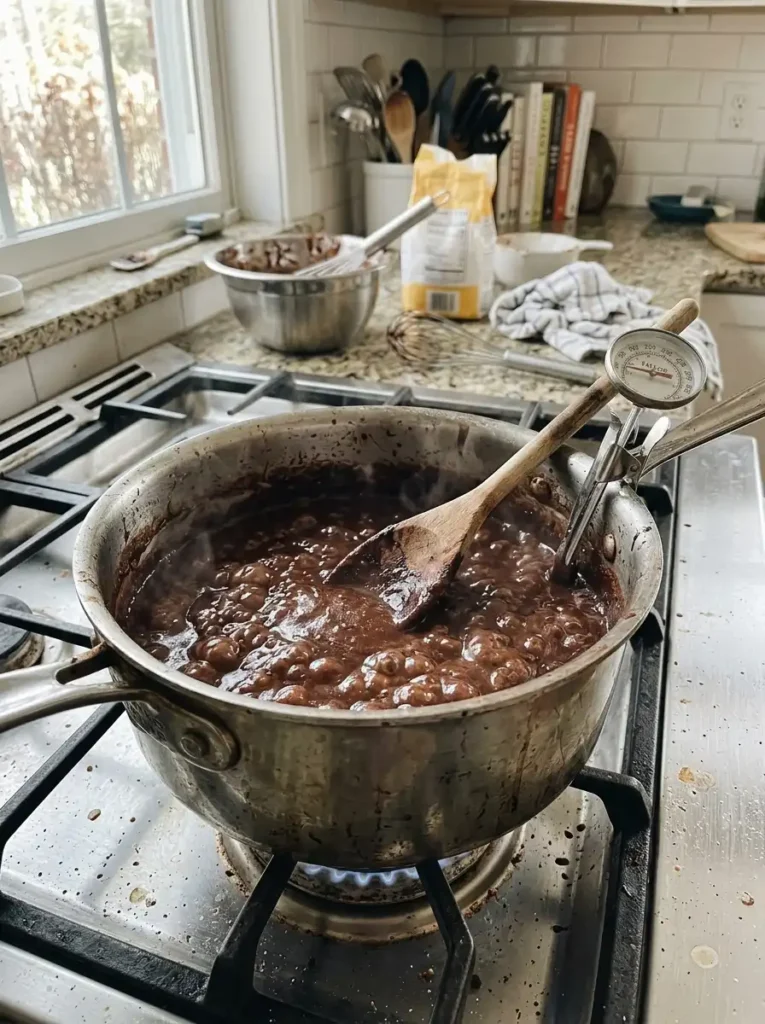
Undercooked fudge is one of the biggest reasons fudge stays sticky. A key part of how to make fudge that doesn’t stick is cooking the mixture long enough to set properly. If the mixture does not reach the right stage, it will not firm properly after cooling.
Most traditional fudge needs to reach the soft-ball stage, usually around 234°F to 240°F (112°C to 116°C), depending on the recipe.
Easy fix: Use a candy thermometer. Clip it to the pan and make sure the tip sits in the mixture without touching the bottom of the pan. For beginners, a thermometer is the safest tool for how to make fudge that doesn’t stick or stay soft.
4. Dissolve the Sugar Fully
Sugar crystals that do not dissolve can make fudge grainy, sticky, or uneven. Stirring before the boil helps dissolve the sugar, but stirring too much after the boil can encourage crystals.
Easy fix: Stir gently while the sugar dissolves. Once the mixture reaches a steady boil, follow your recipe carefully. Some fudge recipes say not to stir during boiling; others use sweetened condensed milk and are more forgiving.
For more beginner baking and candy-making basics, see these baking tips.
5. Let the Fudge Cool Before Cutting
Warm fudge sticks to the knife and smears instead of slicing cleanly. If you are learning how to make fudge that doesn’t stick during cutting, cooling time matters as much as the recipe. Even if the top looks set, the center may still be soft.
Let the fudge cool at room temperature first, then chill it if the recipe allows. Cutting too soon is one of the easiest ways to ruin clean squares.
Easy fix: Let fudge cool fully before slicing. If it still feels soft, refrigerate it for 1 to 2 hours before cutting.
6. Use a Warm Sharp Knife
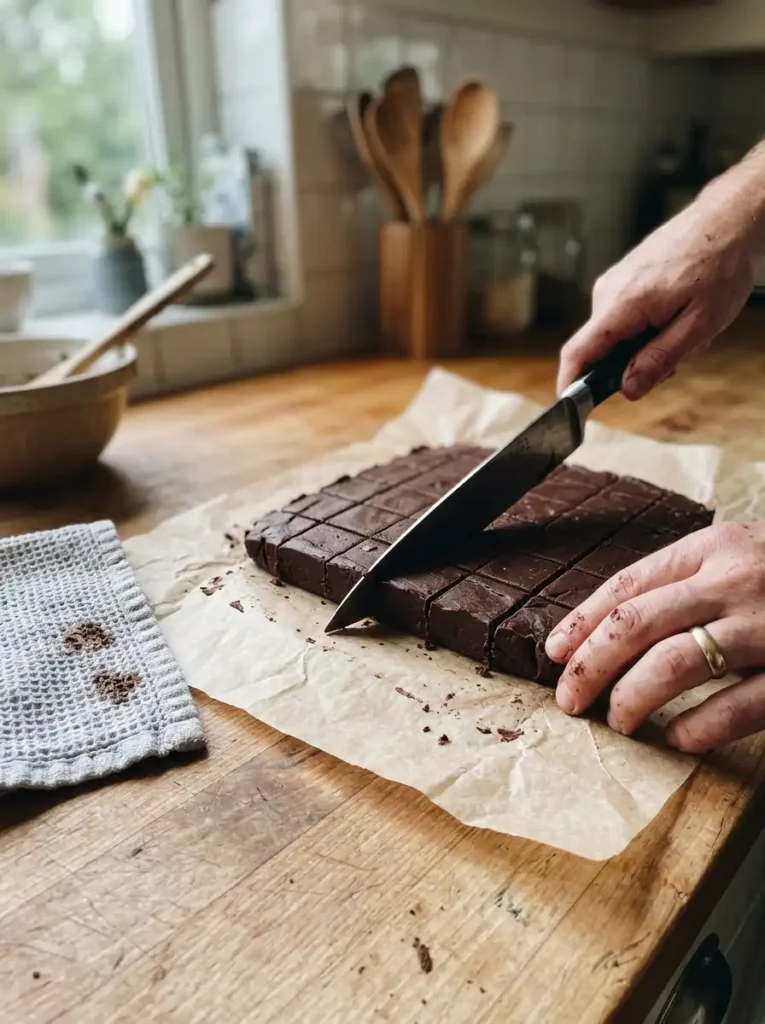
Fudge sticks to a dull or cold knife because the blade drags through the soft candy. A warm knife glides more cleanly and gives better edges.
Easy fix: Dip a sharp knife in hot water, wipe it dry, then cut one line. Wipe the knife clean between cuts. Repeat until all squares are sliced.
This same clean-slice method works well for chilled desserts like lemon cheesecake and chocolate bars.
7. Chill Sticky Fudge Before Handling
If your fudge is set but still slightly tacky, chilling can make it easier to lift, cut, and store. This does not fix undercooked fudge completely, but it can help with slightly soft batches.
Easy fix: Chill the fudge for 1 to 2 hours before cutting. If it is still too sticky to handle, it may need to be recooked or used as a topping. Chilling is a helpful backup step in how to make fudge that doesn’t stick after it sets.
How to Keep Fudge from Sticking to the Knife
To keep fudge from sticking to the knife, chill the fudge first, use a sharp blade, warm the knife with hot water, wipe it dry, and clean the knife between cuts. This is the cleanest cutting method for how to make fudge that doesn’t stick after it has set. Do not saw back and forth. Press down in one clean motion.
If the fudge smears, it is too warm or too soft. Chill it longer before trying again. This small step matters when learning how to make fudge that doesn’t stick to the knife.
Why Is My Fudge Sticky After It Sets?
Fudge is sticky after it sets when it was undercooked, had too much liquid, did not cool long enough, or was stored in a warm room. Humidity can also make fudge feel tacky on the surface.
If the fudge is only slightly sticky, refrigerate it. If it is very soft and will not hold shape, it was probably undercooked. When troubleshooting how to make fudge that doesn’t stick, separate surface stickiness from fudge that never set properly.
Can You Fix Sticky Fudge?
Yes, you can often fix sticky fudge. If it is only a little tacky, chill it longer. If it is very soft, scrape it back into a saucepan, add a small splash of milk or cream if needed, and recook it to the correct temperature.
If the texture still does not set, do not throw it away. Use sticky fudge as an ice cream topping, brownie swirl, cookie filling, or dessert sauce.
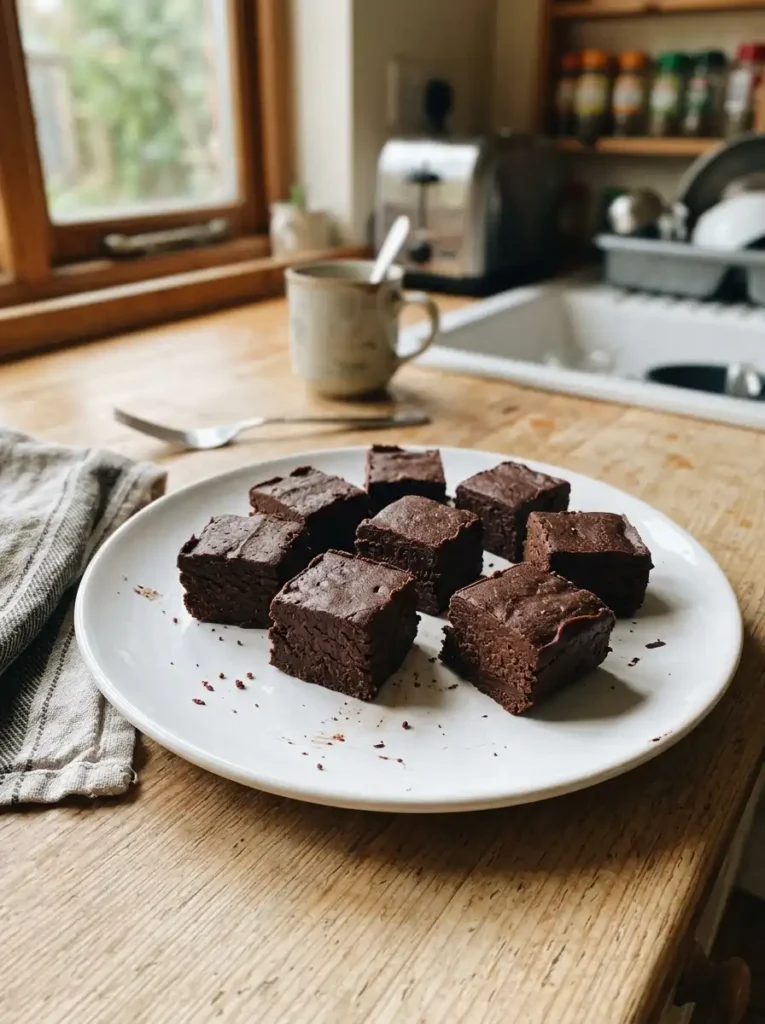
Quick Troubleshooting Chart
| Problem | Likely Cause | Best Fix |
|---|---|---|
| Fudge sticks to pan | Pan was not lined | Use parchment with overhang. |
| Fudge sticks to knife | Cut while warm | Chill and use a warm sharp knife. |
| Fudge is sticky after setting | Undercooked mixture | Recook to soft-ball stage. |
| Fudge is grainy and sticky | Sugar crystals formed | Dissolve sugar fully and avoid over-stirring. |
| Fudge scorched on bottom | Pan too thin or heat too high | Use a heavy-bottomed pan. |
| Fudge smears when sliced | Not cooled enough | Chill 1 to 2 hours before cutting. |
FAQ
What is the easiest way to make fudge that doesn’t stick?
The easiest way for how to make fudge that doesn’t stick is to line the pan with parchment paper, cook the fudge to the correct temperature, cool it fully, and cut it with a warm sharp knife.
How do you stop fudge from sticking to the pan?
Line the pan with parchment paper and leave overhang on two sides. After the fudge sets, lift it out with the parchment before slicing.
Should I use foil or parchment paper for fudge?
Parchment paper is usually better because it releases more cleanly. Foil can work if lightly greased, but it may wrinkle and stick to soft fudge.
Why does my fudge stick to the knife?
Fudge sticks to the knife when it is too warm, too soft, or cut with a dull blade. Chill it first and cut with a warm sharp knife.
Should fudge be refrigerated before cutting?
Fudge does not always need refrigeration, but chilling for 1 to 2 hours can make soft fudge easier to cut cleanly.
Can undercooked fudge be fixed?
Yes. Undercooked fudge can often be recooked to the correct temperature. If it still does not set, use it as a topping or filling.
Why is my fudge sticky on top?
Fudge can become sticky on top from humidity, warmth, or too much moisture in the recipe. Store it in an airtight container in a cool place.