Cake Flour: What It Is, How to Make It, and the Best Substitutes
Quick answer: Cake flour is a finely milled, low-protein wheat flour (about 7–9% protein), usually bleached. Less protein means less gluten, which is why cakes baked with it come out tender, light, and finely crumbed. Out of it? For every 1 cup, use 1 cup all-purpose flour minus 2 tablespoons, plus 2 tablespoons of cornstarch, sifted twice.
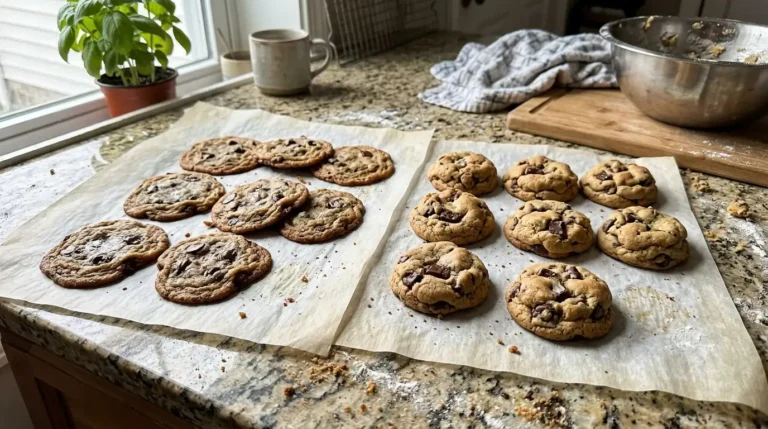
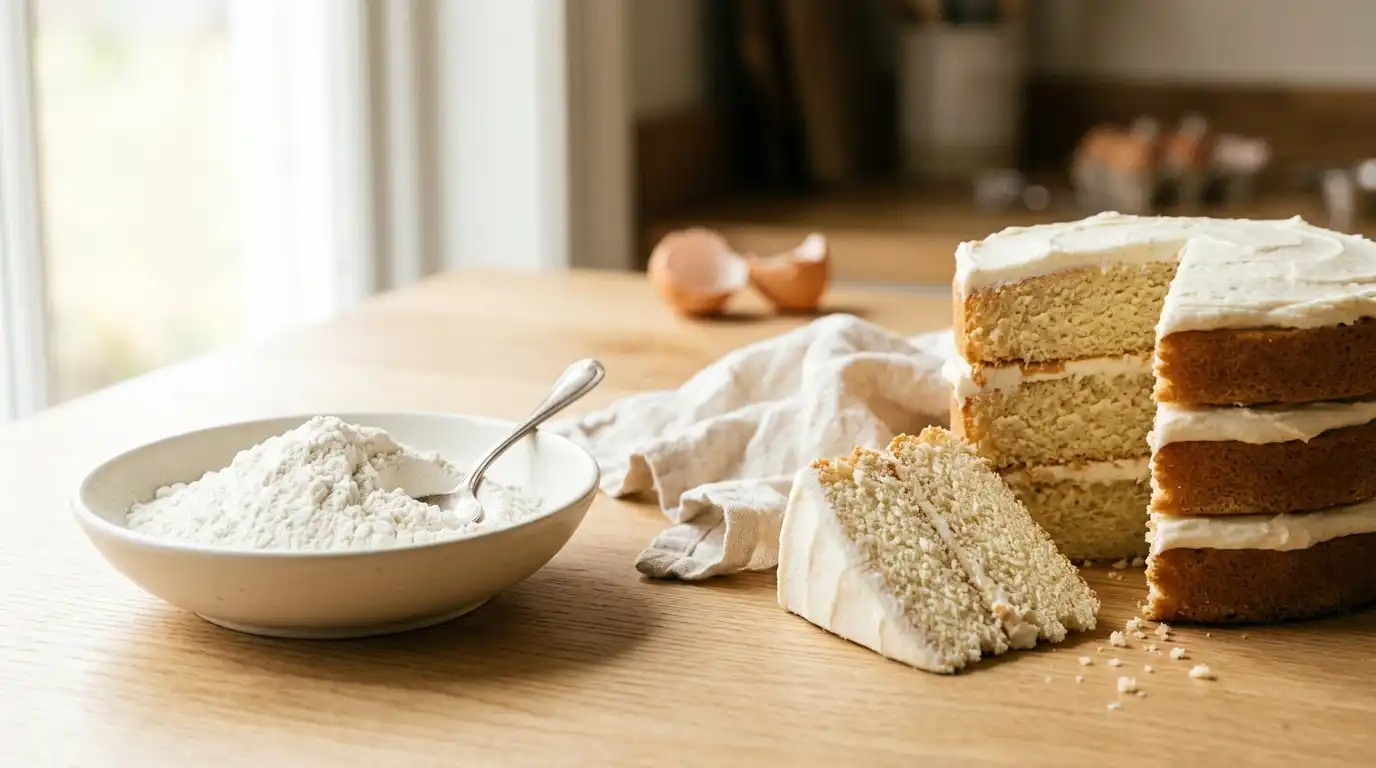
Bake two identical vanilla cakes — one with all-purpose, one with cake flour — and the difference is obvious at the first bite: the second is softer, lighter, and finer. Here’s why that happens, when it actually matters, and how to get the same result without a special trip to the store.
What Is Cake Flour?
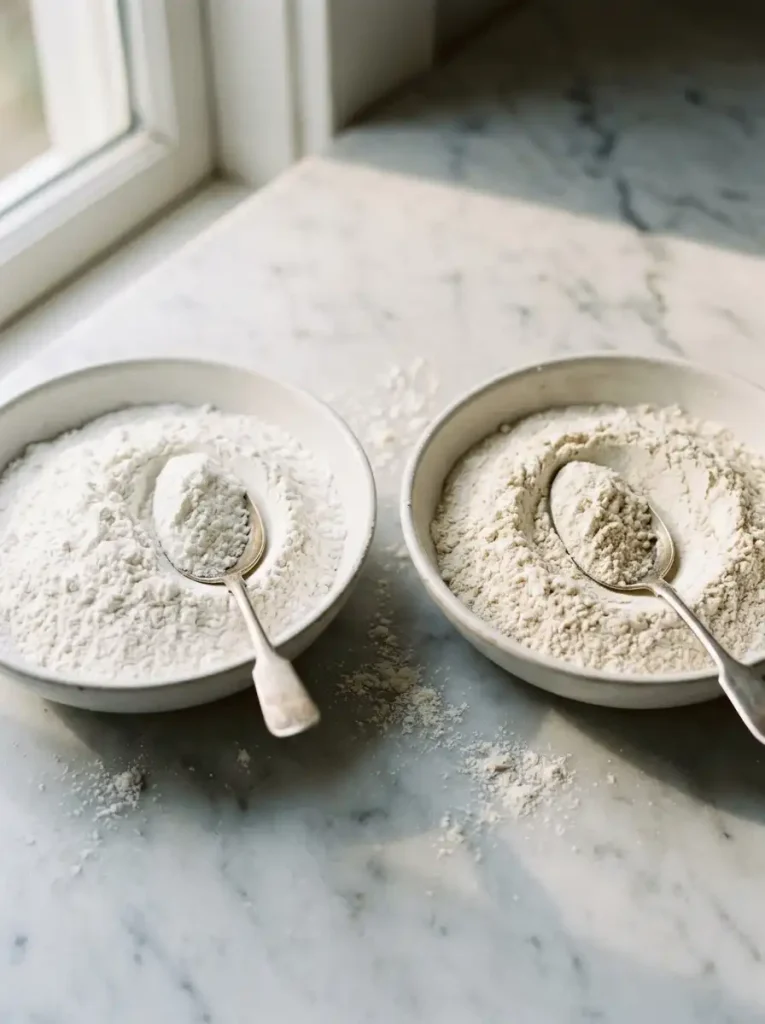
Cake flour is made from soft wheat, milled extra fine, and in most brands bleached with chlorine. That bleaching lowers the pH, which helps the starch set faster and gives cakes a whiter, tighter crumb. It’s the reason a box of this behaves so differently from the all-purpose bag in your cupboard.
The protein numbers tell the whole story:
| Flour | Protein | Best for |
|---|---|---|
| Cake flour | 7–9% | Sponge cakes, chiffon, angel food, layer cakes, cupcakes |
| Pastry flour | 8–9% | Pie crusts, tarts, tender cookies |
| All-purpose flour | 10–12% | Everything — cookies, quick breads, most cakes |
| Bread flour | 12–14% | Yeast breads that need chew and structure |
What cake flour does in a recipe: less gluten means a weaker structure, so the batter sets with more steam and air trapped inside. The result is a taller crumb, a softer touch, and a lighter slice. The trade-off? Use it where you need strength — bread, pizza, chewy cookies — and the structure collapses.
Do You Actually Need Cake Flour?
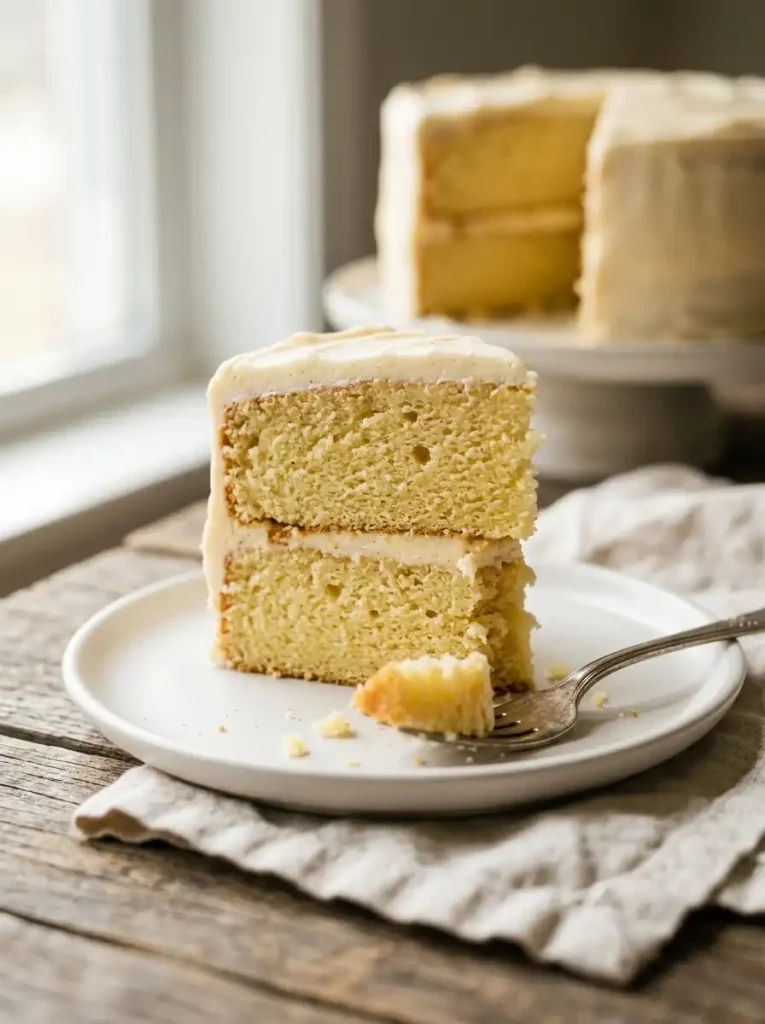
Honestly, it depends on the cake:
- Yes for delicate, high-sugar bakes: vanilla layers, chiffon, angel food, sponge, and light cupcakes like these lemon raspberry cupcakes.
- No for oil-based and chocolate cakes, banana bakes (like this banana cake with cream cheese frosting), bundts such as this chocolate chip bundt cake, or anything dense and fudgy like red velvet brownies.
- Never for yeast breads or pizza dough.
- Pound cake sits in the middle: this flour gives a finer crumb, all-purpose gives more structure. Either works — pick based on how soft you want the slice.
How to Make Cake Flour at Home
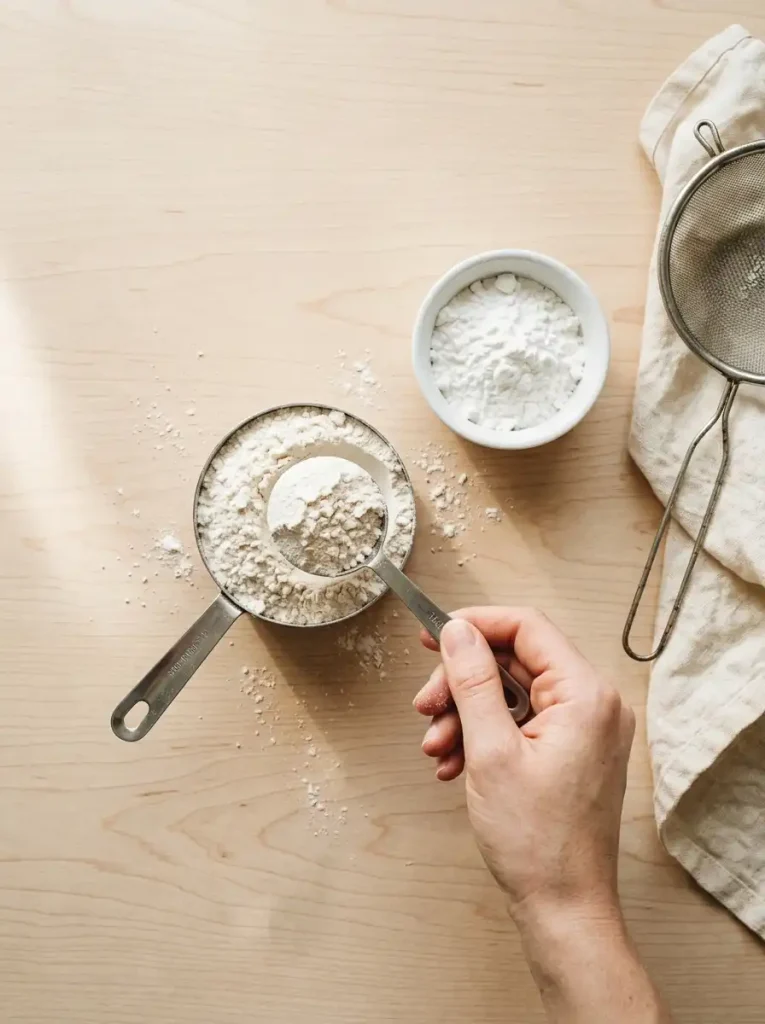
This is the trick that made the internet fall in love with the substitution. Homemade cake flour works because cornstarch dilutes the gluten-forming protein and adds tenderness:
- Measure 1 cup all-purpose flour (120 g).
- Remove 2 tablespoons (about 16 g).
- Add 2 tablespoons of cornstarch (about 16 g).
- Sift together twice — not optional. Double sifting mimics the ultra-fine texture and distributes the starch evenly.
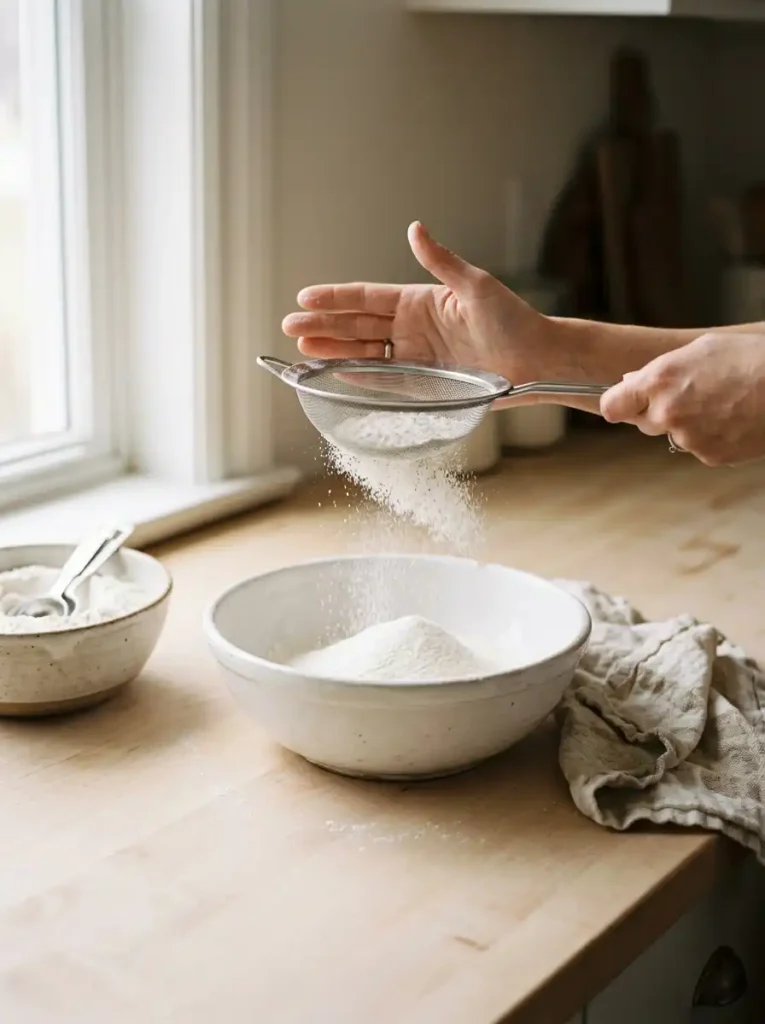
That brings the effective protein from roughly 11% down to about 8% — almost exactly where the store-bought kind sits. For a bigger batch, mix 1¾ cups AP flour + ¼ cup cornstarch and keep it in a jar.
By weight: 104 g all-purpose flour + 16 g cornstarch = 120 g of homemade cake flour.
Why cornstarch? You can’t remove protein at home — but you can add starch to water it down. Cornstarch also absorbs moisture and interferes with gluten development, so the cake stays tender.
The Best Cake Flour Substitutes
Mid-recipe, empty-handed and no cake flour in sight? Here’s the exact order of preference:
| Substitute | How much to use | Result |
|---|---|---|
| AP flour + cornstarch | 1 cup minus 2 tbsp + 2 tbsp cornstarch | ★★★★★ Closest match |
| Pastry flour | 1 : 1 | ★★★★ More structure, similar tenderness |
| AP flour alone | 1 : 1 | ★★★ Works, denser crumb |
| Italian 00 flour | 1 : 1 | ★★★ Silky, but higher protein — not a real swap |
| Self-rising flour | ⛔ Don’t | ⛔ Already has baking powder + salt — wrecks the recipe |
| Bread flour | ⛔ Don’t | ⛔ Too much protein; the cake turns rubbery |
In the UK and Europe, it isn’t a standard shelf item. Look for sponge flour or use the plain-flour-plus-cornstarch method above — that’s what most British bakers do.
Is Italian 00 Flour the Same?
No, and this trips up a lot of bakers. The “00” refers to how finely the grain is milled, not to protein content. A 00 flour can sit anywhere from 9% to 12% protein depending on the brand, so while it feels silky and makes beautiful pasta, it’s closer to pastry or all-purpose than to the soft-wheat kind. For sponge cakes, the real thing (or the cornstarch trick) still wins.
The Best Cake Flour Brands
Most cake flour brands sit in the same 7–9% protein window, but they behave differently because of bleaching and wheat type:
| Brand | Style | Best for |
|---|---|---|
| Swans Down | Bleached, soft wheat | The classic Southern choice — layer cakes, chiffon |
| Pillsbury Softasilk | Bleached, supermarket staple | Everyday cakes and cupcakes |
| King Arthur Unbleached Cake Flour | Unbleached, slightly higher protein (~10%) | Bakers who want more structure and no bleach |
| White Lily | Soft wheat, Southern favorite | Biscuits and tender cakes |
Bleached vs unbleached: the bleached kind creates a finer, brighter crumb because the lower pH helps the batter set faster. Unbleached versions work, but expect a slightly coarser texture and more browning.
How to Store Cake Flour
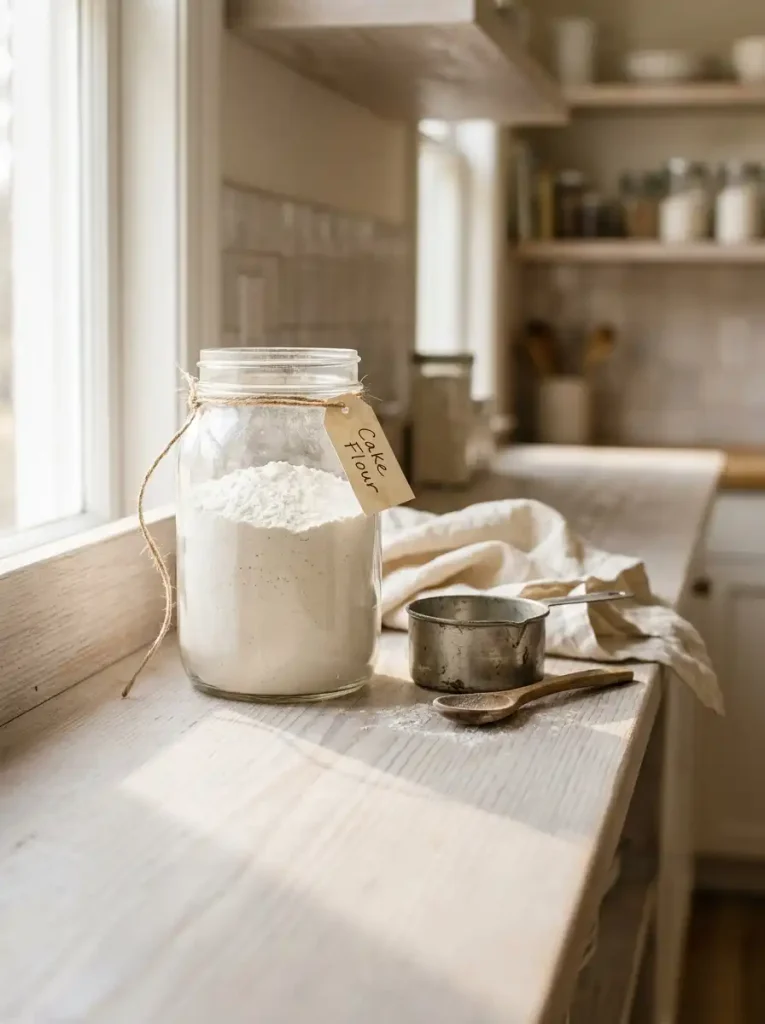
Keep cake flour airtight in a cool, dark cupboard for 6–8 months, or freeze it for up to a year. Flour absorbs odors and moisture fast, so don’t park it next to the coffee or above the stove.
FAQ
Is cake flour the same as all-purpose flour?
No. It has 7–9% protein and is finely milled (usually bleached), while all-purpose sits at 10–12%. That gap changes how much gluten forms — which is why cakes made with it are more tender.
What is the best cake flour substitute?
One cup of all-purpose flour minus 2 tablespoons, plus 2 tablespoons of cornstarch, sifted twice. It’s the closest match and works in every cake recipe.
How do I convert all-purpose flour into cake flour?
Use 104 g all-purpose plus 16 g cornstarch for every 120 g of cake flour the recipe calls for, and sift twice before using it.
Do I really need cake flour for cakes?
For light, high-sugar bakes — vanilla layers, chiffon, angel food — yes, the difference is noticeable. For dense cakes, banana bakes, and bundts, all-purpose is perfectly fine.
Is self-raising flour the same?
No. Self-raising is all-purpose flour with baking powder and salt added. Same protein as AP, plus leavening you didn’t account for.
Which brand is best in the US?
Swans Down and Pillsbury Softasilk are the classic bleached choices; King Arthur’s unbleached version is great if you’d rather skip chlorine treatment.
What happens if I swap them in a recipe?
Your cake gets softer and more tender but loses structure. In a delicate recipe that’s exactly what you want; in bread or a chewy cookie, it’s a problem.
Can I make a cake without it?
Yes — use the cornstarch substitution, or pick a recipe built for all-purpose flour, like an oil-based birthday cake or an upside-down cake. Both bake beautifully without it.
Final Thoughts
Cake flour isn’t a gimmick — it’s flour engineered for tenderness. Bake cakes often? Keep a box on hand for your lightest recipes. Bake once in a while? The cornstarch trick gets you 95% of the way there.
Either way, you now know what it does, when it matters, and exactly how to swap it. Next time you’re creaming butter and sugar, you’ll make the cake you actually meant to make.
For more fundamentals — measuring, pan sizes, oven temps — browse our baking tips guides. And if you’re baking gluten-free, note that this flour is a wheat product: use a tested blend instead, like the one in this gluten free birthday cake.