Cream Cheese Frosting Recipe (Smooth & Tangy)
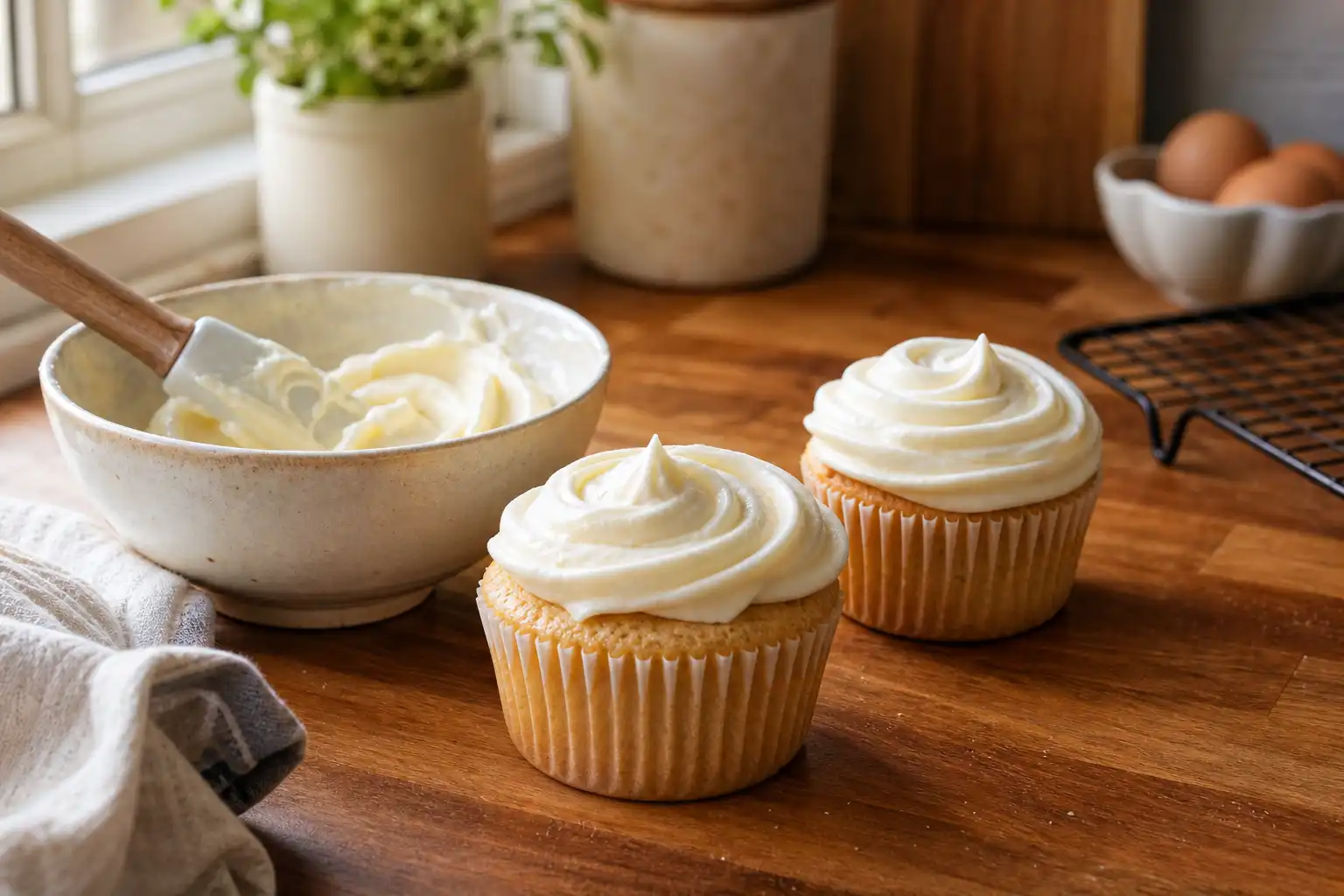
This cream cheese frosting recipe is designed to be smooth, tangy, and adjustable: start with less powdered sugar for spreading, then add a little more if you want firmer swirls. The draft makes about 3 cups, enough for roughly 12 cupcakes with generous swirls or about 24 with a lighter layer. Those amounts and the yield are estimates until the recipe is kitchen-tested.
Why this cream cheese frosting recipe is adjustable
Many frosting recipes give one fixed sugar amount, even though a soft spread for a sheet cake and a firmer swirl for a cupcake do not need the same texture. This version starts at 3 cups of powdered sugar and allows up to ½ cup more. Add that extra sugar gradually, because it also makes the frosting sweeter.
The formula uses twice as much cream cheese as butter by weight for a tangier flavor. Use full-fat, block-style cream cheese rather than a spreadable tub; the latter can contain extra moisture and make frosting softer. The ingredient ratio and texture guidance here are provisional and need a test batch.
Ingredients for this cream cheese frosting recipe
These ingredients are simple, but their temperature and form matter. The exact amounts for this cream cheese frosting recipe are in the card.
- Full-fat block cream cheese: The main flavor and structure. Soften it until easy to mix but still cool; don’t use whipped or spreadable cream cheese.
- Unsalted butter: Adds body and a rounder flavor. It should be pliable, not shiny, greasy, or melted.
- Powdered sugar: Start with 3 cups, then add up to ½ cup more for a firmer finish. Sift it if it is lumpy.
- Vanilla and fine salt: Vanilla rounds out the flavor; a small amount of salt balances the sweetness.
For another topping option, try our cream cheese glaze.
How to make this cream cheese frosting recipe
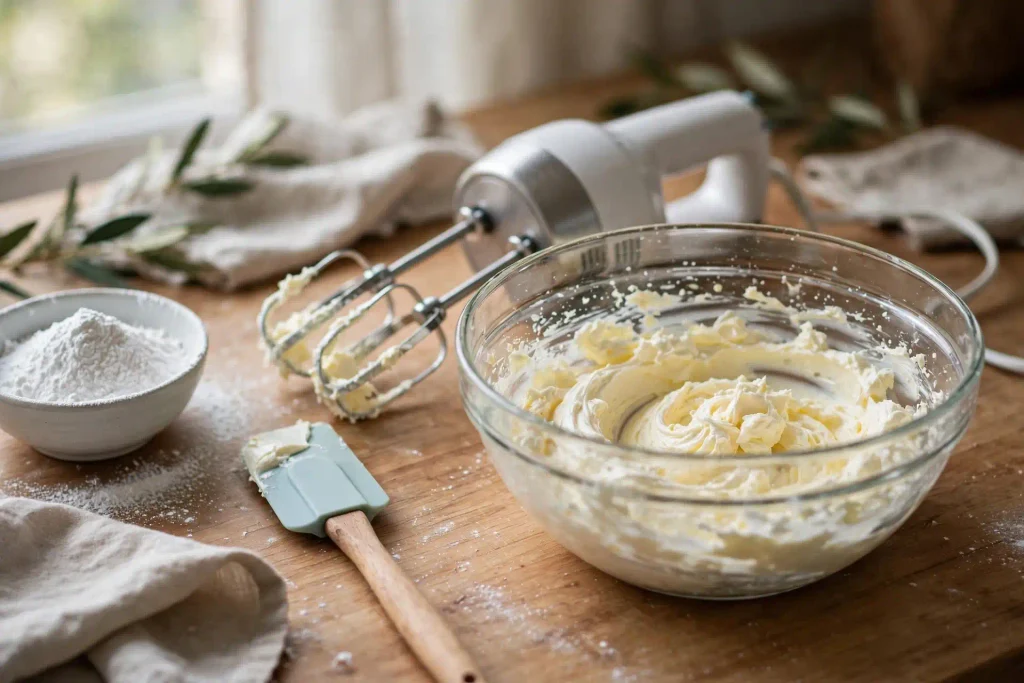
The mixing order in this cream cheese frosting recipe is designed to smooth the cream cheese first, then add the butter and sugar without whipping the mixture for too long.
- Bring the ingredients to cool room temperature. The cream cheese and butter should be soft enough to mix but not warm or greasy. Avoid microwaving them until soft.
- Smooth the cream cheese first. Beat it briefly on medium-low speed, then scrape the bowl. This helps prevent lumps without whipping in lots of air.
- Add the butter. Mix just until smooth and combined. Scrape the bowl again.
- Add the flavorings and sugar. Mix in the vanilla and salt. With the mixer on low, add 3 cups powdered sugar in a few additions. Stop to scrape the bowl; don’t beat the frosting for several minutes after it looks smooth.
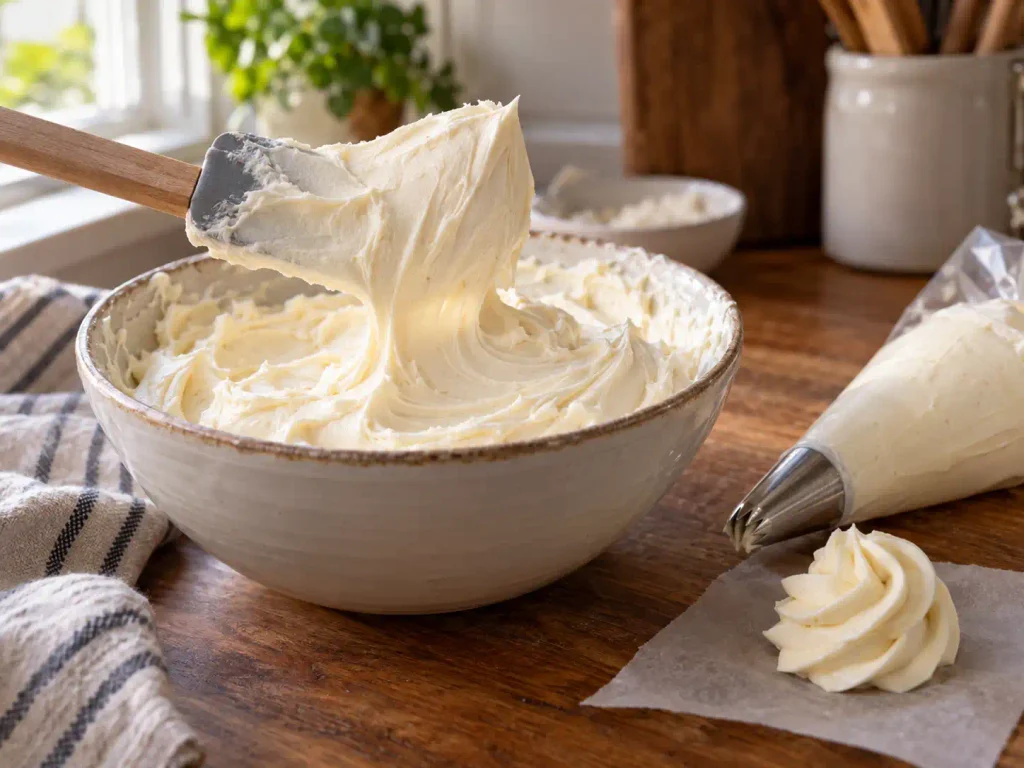
- Adjust only if needed. For a firmer swirl, add more powdered sugar 1–2 tablespoons at a time, up to the extra ½ cup. If the frosting is soft, chill it for 15–20 minutes before adding more sugar.
- Use or chill. Use the frosting right away for spreading. For piping, chill it briefly, then check the texture; it should be cool, not hard.
Adjust this cream cheese frosting recipe for the job
This cream cheese frosting recipe can be kept softer for spreading or firmed up for broad cupcake swirls. Add the extra sugar gradually; it also increases sweetness.
| Use | Powdered sugar | Expected texture in this draft |
|---|---|---|
| Spreading on a sheet cake or filling a cookie | 3 cups | Softer and less sweet; spread with an offset spatula |
| Frosting cupcakes with a broad swirl | 3¼ cups | A little firmer; chill before piping |
| Sharper or taller swirls | Up to 3½ cups | Firmer but sweeter; keep the frosting cool |
This is a starting guide, not a guarantee. Cream cheese temperature, brand, and how the sugar is measured can change the consistency. If you’re decorating a layer cake, our guide to how to frost a cake has more assembly tips.
Troubleshooting this cream cheese frosting recipe
If this cream cheese frosting recipe looks loose, chill it before adding more sugar; that avoids increasing sweetness when warmth is the actual problem.
| Problem | Likely cause | Try this |
|---|---|---|
| Too soft or runny | Warm ingredients, a warm room, overmixing, or tub-style cream cheese | Chill 15–20 minutes first. If it is still loose, add sifted powdered sugar 1 tablespoon at a time. |
| Lumpy | Cold cream cheese or unsifted sugar | Let the ingredients soften until cool and pliable; sift the sugar and scrape the bowl. |
| Too sweet | Too much powdered sugar for your taste | Next time, start with 3 cups and add only what the frosting needs. A pinch of salt can balance flavor but won’t remove sugar. |
| Too stiff | More sugar than needed or frosting chilled very firm | Let it sit briefly at cool room temperature and stir gently. Avoid adding liquid unless absolutely necessary; it can loosen the frosting. |
How to store this cream cheese frosting recipe safely
This cream cheese frosting recipe contains dairy, so transfer extra frosting to a clean, covered container and refrigerate promptly. Because it contains cream cheese, don’t leave it at room temperature for more than 2 hours (or 1 hour if the temperature is above 90°F/32°C). Keep the refrigerator at or below 40°F/4°C and use refrigerated leftovers within 3–4 days. For the general refrigeration and leftover guidance, see FoodSafety.gov’s food-safety tips.
To use chilled frosting, let it soften briefly at cool room temperature, then stir or beat on low just until spreadable. For a frosted cake, follow the same refrigeration guidance. Freeze extra frosting in an airtight container if you need longer storage; thaw it in the refrigerator and mix gently before using.
Frequently asked questions
Can I pipe this cream cheese frosting recipe?
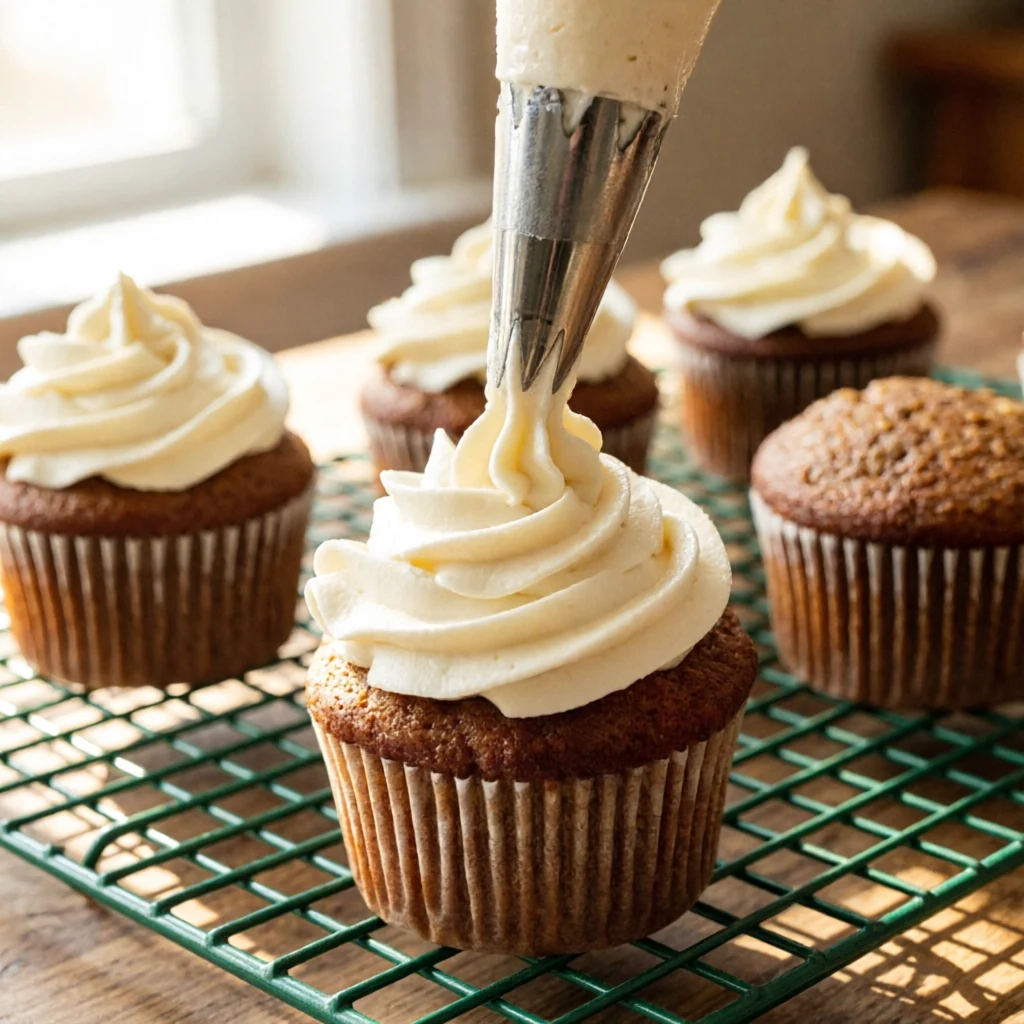
It is intended for spreading or simple swirls, not delicate decorations in a warm room. Start with the firmer sugar amount, chill the frosting and piping bag briefly, and keep the finished dessert refrigerated. Test the final consistency before using it for an important cake.
Can I use tub cream cheese in this cream cheese frosting recipe?
Block-style cream cheese is the better choice for this recipe. Tub or whipped cream cheese is softer and may contain extra moisture, so it can make the frosting loose.
How do I make this cream cheese frosting recipe less sweet?
Start with 3 cups of powdered sugar and taste before adding more. The frosting will be softer at the lower amount. Adding salt can balance sweetness, but it does not reduce the sugar.
Can I make this cream cheese frosting recipe ahead?
Yes. Cover and refrigerate it, then stir or mix briefly on low before using. Do not leave it on the counter for hours to soften; follow the refrigeration guidance above.
What to serve with this cream cheese frosting recipe
This cream cheese frosting recipe is a good match for our best banana cake with cream cheese frosting and can also be spread over red velvet brownies. If you want a different style, compare it with our buttercream frosting.
Bottom line
Good cream cheese frosting depends on the ingredients, temperature, and the texture you need. Start with block cream cheese and the lower sugar amount, mix only until smooth, and chill before adding extra sugar to fix softness. This draft formula still needs a real kitchen test before publication.
Cream Cheese Frosting
Ingredients
Equipment
Method
- Let the cream cheese and butter soften until pliable but still cool to the touch. Do not melt or microwave them until warm.
- Beat the cream cheese on medium-low speed just until smooth, stopping to scrape the bowl.
- Add the softened butter and mix just until smooth and combined. Do not whip for several minutes.
- Mix in the vanilla extract and fine salt.
- With the mixer on low, add 3 cups powdered sugar in a few additions. Scrape the bowl, then mix only until no dry pockets remain.
- For a firmer frosting, add more sifted powdered sugar 1 to 2 tablespoons at a time, up to 1/2 cup more. Stop when the texture suits the job; extra sugar also increases sweetness.
- Use immediately for spreading. For simple piping, chill the frosting for about 20 minutes, then check the texture. Keep the frosted dessert refrigerated.