Easy Vanilla Cake Pops Recipe From Scratch
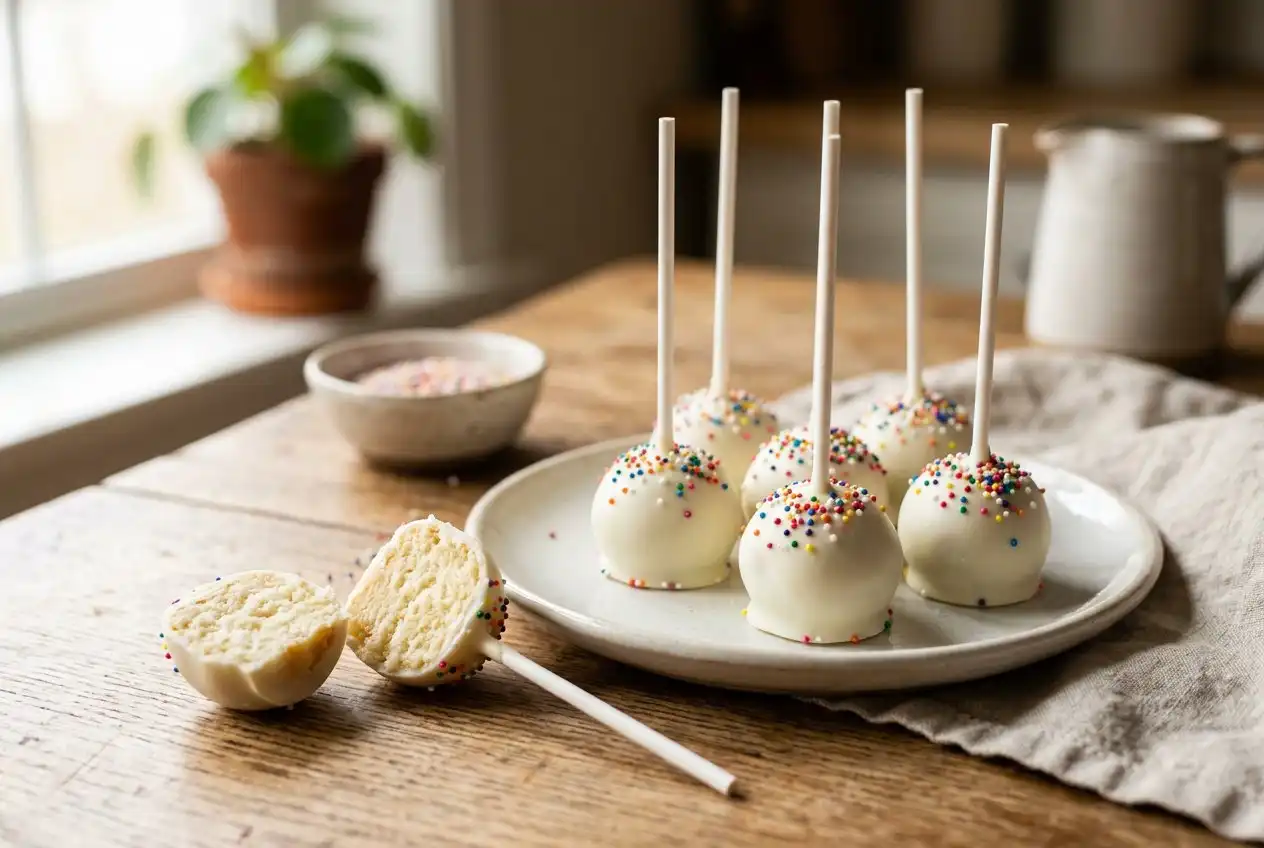
Homemade cake pops start with a fully cooled cake, fine crumbs and just enough buttercream to help the mixture hold together. This cake pops recipe bakes a vanilla cake from scratch, shapes it into bite-size balls and dips them in a white coating. The current recipe card yields about 40 pops when portioned at 25 grams each. Plan ahead for cooling and chilling; those stages help the centers hold their shape.
Why this cake pops recipe works
- Homemade vanilla cake gives the pops a classic flavor and a soft, even crumb.
- Buttercream is added gradually, so the mixture binds without becoming sticky or greasy.
- The sticks are anchored before dipping, helping the pops stay secure as the coating sets.
Ingredients for homemade cake pops
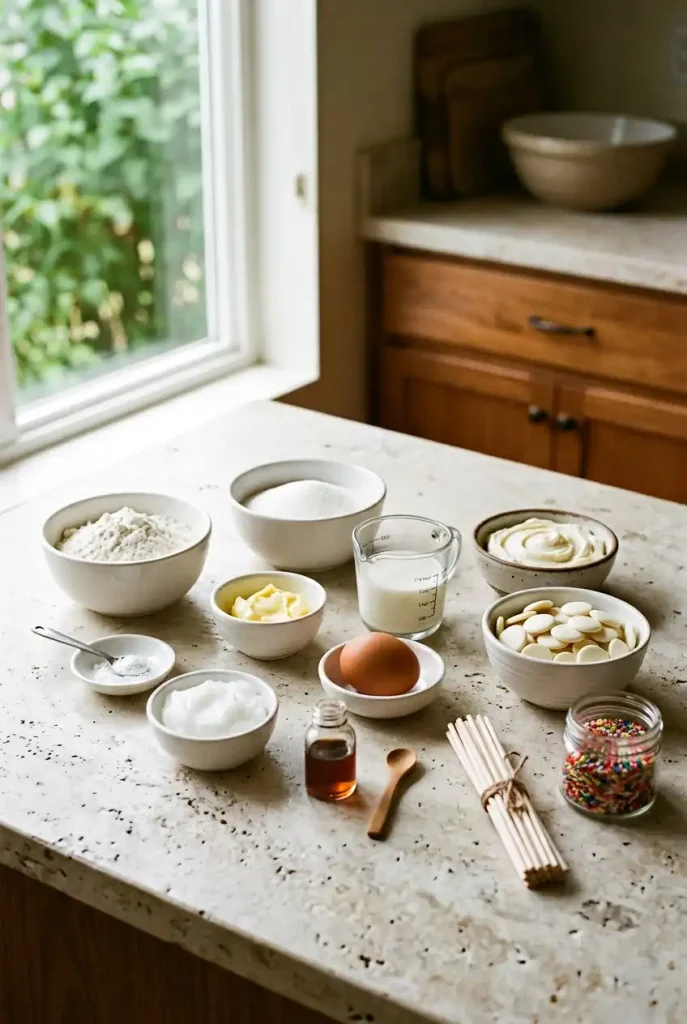
- Vanilla cake: All-purpose flour, sugar, butter, egg, milk, baking powder and vanilla make the base. Let the baked cake cool completely before crumbling it.
- Vanilla buttercream: The current recipe card calls for 1/2 cup prepared buttercream. Add it a spoonful at a time; you may not need every bit if your cake is moist. See our vanilla buttercream frosting for a separate frosting guide.
- White coating: The card lists 16 ounces of white chocolate or candy melts. Candy melts are convenient for dipping; real chocolate behaves differently and may need tempering to set well.
- Coconut oil: The live card lists 2 tablespoons for thinning. Add gradually and follow the directions for the coating you choose; products vary.
- Sticks and sprinkles: Use food-safe lollipop sticks. Add sprinkles while the coating is still wet.
For this cake pops recipe, the mixture is ready when a squeezed handful holds together without feeling wet or leaving a sticky layer on your hand.
How to make this cake pops recipe
- Bake the vanilla cake. Prepare the cake from the recipe-card ingredients. Bake in a greased 9-inch pan at 350°F (175°C) until done, about 30 minutes according to the current card. Cool completely before moving on.
- Crumble the cake. Break the cooled cake into a large bowl and rub out any large pieces. Fine, even crumbs make it easier to get a smooth mixture.
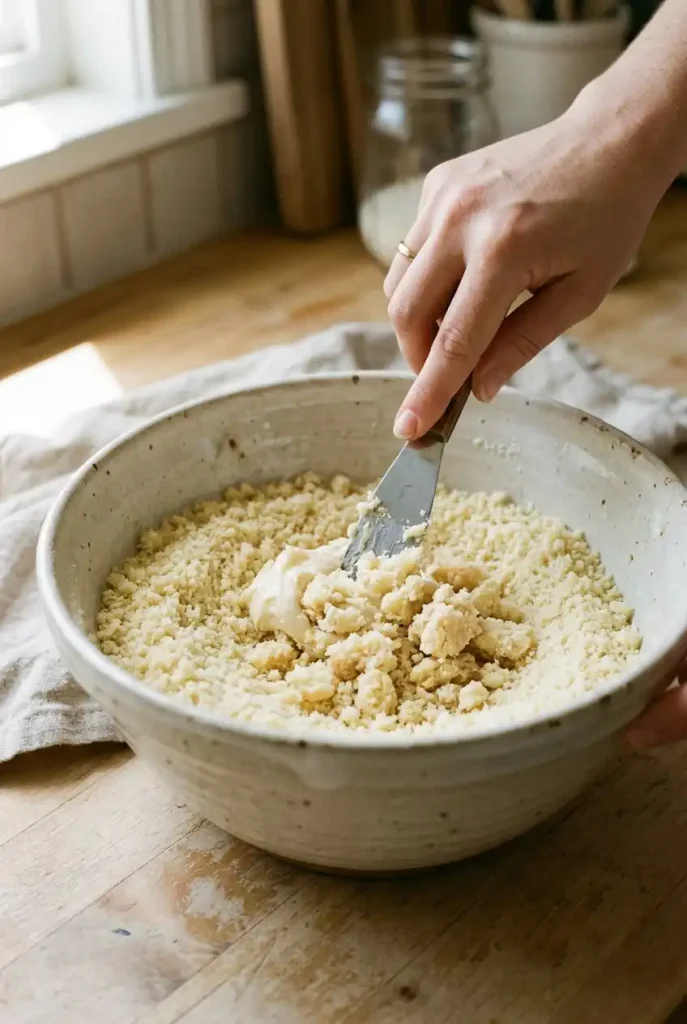
- Mix in the buttercream. Add it a spoonful at a time, pressing and stirring until the crumbs hold together when squeezed. Stop as soon as the mixture is cohesive; too much binder can make the centers heavy or greasy.
- Portion and roll. Weigh portions at about 25 grams to match the live recipe card, then roll them into even balls. Place them on a lined tray.
- Chill until firm. Cover and refrigerate the balls for at least 2 hours, as listed in the card. They should lift easily without losing their shape. Avoid freezing them solid before dipping.
- Anchor the sticks. Melt a little coating. Dip about 1/2 inch of each stick into it, insert the coated end halfway into a ball, and let the coating set for about 20 minutes.
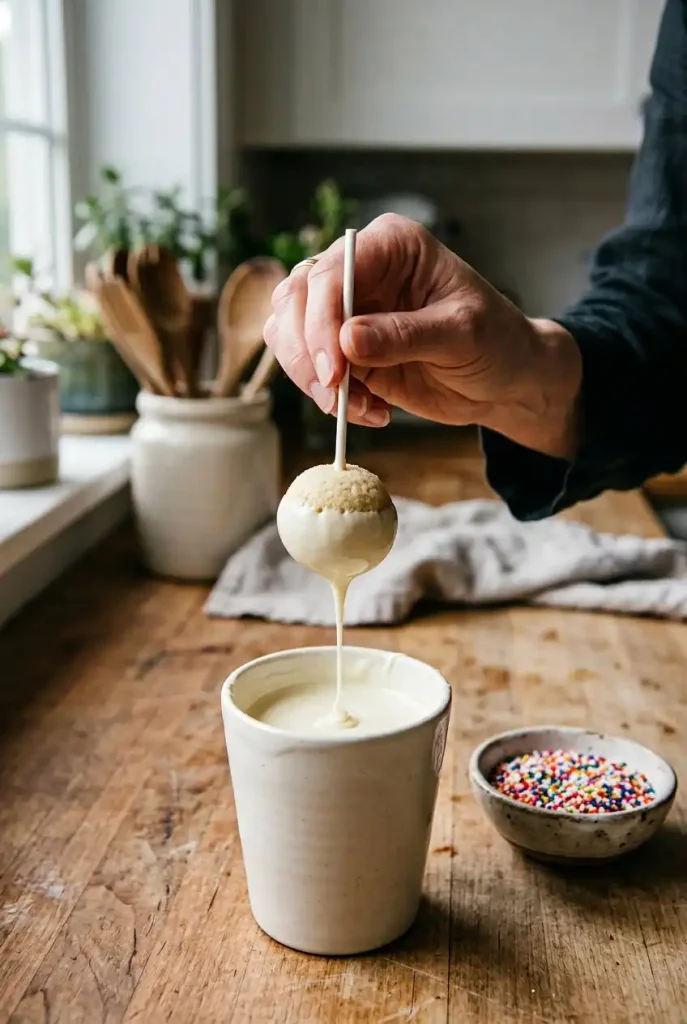
- Dip and decorate. Melt the remaining coating gently, stirring often and following its package directions. If using the coconut oil listed in the card, add it gradually until the coating flows in a thin ribbon. Dip each pop in one smooth motion, lift, and tap the stick lightly to remove excess. Add sprinkles before the shell sets.
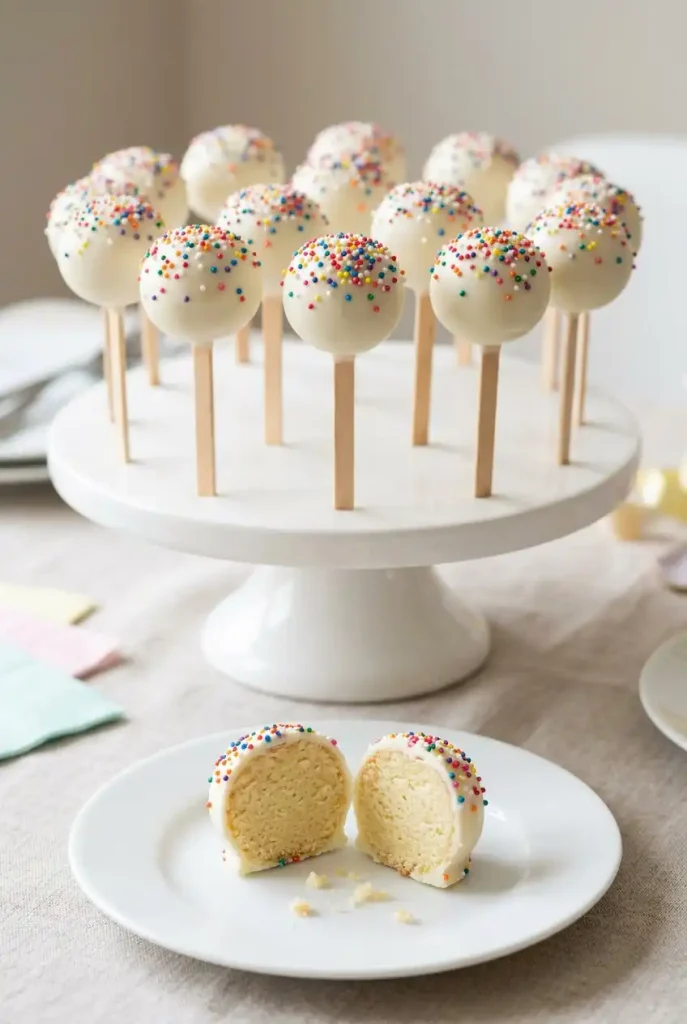
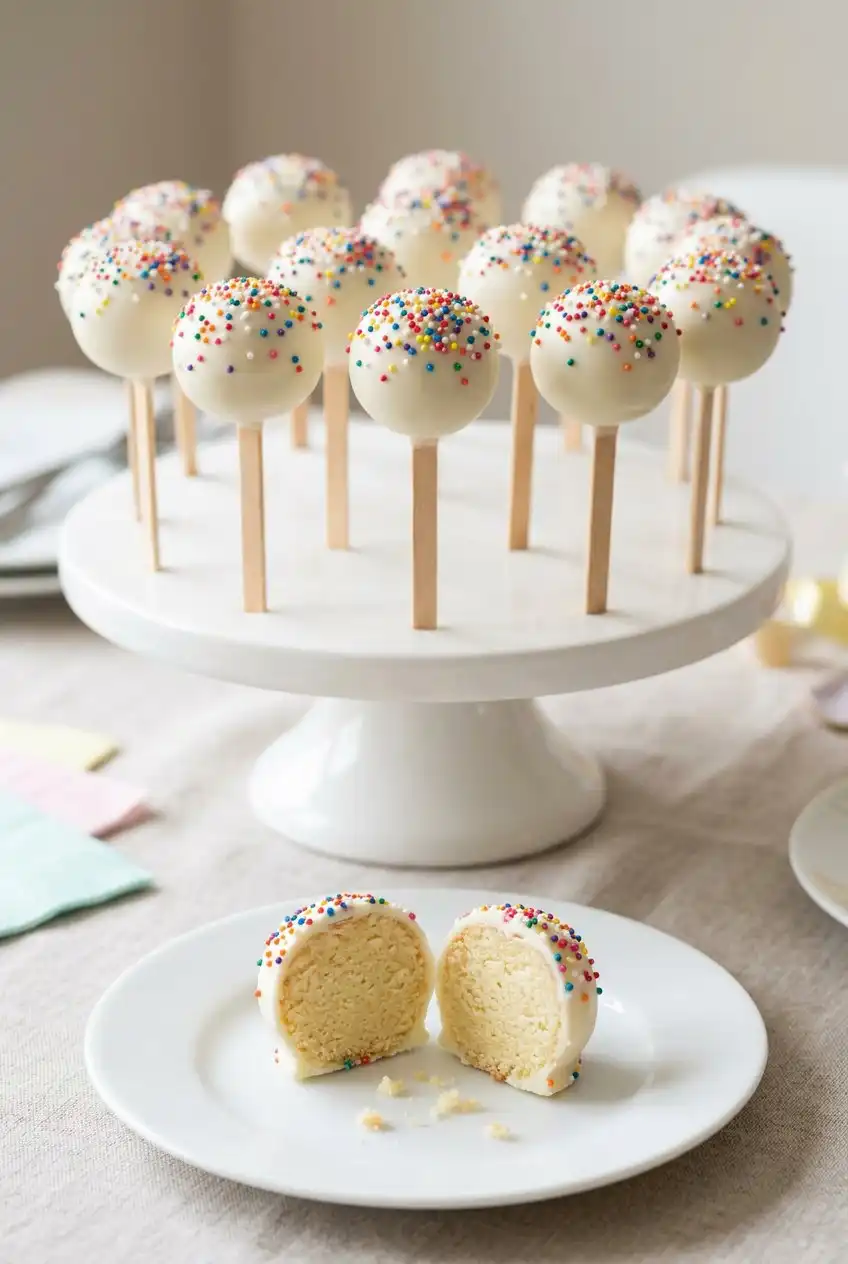
- Let the coating set. Stand the pops upright in a purpose-made cake-pop stand or another clean, food-safe holder. The live card says about 1 hour; setting time depends on the coating and room conditions.
Tips for smooth, sturdy cake pops
- Cool the cake completely; warm crumbs can make the mixture too soft.
- Add buttercream slowly and stop as soon as the mixture holds together.
- Keep portions even and modest. The current card uses 25-gram balls.
- Chill until firm, but do not dip frozen cake balls. Let very cold balls stand briefly while you prepare the coating to reduce the temperature difference.
- Use a deep, narrow cup for dipping. Keep water and steam away from the coating, and use only a thinning agent recommended for the product.
- Use a food-safe cake-pop stand rather than generic craft foam.
Troubleshooting this cake pops recipe
| Problem | Likely cause | What to try |
|---|---|---|
| Cake balls crumble | The cake is dry or needs a little more binder | Add buttercream a teaspoon at a time and test by squeezing. |
| Mixture feels sticky or greasy | Too much buttercream, or the cake was still warm | Chill briefly; next time add the binder more slowly and cool the cake fully. |
| Pops slide down the sticks | Balls are too large or soft, or the stick was not anchored | Use even portions, chill until firm, and let the dipped stick tip set first. |
| Coating cracks | The cake ball and coating may be at very different temperatures, or the coating was overheated | Do not dip frozen balls. Melt the coating gently and follow its package directions. |
| Coating is too thick | It may be overheated or need a compatible thinner | Stir and use only a thinner approved for that coating, in small increments. |
Candy melts or white chocolate?
Candy melts or confectionery coating are often simpler for a first batch because they are made for dipping and decorating. White chocolate can have a richer flavor, but it needs different handling and may require tempering for a firm finish. Follow the directions for the product you buy rather than treating every coating the same. The recipe card lists coconut oil, so test that combination with your chosen coating before making a large batch.
Make-ahead and storage
You can bake the cake ahead, cool it completely and wrap it well until ready to crumble. The shaped balls can also be made ahead and kept covered in the refrigerator before dipping. For the best appearance, finish the coating before the event and give it time to set.
Because this recipe uses buttercream and may include cream, keep finished pops covered and refrigerated unless the exact frosting has been confirmed shelf-stable. Keep perishable food out for no more than 2 hours, or 1 hour when the temperature is above 90°F (32°C); keep it chilled for a longer event. See FoodSafety.gov’s guidance for perishable foods. Bring chilled pops toward serving temperature while still covered to help limit condensation.
Frequently asked questions
What is the trick to this cake pops recipe?
Add buttercream gradually and stop as soon as a squeezed handful holds together. Then chill the balls until firm, anchor each stick with a little coating, and dip in coating that has been melted gently.
Can I use leftover cake in this cake pops recipe?
Yes, if it is plain, fresh cake without a perishable filling. Crumble it finely and add buttercream a little at a time. Leftover cake can be drier or moister than the cake in this recipe, so use the texture cue rather than an exact binder amount.
Why do cake pops crack after dipping?
A sharp temperature difference between a very cold cake ball and warm coating can contribute to cracking. Overheated or unsuitable coating can also cause problems. Chill the balls until firm, not frozen solid, and follow the coating’s package instructions.
How far ahead can I make this cake pops recipe?
Bake and cool the cake ahead, or shape the balls and keep them covered in the refrigerator before dipping. For a party, finish the coating in advance and store the pops safely according to the frosting and coating you used.
What flavor is best for cake pops?
Vanilla is a flexible starting point and pairs well with white coating. Chocolate or red velvet can also work, but treat them as separate variations: their moisture and binder needs may differ, so adjust the buttercream by texture rather than automatically using the same amount.
For another dipped party treat, try our chocolate-dipped Oreos.
Easy Vanilla Cake Pops From Scratch
Ingredients
Equipment
Method
- Preheat the oven to 350°F (175°C). Grease a 9-inch cake pan.
- Cream the room-temperature butter and granulated sugar until combined and lighter in texture. Beat in the egg and vanilla.
- Whisk the flour and baking powder together. Add the dry mixture to the butter mixture in portions, alternating with the milk, and mix just until the batter is combined.
- Spread the batter in the prepared pan. Bake for about 30 minutes, or until the center is baked through. Cool the cake completely on a rack.
- Crumble the cooled cake into fine, even crumbs in a large bowl. Break up any large pieces.
- Add the prepared vanilla buttercream one spoonful at a time, mixing and squeezing a little of the mixture after each addition. Stop as soon as it holds together without feeling sticky or greasy; the full 1/2 cup may not be needed.
- Portion the mixture into approximately 25 g pieces and roll into even balls. Place on a parchment-lined baking sheet.
- Cover and refrigerate the cake balls for at least 2 hours, until firm but not frozen solid.
- Melt a small amount of the coating gently. Dip about 1/2 inch of each lollipop stick into the coating, insert the coated end halfway into a cake ball, and let the anchor set for about 20 minutes.
- Melt the remaining coating according to the product directions. If the selected coating allows it, add the recipe’s coconut oil gradually until the coating flows smoothly; do not overheat.
- Dip each cake pop in one smooth motion, lift it out, and tap the stick lightly to remove excess coating. Add rainbow sprinkles while the coating is still wet.
- Stand the dipped pops upright in a purpose-made cake-pop stand or another clean, food-safe holder. Let the coating set fully; the live card estimates about 1 hour, but confirm the actual setting time with the chosen coating.