Easy Gluten Free Peanut Butter Cookies (Soft & Chewy)
These gluten free peanut butter cookies use a 1:1 flour blend for a classic peanut-butter cookie with a fork-pressed top. The goal is a lightly crisp edge and chewy center without the gritty or crumbly texture that can happen when gluten-free dough is too dry or under-rested.
This page covers two routes: the main recipe uses a 1:1 gluten-free baking blend, while a short flourless option points to our existing three-ingredient variation. If you need gluten free peanut butter cookies for someone with celiac disease, check ingredient labels and prevent cross-contact with shared bowls, pans, and utensils.
| Route | What to expect | Where to start |
|---|---|---|
| 1:1 gluten-free flour blend | More structure and a classic soft-centered cookie | Main recipe on this page |
| Flourless, three ingredients | Denser, peanut-forward cookies that are delicate while hot | Full method is linked in our existing peanut-butter cookie post |
Why these gluten free peanut butter cookies use a flour blend
A 1:1 gluten-free flour blend makes these gluten free peanut butter cookies closer to a traditional bakery-style cookie than a flourless version. It gives the dough enough structure for a thicker cookie, while peanut butter supplies the familiar rich flavor.
Gluten-free blends vary in starches and binders, so this gluten free peanut butter cookie recipe needs a short rest before baking. That gives the flour time to absorb moisture and helps reduce a gritty bite. Different brands can feel softer or firmer, so let the dough rest before judging its texture or adding extra flour.
| Main dough ingredient | Baker’s percentage (flour = 100%) |
|---|---|
| 1:1 gluten-free flour blend | 100% |
| Creamy peanut butter | 104% |
| Unsalted butter | 46% |
| Light brown sugar | 54% |
| Granulated sugar | 36% |
| Egg | 27% |
Ingredients that matter
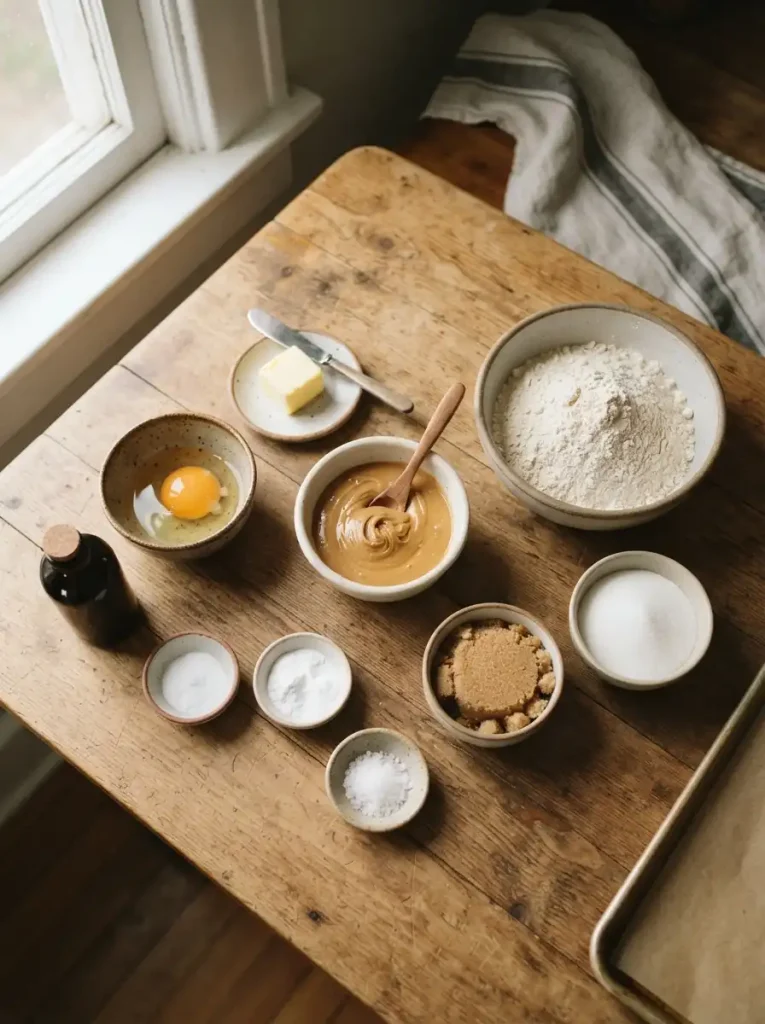
- 1:1 gluten-free flour blend: Use a baking blend intended to replace wheat flour cup-for-cup. This formula is designed for a blend that already contains xanthan gum; don’t add extra if it is listed among the ingredients.
- Creamy peanut butter: A conventional no-stir style is the starting point. Natural peanut butter can separate, changing the dough’s fat balance and making gluten free peanut butter cookies spread or crumble.
- Butter and sugars: Butter brings richness; brown sugar helps the centers stay chewy, while granulated sugar supports the edges and fork pattern.
- Egg and vanilla: The egg helps bind the dough. Vanilla rounds out the peanut flavor.
- Baking soda, baking powder, and salt: The leaveners help the cookies rise slightly; salt balances the sweetness.
For consistent gluten free peanut butter cookies, weigh the flour if you can. If you use cups, spoon the blend into the measuring cup and level it rather than packing it down. The key to dependable gluten free peanut butter cookies is controlling flour absorption, not adding extra flour before the dough rests.
How to make gluten free peanut butter cookies
- Prepare the pan. Heat the oven to 350°F and line a baking sheet with parchment. Use a light-colored pan for more even browning.
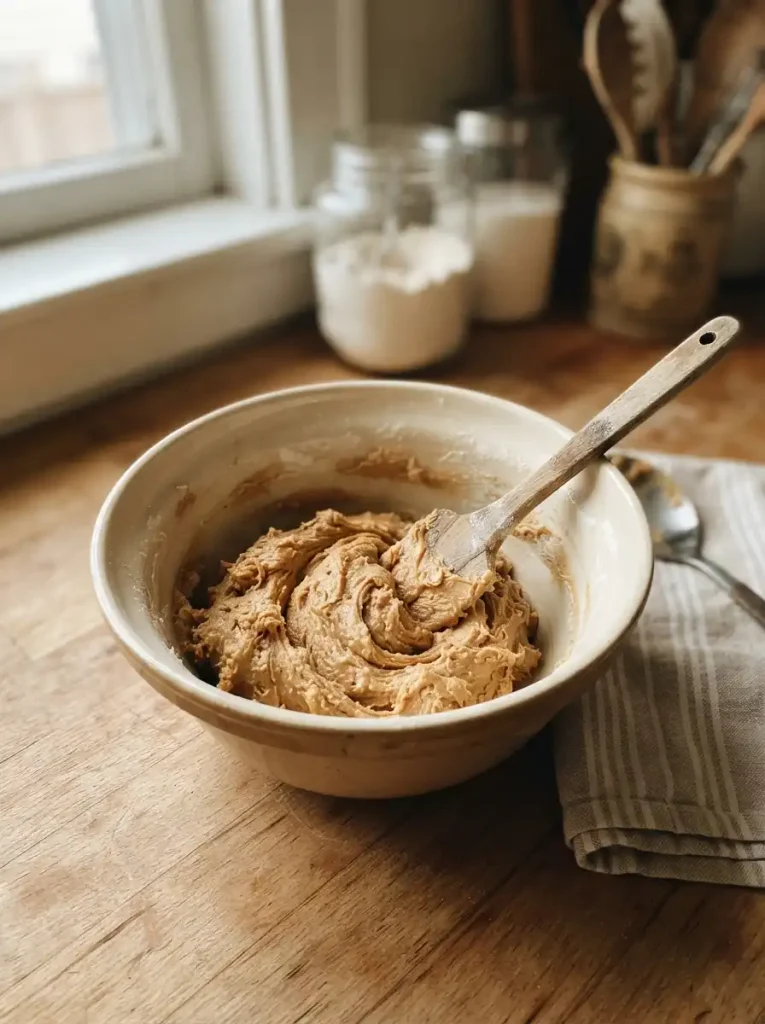
- Mix the wet ingredients. Stir the peanut butter, cooled melted butter, brown sugar, granulated sugar, egg, and vanilla until smooth. Don’t whip in excess air.
- Add the dry ingredients. In a second bowl, whisk the gluten-free blend, baking soda, baking powder, and salt. Fold the dry mixture into the peanut-butter mixture just until no dry streaks remain.
- Rest the dough. Cover and chill the dough for about 30 minutes. This pause helps the gluten-free flour absorb moisture and makes the dough easier to portion.
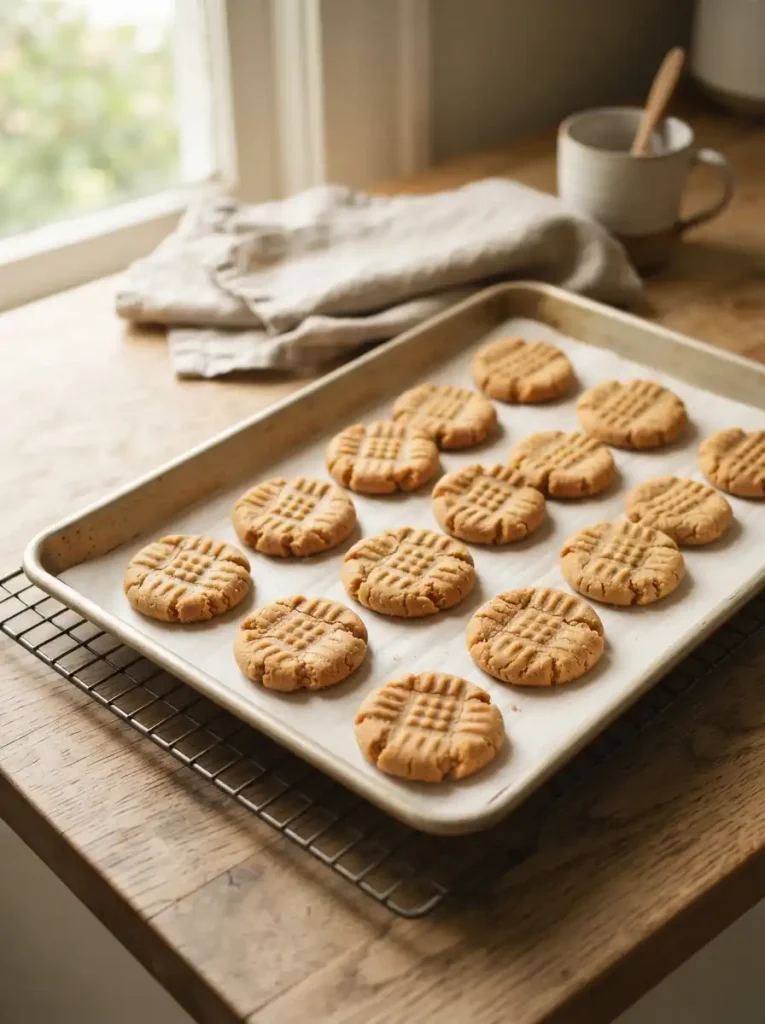
- Shape and mark. Scoop equal portions, roll them into balls, and set them apart on the sheet. Press each ball gently with a fork in a crosshatch pattern; don’t flatten it too thin.
- Bake and cool. Bake until the edges look set and the centers still look a little soft. Let the cookies rest on the pan before moving them; gluten free peanut butter cookies firm up as they cool.
If you want another peanut-butter bake, try our peanut butter jelly cookies. For a different gluten-free cookie, see our gluten-free shortbread cookies.
Want a flourless version?
For flourless gluten free peanut butter cookies, use the three-ingredient peanut-butter, sugar, and egg variation in our peanut butter chocolate chip cookie recipe. That page has the full flourless method; this article’s main recipe stays focused on the 1:1 flour-blend version so the two pages don’t duplicate the same full recipe.
Troubleshooting gluten free peanut butter cookies
- The dough feels dry or cracks: The flour may be packed into the cup, or the blend may absorb more liquid. Weigh it when possible and avoid adding extra flour before the dough has rested.
- The cookies taste gritty: Give the dough its full rest before baking. Some blends need more time to hydrate; don’t change the liquid or flour amount until you have tested the exact blend.
- The cookies spread too much: Check that the peanut butter isn’t oily or separated, and chill the dough before baking. Let the baking sheet cool before adding the next batch.
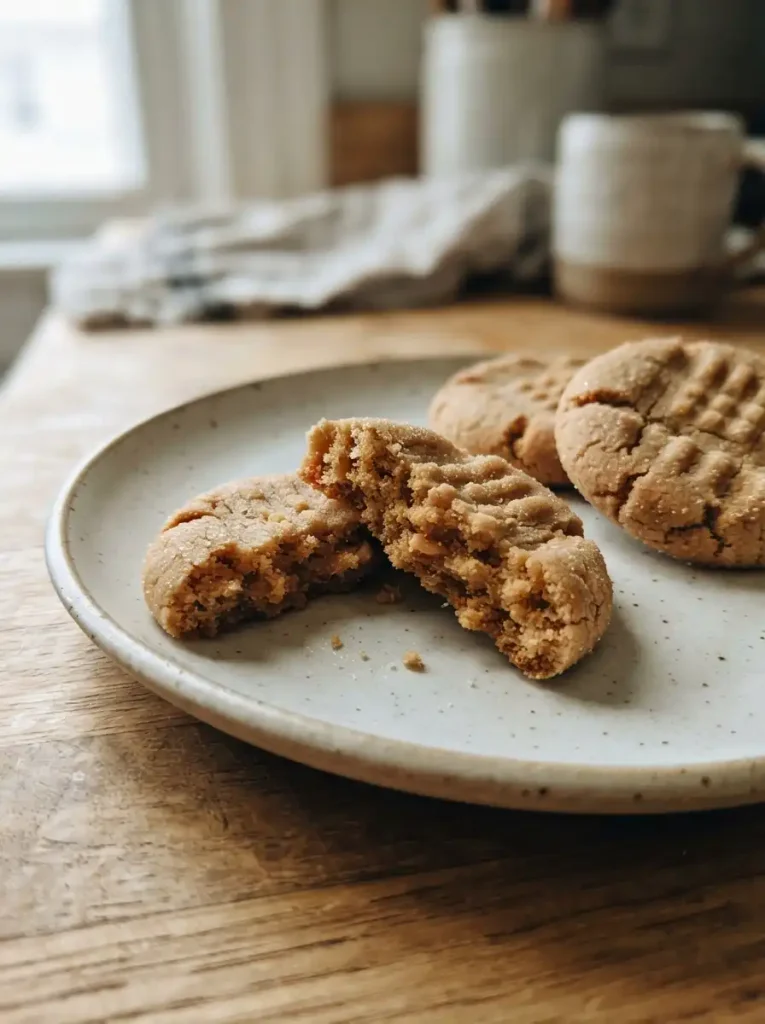
- The cookies turn crumbly: They may be overbaked or the dough may have too much flour. Pull them while the centers still look slightly soft and let them set on the hot pan.
- The fork sticks: Dip the fork in granulated sugar or lightly grease it before pressing the crosshatch.
Frequently asked questions
Are peanut butter cookies naturally gluten-free?
Peanut butter itself is generally made from peanuts, but cookie recipes may add wheat flour, and packaged products can have other ingredients or cross-contact risks. For gluten free peanut butter cookies, check labels and use clean equipment, especially when baking for someone with celiac disease.
Which gluten-free flour blend should I use?
Use a 1:1 baking blend designed to replace wheat flour; this formula assumes the blend already contains xanthan gum. Blends absorb liquid differently, so avoid switching brands mid-recipe and let the dough rest before deciding it needs extra flour.
Do gluten free peanut butter cookies need xanthan gum?
This formula is designed for a 1:1 blend that already contains xanthan gum. Too much binder can make gluten free peanut butter cookies gummy, so check the package and don’t add extra when the flour mix already includes it.
Can I use natural peanut butter?
The main recipe is being developed with conventional creamy peanut butter because separated oil can make the dough unpredictable. Natural peanut butter may work, but it needs its own test before it can be recommended as a direct swap.
How should I store these cookies?
Let the cookies cool completely, then store them in an airtight container at room temperature. Separate layers with parchment if needed. Freeze cooled cookies in a sealed container and thaw them at room temperature before serving.
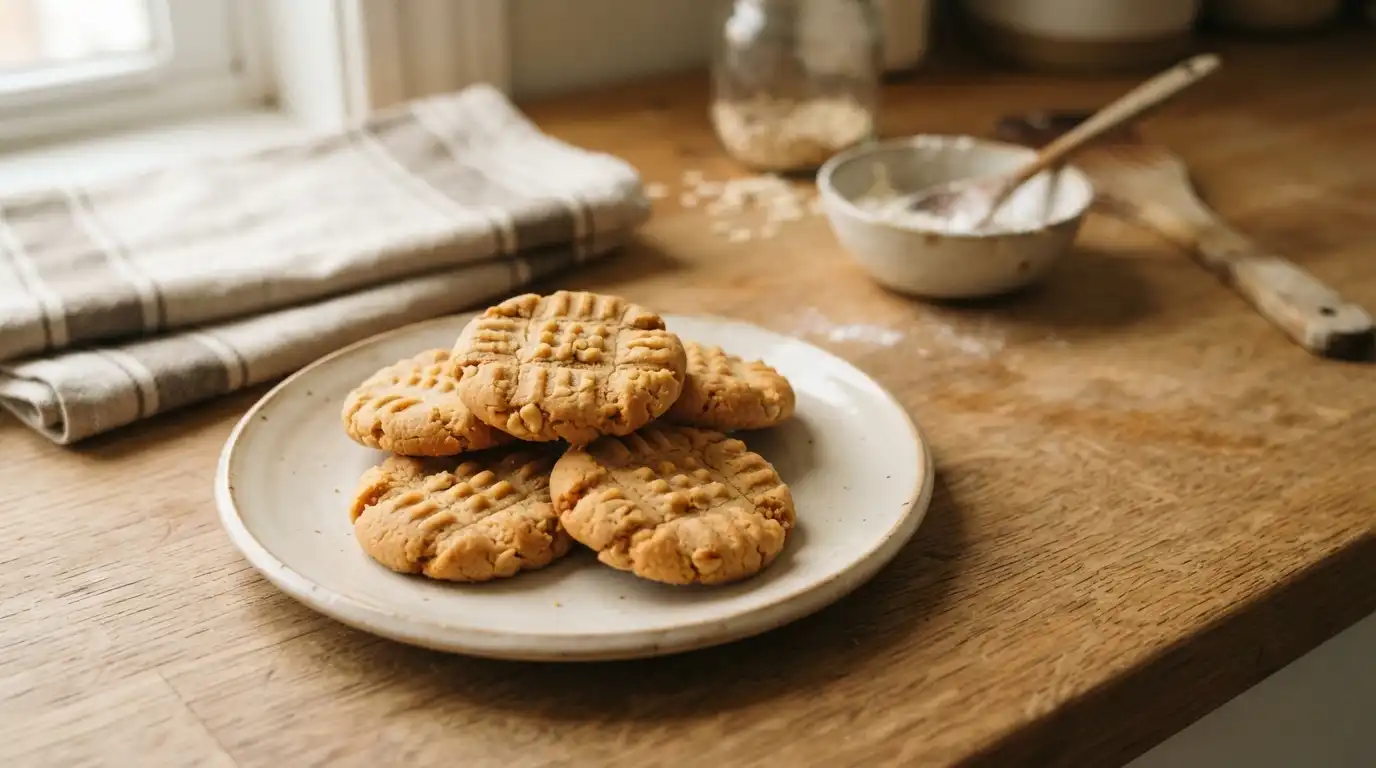
Easy Gluten Free Peanut Butter Cookies
Ingredients
Equipment
Method
- Heat the oven to 350°F (175°C). Line light-colored baking sheets with parchment paper.
- In a medium bowl, whisk together the gluten-free flour blend, baking soda, baking powder, and salt.
- In a large bowl, stir together the peanut butter, melted and cooled butter, brown sugar, granulated sugar, egg, and vanilla until smooth.
- Fold the dry ingredients into the wet ingredients just until no dry streaks remain. Cover the bowl and chill the dough for 30 minutes.
- Scoop the dough into portions of about 2 tablespoons (about 38 g each), aiming for roughly 18 cookies. Roll each portion into a ball and place the balls about 2 inches apart on the prepared sheets.
- Press each dough ball gently with a fork in a crosshatch pattern. Bake for a provisional 10–12 minutes, until the edges look set and the centers still look slightly soft. Bake in two batches if the cookies do not fit with enough room to spread.
- Cool the cookies on the baking sheet for 10 minutes, then transfer them to a rack. Let them cool completely before judging the final texture.