How to Make Sourdough Starter (Easy Step-by-Step Guide)
If you’ve ever wondered how to make sourdough starter at home, this beginner-friendly guide will show you exactly how to do it step by step. Learning how to make sourdough starter is simple, affordable, and incredibly rewarding. With only flour, water, and time, you can create a healthy sourdough starter for homemade bread, pizza dough, pancakes, and many other baked recipes.
This easy sourdough starter recipe is perfect for beginners who want to learn how to start sourdough starter the right way. Whether you want rustic artisan loaves or a classic sourdough bread recipe with starter, everything begins with a strong and active starter.
What Is a Sourdough Starter?
Before learning how to make sourdough starter, it’s important to understand what it actually is.
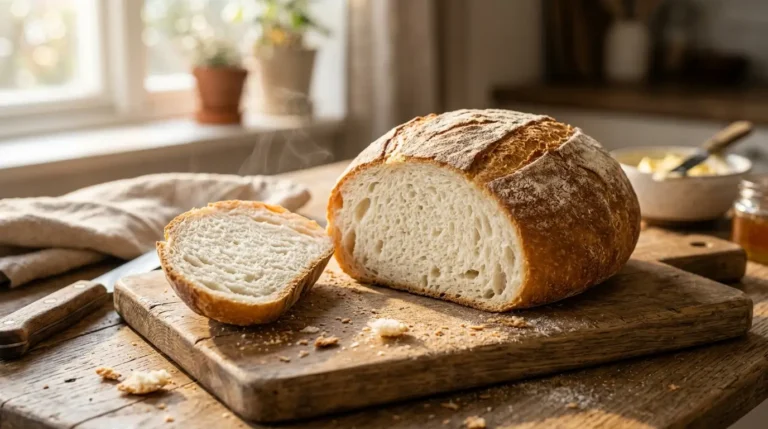
A sourdough starter is a natural fermented mixture made from flour and water. During fermentation, wild yeast and beneficial bacteria develop naturally inside the mixture. This natural yeast replaces commercial yeast and helps bread rise.
A healthy sourdough starter gives bread:
- Better flavor
- A chewy texture
- A crispy crust
- Natural fermentation benefits
Once you know how to make sourdough starter successfully, you can keep it alive for years with regular feeding.
Ingredients for Sourdough Starter Recipe
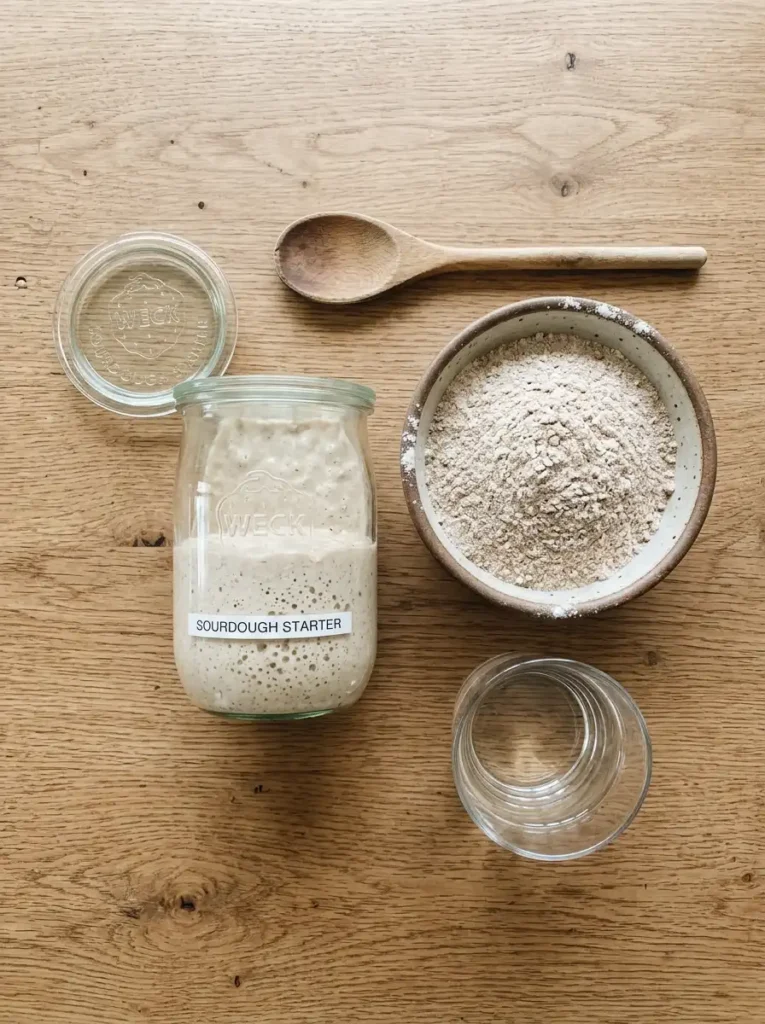
This simple sourdough starter recipe only requires two ingredients:
- 1 cup whole wheat flour
- 1 cup filtered water
That’s it.
Many people ask:
“Can I use all purpose flour for sourdough starter?”
Yes, you can. Whole wheat flour helps the starter begin fermenting faster, but unbleached all-purpose flour works very well for feeding and maintaining your sourdough starter long term.
Can I Use All Purpose Flour for Sourdough Starter?
One of the most common questions beginners ask is:
“Can I use all purpose flour for sourdough starter?”
The answer is yes.
Unbleached all-purpose flour is excellent for maintaining a healthy sourdough starter. However, when first learning how to make sourdough starter, many bakers prefer starting with whole wheat flour or rye flour because they contain more natural nutrients and wild yeast.
For best results:
- Start with whole wheat flour
- Continue feeding with all-purpose flour
This method makes it easier to build a strong sourdough starter.
Equipment Needed
Before you learn how to start sourdough starter, prepare these tools:
- Large glass jar
- Spoon or spatula
- Kitchen scale
- Rubber band or marker
Using a clean jar is very important because harmful bacteria can ruin your sourdough starter.
How to Make Sourdough Starter Step by Step
This detailed guide explains exactly how to make sourdough starter from scratch.
Day 1: Mix the Starter
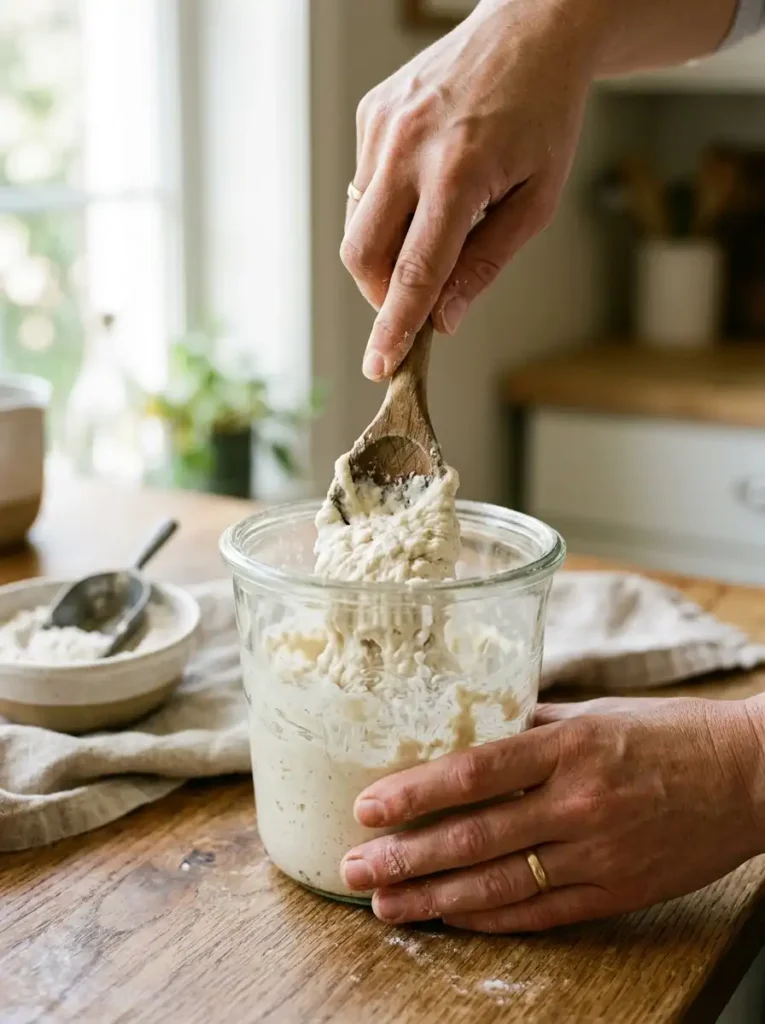
To begin your sourdough starter recipe:
Add to a clean jar:
- 1 cup whole wheat flour
- 1 cup filtered water
Mix until smooth.
The texture should resemble thick pancake batter.
Cover loosely and place the jar in a warm area for 24 hours.
When learning how to make sourdough starter, warmth is extremely important because yeast grows faster in warm temperatures.
Day 2: Check for Activity
After 24 hours, look carefully for:
- Small bubbles
- A slightly sour smell
- Minor rise in volume
These are signs that your sourdough starter is becoming active.
Discard half of the mixture.
Feed the remaining starter with:
- 1/2 cup flour
- 1/4 cup filtered water
Mix thoroughly and let it rest another 24 hours.
This feeding process is essential when learning how to start sourdough starter successfully.
Day 3: Feed Again
Your sourdough starter should now have more bubbles and a stronger smell.
Again:
- Discard half
- Add fresh flour and water
- Stir well
As you continue learning how to make sourdough starter, consistency becomes very important. Feeding your starter regularly helps build strong natural yeast.
Day 4 to Day 7: Strengthening the Starter
Repeat the feeding process every 24 hours.
During this stage, your sourdough starter should:
- Double in size
- Develop large bubbles
- Smell pleasantly sour
By day 5 to 7, your sourdough starter recipe should be active enough for baking.
Understanding how to make sourdough starter properly during these days is the key to long-term success.
How to Know Your Sourdough Starter Is Ready
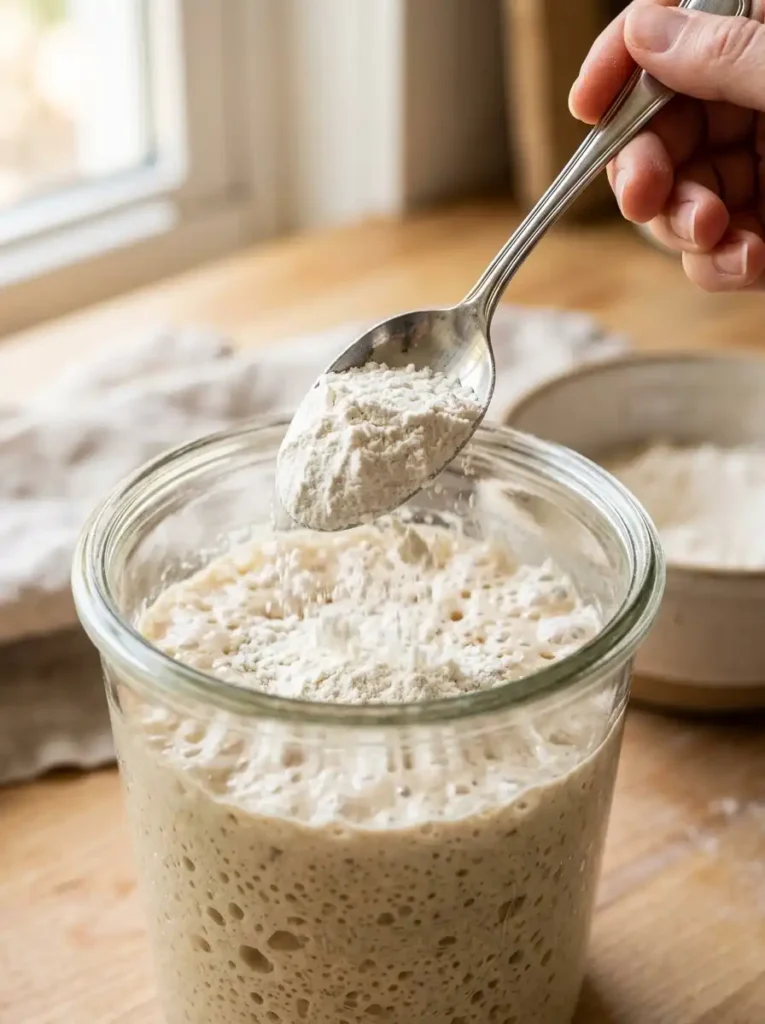
A healthy sourdough starter should:
- Rise quickly after feeding
- Double in size
- Have a bubbly texture
- Smell fresh and sour
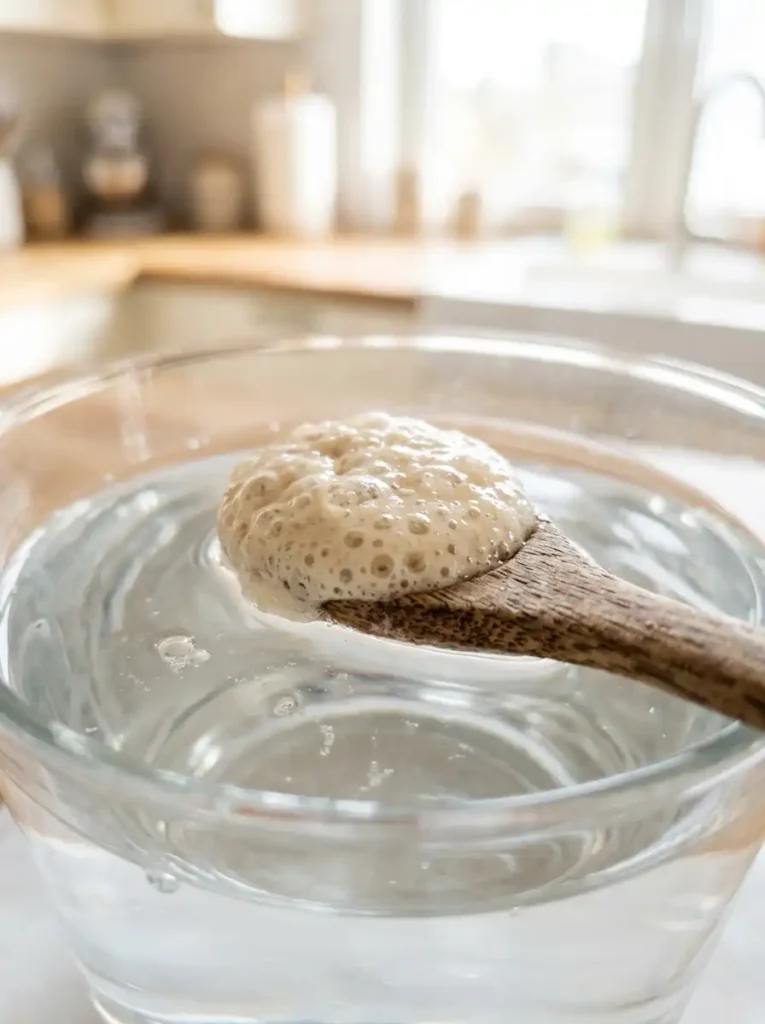
One popular method for testing readiness is the float test.
The Float Test
Take a spoonful of sourdough starter and place it into water.
If it floats:
✅ Your starter is ready for baking.
If it sinks:
- Continue feeding for another day or two.
The float test is a simple way to confirm that your sourdough starter contains enough natural gas and yeast activity.
Common Problems When Learning How to Make Sourdough Starter
Even with a good sourdough starter recipe, beginners sometimes face problems.
Starter Not Bubbling
Possible causes:
- Cold room
- Chlorinated tap water
- Weak flour
- Inconsistent feeding
Move your sourdough starter to a warmer location and continue feeding daily.
Bad Smell or Mold
A healthy sourdough starter should smell:
- Tangy
- Slightly sour
- Yeasty
If you notice:
- Pink color
- Black spots
- Fuzzy mold
Throw the starter away immediately.
Liquid on Top of the Starter
This liquid is called “hooch.”
It forms when the sourdough starter becomes hungry.
You can:
- Stir it back in
- Or pour it off before feeding
Best Flour for Sourdough Starter
Choosing the right flour makes learning how to make sourdough starter much easier.
Best options:
- Whole wheat flour
- Rye flour
- Unbleached all-purpose flour
Many bakers successfully use all-purpose flour after the starter becomes active.
So if you’re wondering again:
“Can I use all purpose flour for sourdough starter?”
✅ Yes, absolutely.
How to Store Sourdough Starter
Once you know how to make sourdough starter, proper storage becomes important.
If baking often:
- Keep the starter at room temperature
- Feed daily
If baking occasionally:
- Store in the refrigerator
- Feed once per week
A strong sourdough starter can survive for years with proper care.
Sourdough Bread Recipe With Starter
After learning how to make sourdough starter, the next step is baking bread.
A simple sourdough bread recipe with starter usually includes:
- Bread flour
- Water
- Salt
- Active sourdough starter
The starter naturally ferments the dough and creates classic sourdough flavor.
Tips for Success
To make the best sourdough starter recipe:
- Use filtered water
- Feed consistently
- Keep the starter warm
- Use clean equipment
- Be patient
Learning how to make sourdough starter takes time, but the results are worth it.
Frequently Asked Questions
How long does it take to make sourdough starter?
Usually between 5 and 7 days.
Can I use all purpose flour for sourdough starter?
Yes. Unbleached all-purpose flour works very well.
Why do I discard part of the starter?
Discarding keeps the sourdough starter balanced and healthy.
Can I freeze sourdough starter?
Yes. Many bakers freeze portions for long-term storage.
What can I make with sourdough starter?
You can make:
- Bread
- Pizza dough
- Pancakes
- Waffles
- Crackers
Final Thoughts
Now you know exactly how to make sourdough starter from scratch.
This easy sourdough starter recipe is simple enough for beginners but effective enough for experienced bakers. By following this guide on how to start sourdough starter, you can build a strong and active starter that lasts for years.
Once your sourdough starter becomes bubbly and active, you’ll be ready to try your favorite sourdough bread recipe with starter and many other homemade baked recipes.
Easy Sourdough Starter Recipe (Beginner Friendly)
Ingredients
Equipment
Method
- In a clean glass jar, mix 1/2 cup whole wheat flour and 1/4 cup filtered water until it forms a thick paste. Cover loosely and let it sit in a warm spot for 24 hours.
- Check for small bubbles. Discard half of the starter, then feed it with 1/2 cup unbleached all-purpose flour and 1/4 cup filtered water. Stir well, cover loosely, and rest for 24 hours.
- Repeat the discard and feeding process every 24 hours. The starter should start to smell slightly sour and show more bubbles.
- Continue feeding daily. By day 5 to 7, the starter should double in size within 4-8 hours of feeding and have large bubbles.
- Perform the float test: drop a small spoonful of starter into water. If it floats, your sourdough starter is ready to bake with.