The Ultimate Focaccia Recipe: How to Make Bakery-Style Bread at Home
If you’ve been dreaming of that perfect focaccia recipe—the one with a golden, shatteringly crispy crust and a cloud-like, airy interior—you’ve just hit the jackpot. Making a focaccia bread recipe isn’t just about mixing flour and water; it’s about mastering the art of hydration and patience.
Whether you’re looking for a basic focaccia recipe to start your baking journey or you’re a seasoned pro wanting to dive into a sourdough focaccia recipe, this guide covers everything. We’ll show you how to transform simple pantry staples into a Mediterranean masterpiece.
Why This is the Only Focaccia Bread Recipe You’ll Ever Need
Most recipes fail because they don’t account for the “dimpling” technique or the specific type of fat used. In this version, we prioritize:
- High Hydration: For those iconic large air bubbles.
- Cold Fermentation: To develop a complex flavor that mimics a sourdough focaccia recipe without the starter.
- Generous Olive Oil: Because focaccia is essentially “fried” in the oven.
Ingredients for the Best Basic Focaccia Recipe
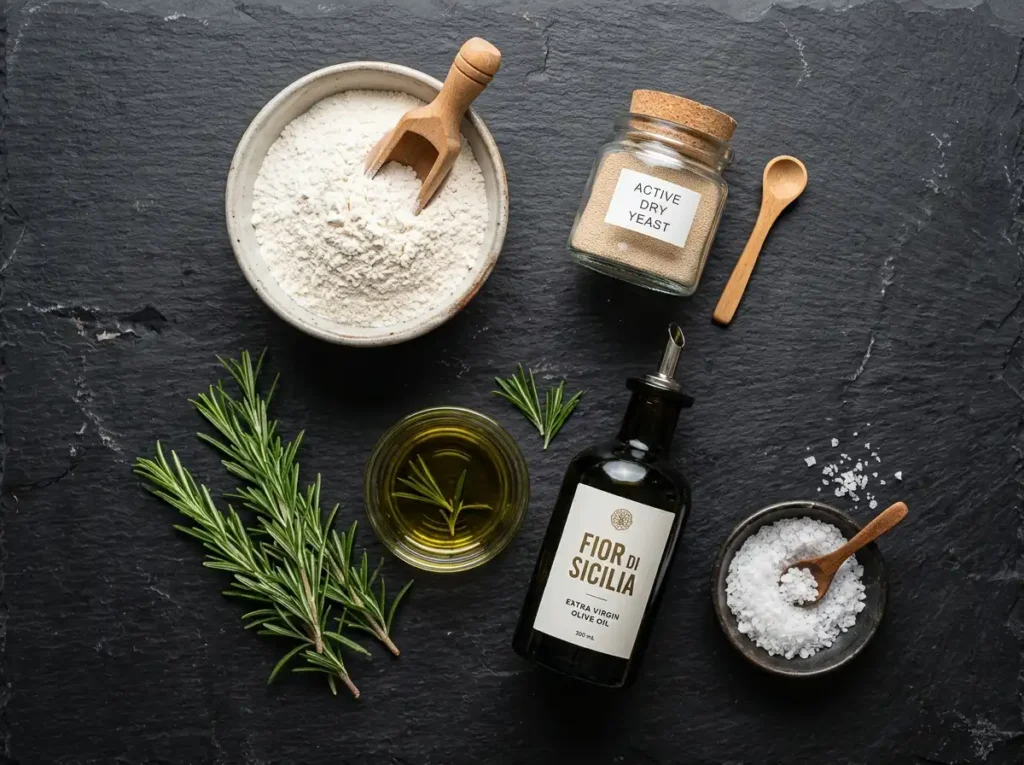
To get that authentic Italian taste, quality matters. Here is what you’ll need:
- High-Protein Flour: Bread flour is best, but all-purpose works if measured correctly.
- Warm Water: Around 105°F to activate the yeast.
- Yeast: Active dry or instant.
- Honey or Sugar: To feed the yeast and help with browning.
- Extra Virgin Olive Oil: The soul of any rosemary focaccia bread recipe.
- Flaky Sea Salt: For that essential crunch.
Step-by-Step: How to Master This Focaccia Recipe
1. The Dough Mix (No-Knead Method)
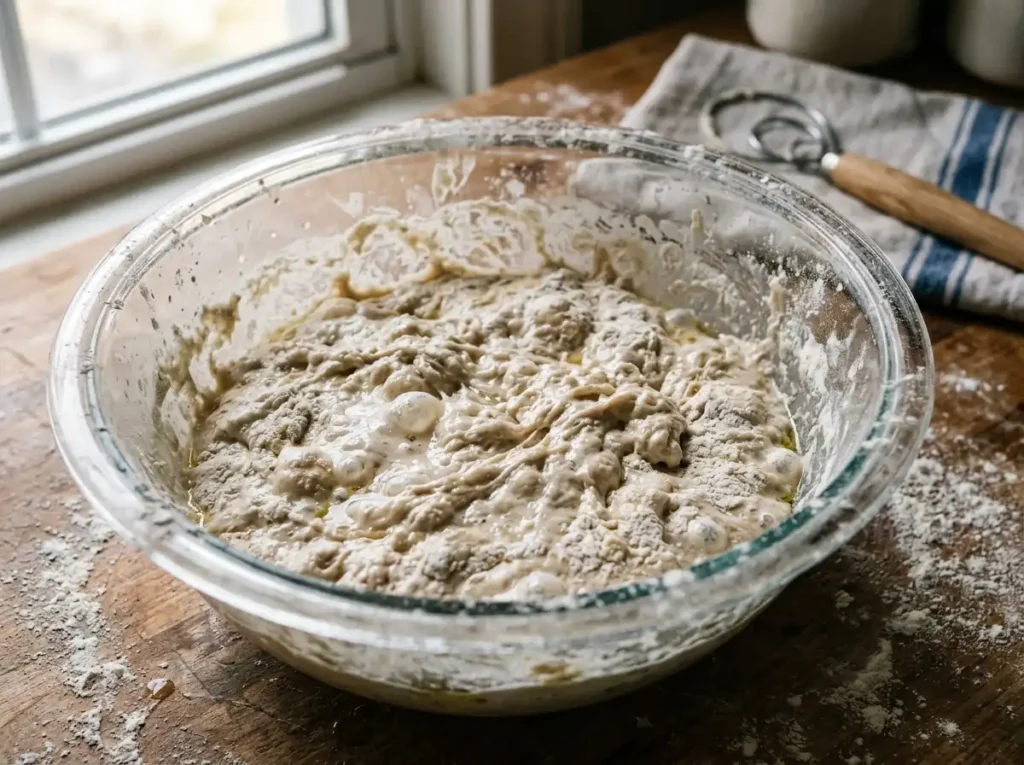
In a large bowl, whisk your flour and salt. In a separate jar, bloom your yeast in warm water with a touch of honey. Combine them until a shaggy, wet dough forms. This is a basic focaccia recipe, so don’t overthink the kneading—the gluten will develop on its own during the rest.
2. The First Rise (Bulk Fermentation)
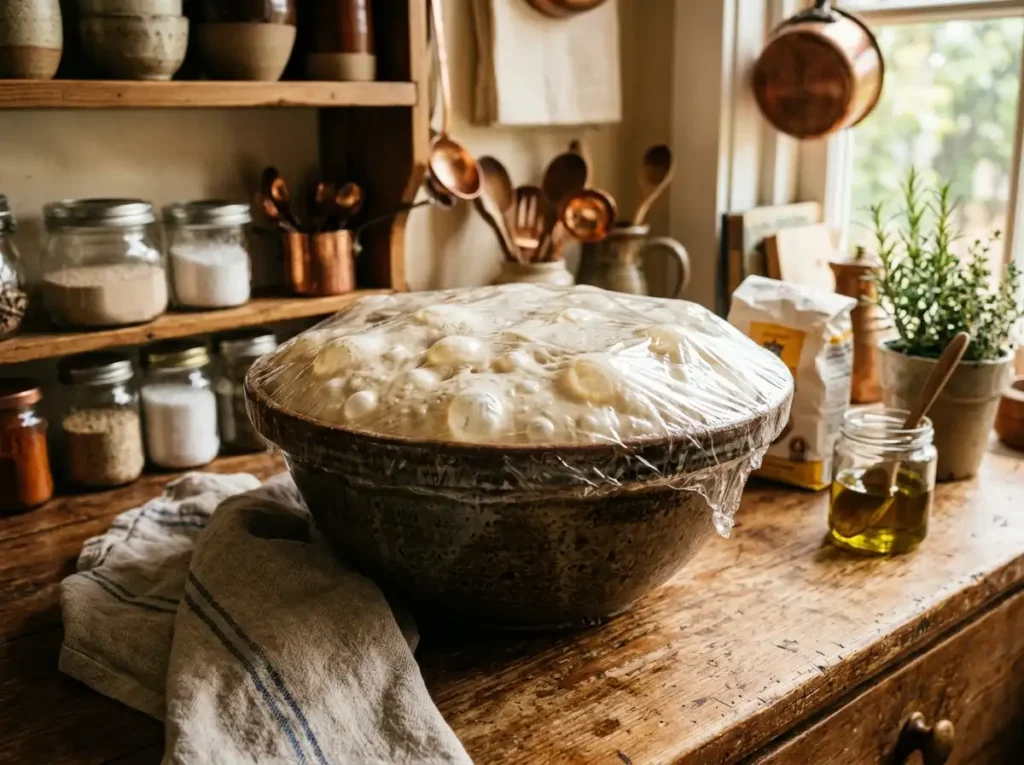
Cover your dough and let it sit. If you want a deeper flavor—similar to what you’d find in a sourdough focaccia recipe—put it in the fridge for 12–24 hours. The cold temperature slows down the yeast and develops those beautiful lactic acid flavors.
3. The Second Rise & Dimpling
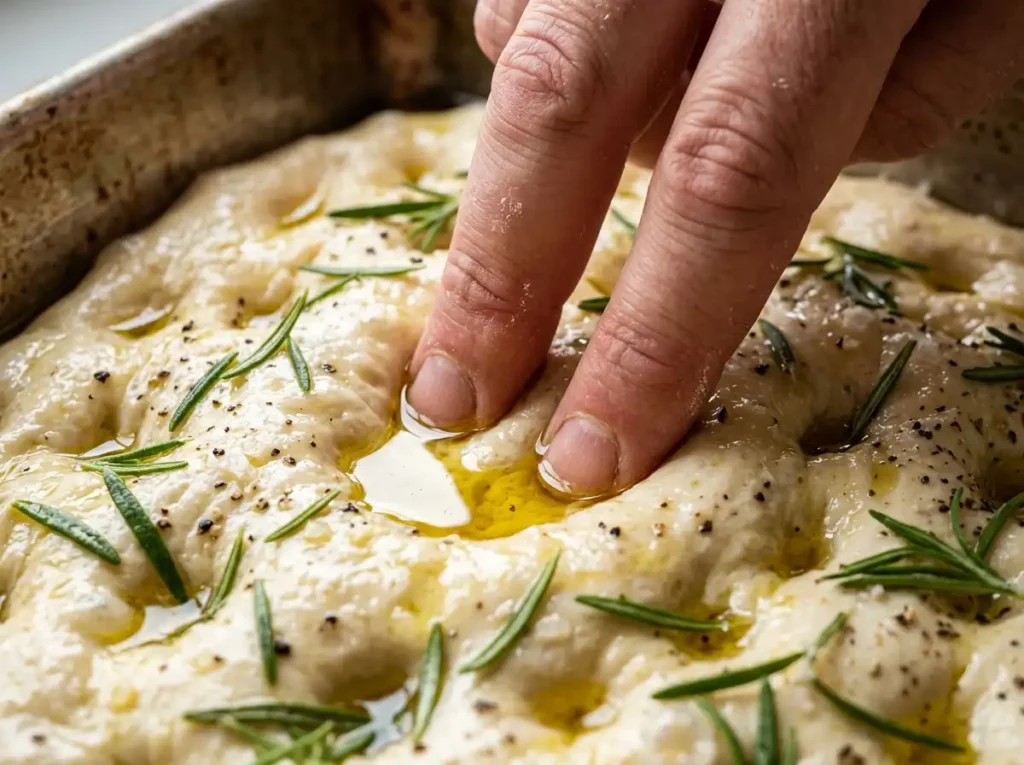
Transfer the dough to a heavily oiled pan. Let it stretch naturally to the corners. Now comes the best part of any focaccia bread recipe: the dimpling. Use your fingertips to press deep into the dough, creating “pools” for the olive oil.
4. Adding the Toppings: A Classic Rosemary Focaccia Bread Recipe
While you can add anything, the rosemary focaccia bread recipe remains the gold standard.
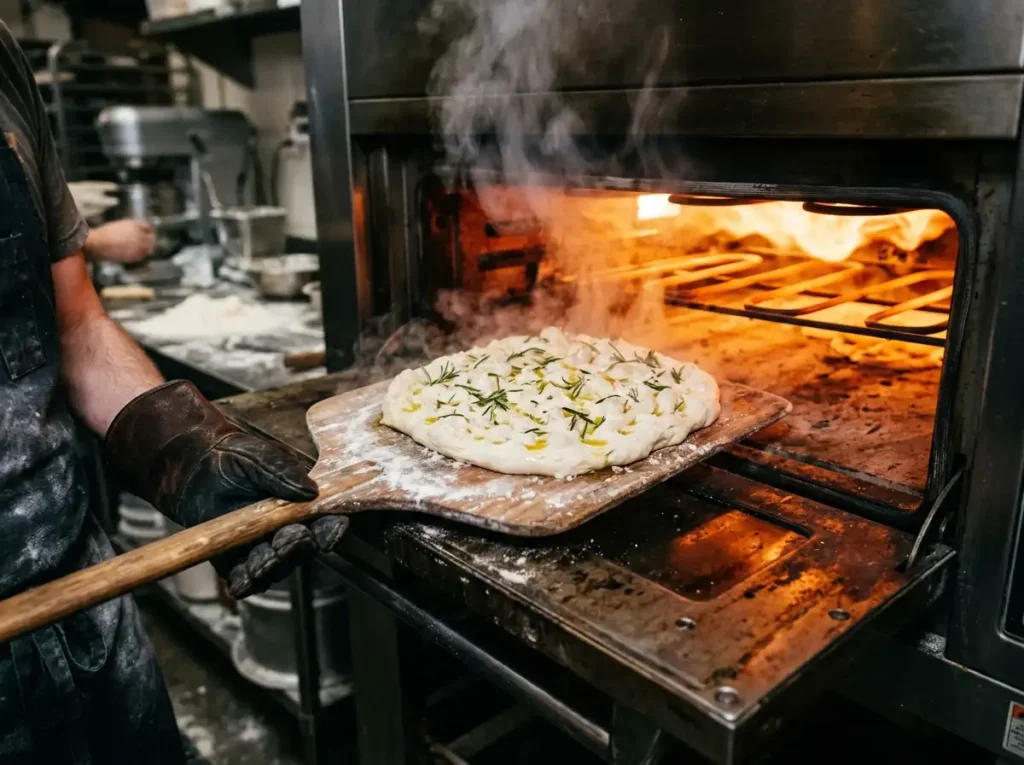
- Fresh Rosemary: Stripped from the stem and tucked into the dimples.
- Flaky Salt: Don’t be shy; it brings out the richness of the oil.
Pro Tips
- Don’t Rush the Rise: If the dough is cold, it won’t dimple well. Let it reach room temperature.
- Oven Temperature: You need a hot oven (at least 425°F/220°C) to get that “fried” bottom crust.
- The Pan Matters: Use a metal baking pan rather than glass for the crispiest results.
Sourdough Focaccia Recipe: For the Advanced Baker
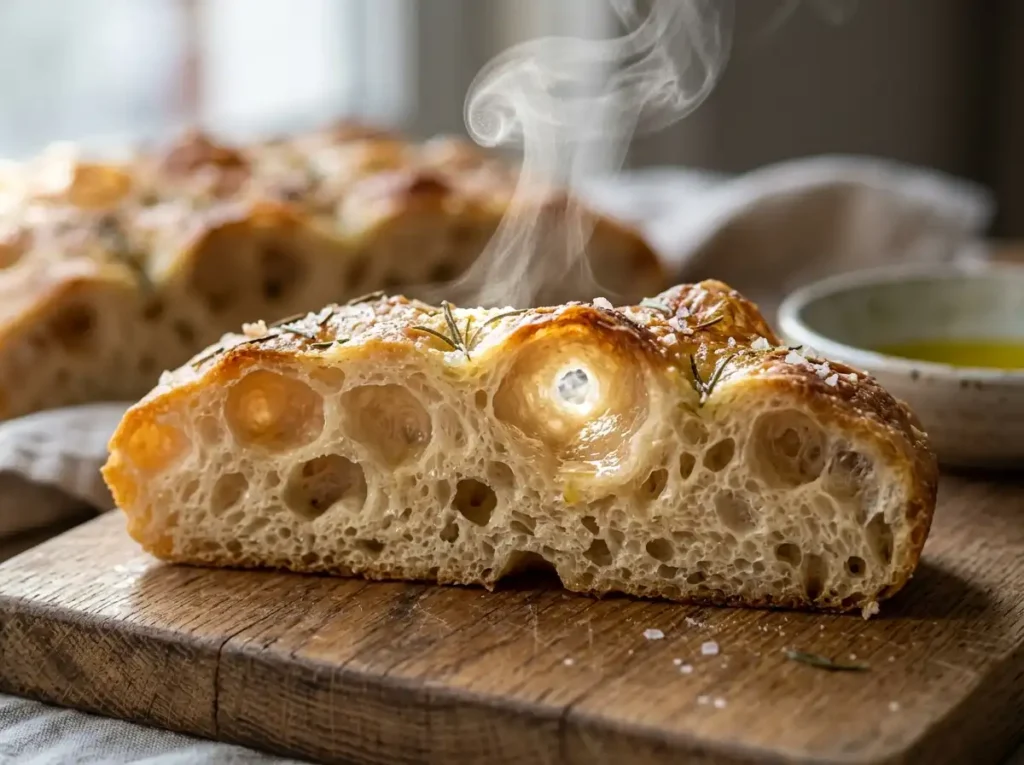
If you have a bubbly starter in your kitchen, you can easily adapt this into a sourdough focaccia recipe. Simply replace the commercial yeast with 100g of active starter and increase the fermentation time. The result is a tangier, more digestible focaccia that stays fresh for days.
Frequently Asked Questions about Focaccia
Why is my focaccia flat?
Usually, this happens if the yeast was dead or you didn’t let it rise long enough in the pan. A basic focaccia recipe relies on that final proof to get its height.
Can I freeze focaccia bread?
Yes! Focaccia freezes beautifully. Just wrap it tightly in foil and reheat in the oven to restore the crispiness.
Final Thoughts: Mastering the Art of Focaccia
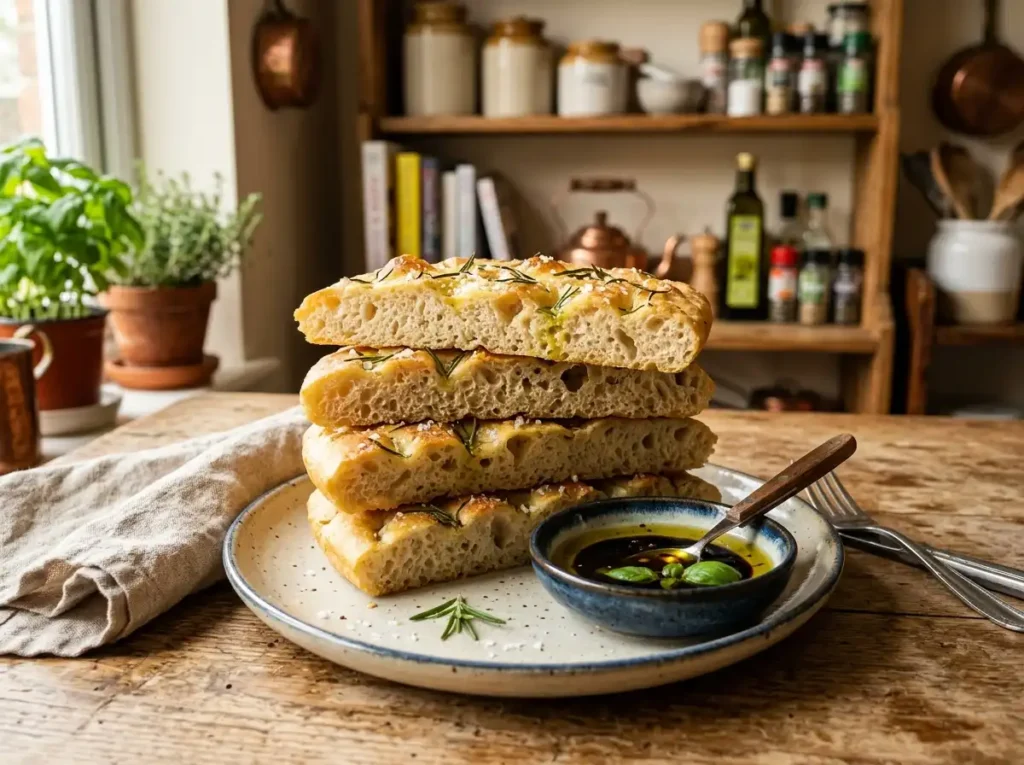
Whether you are making a quick rosemary focaccia bread recipe for dinner or experimenting with a long-fermented sourdough focaccia recipe, the key is to have fun with it. This bread is forgiving, rustic, and guaranteed to impress.
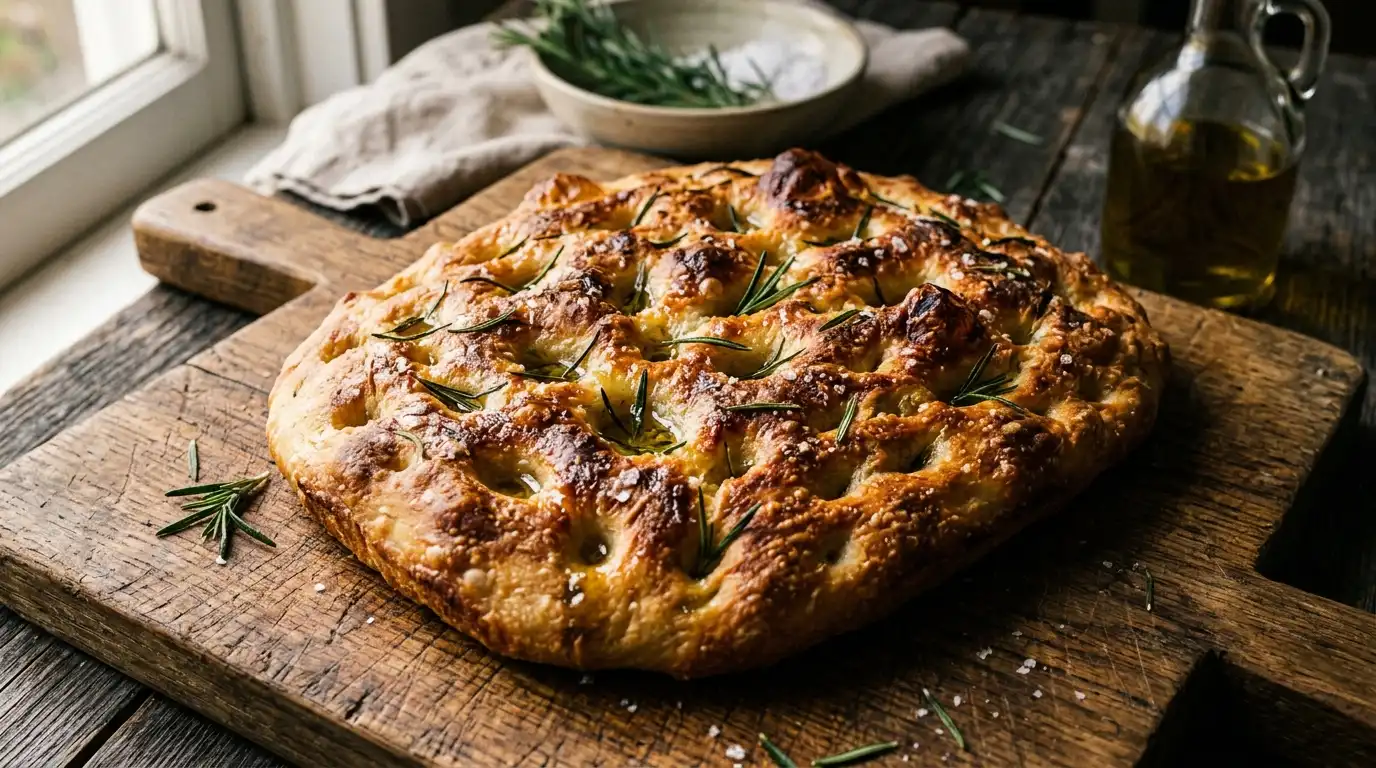
The Best Homemade Focaccia Recipe: Soft, Airy & Crispy
Ingredients
Equipment
Method
- Proof,"Combine warm water, sugar, and yeast; let sit for 5 minutes until foamy."
- Mix,”Add flour and salt to the yeast mixture; mix until a sticky, shaggy dough forms.”
- Rise 1,"Transfer to an oiled bowl, cover, and let rise for 1 to 1.5 hours in a warm spot."
- Shape,Transfer dough to a greased 9×13 pan and stretch it gently to the edges.
- Rise 2,Cover and let rise for another 45 minutes until the dough has doubled in size.
- Dimple,Drizzle with olive oil and use fingers to press deep dimples all the way to the pan.
- Bake,Sprinkle with rosemary and flaky salt. Bake at 425°F for 25 minutes until golden brown.