How to Make Matcha Latte at Home
Learning how to make matcha latte at home is easier than most people think. You do not need a coffee shop machine, expensive tools, or barista skills. What you really need is good matcha powder, warm water, milk, and the right mixing method so the drink turns out smooth, creamy, and never clumpy.
This easy matcha green tea latte recipe works hot or iced, sweetened or unsweetened, with dairy milk or plant-based milk. It is fresh, lightly earthy, naturally green, and ready in about 5 minutes. If you enjoy simple homemade drinks like a homemade milkshake, this matcha latte is another café-style recipe you can make at home without much effort.
This guide keeps how to make matcha latte simple, so you get the right ratio, texture, and flavor from the first try. The key is simple: mix the matcha with warm water first, then add milk. That one step makes the biggest difference between a smooth latte and a drink full of green clumps.
Quick Answer: How to Make Matcha Latte
To learn how to make matcha latte, sift 1 teaspoon of matcha powder into a small bowl or mug. Add 2 ounces of warm water, about 175°F or 80°C, and whisk until smooth and lightly foamy. Add 6 to 8 ounces of warm milk for a hot matcha latte, or pour cold milk over ice for an iced matcha latte. Sweeten with honey, maple syrup, sugar, or vanilla syrup if desired.
If your matcha usually tastes bitter or grainy, the water may be too hot, the powder may not be sifted, or the matcha may have been mixed directly into milk instead of water first.
What Is a Matcha Latte?
A matcha latte is a creamy drink made with matcha green tea powder, water, and milk. Matcha is different from regular green tea because the tea leaves are ground into a fine powder. Instead of steeping tea leaves in water and removing them, you whisk the powder directly into the drink.
That gives matcha a bold green tea flavor, a bright color, and a smooth earthy taste. A good matcha latte should taste creamy, fresh, slightly grassy, and balanced. It should not taste dusty, harsh, or overly bitter.
If this is your first time learning how to make matcha latte, start with a small amount of powder. You can always add more later, but too much matcha can quickly overpower the milk.
Ingredients You Need
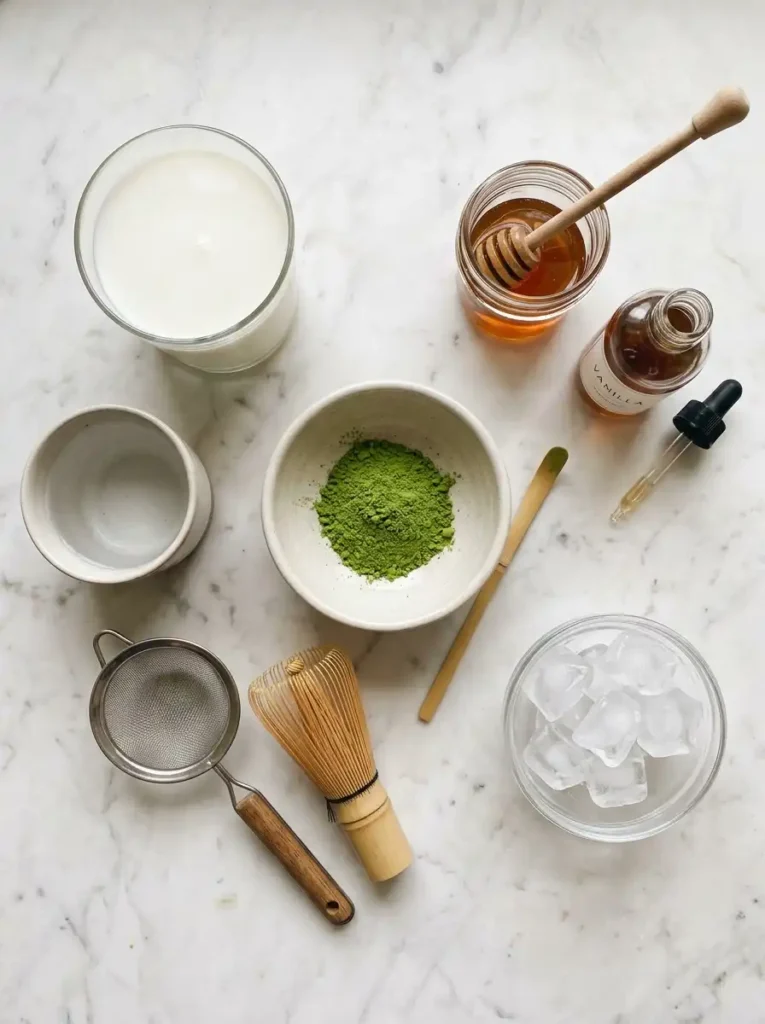
You only need a few basic ingredients:
- 1 teaspoon matcha powder
- 2 ounces warm water
- 6 to 8 ounces milk
- 1 to 2 teaspoons sweetener, optional
- Ice, for an iced version
For milk, oat milk is one of the best options because it is naturally creamy and slightly sweet. Whole milk makes the richest latte. Almond milk gives a lighter drink, soy milk foams well, and coconut milk adds a soft tropical flavor.
For sweetener, honey gives a warm floral flavor, maple syrup keeps it vegan, and vanilla syrup makes the latte taste more like a coffee shop drink. If you want a fruity version, add homemade strawberry puree to the bottom of the glass before adding ice, milk, and matcha.
Best Matcha Latte Ratio
The easiest ratio for a balanced matcha latte is:
1 teaspoon matcha + 2 ounces warm water + 6 to 8 ounces milk
Use this guide depending on your taste:
| Style | Matcha | Water | Milk |
|---|---|---|---|
| Mild | 1/2 teaspoon | 2 ounces | 8 ounces |
| Classic | 1 teaspoon | 2 ounces | 6–8 ounces |
| Strong | 1 1/2 teaspoons | 2 ounces | 8 ounces |
For beginners, the classic ratio is the safest. If the drink tastes too strong, add more milk. If it tastes too light, use a little more matcha next time.
This ratio is the easiest starting point for anyone learning how to make matcha latte without making it too weak or too bitter.
How to Make Matcha Latte Hot
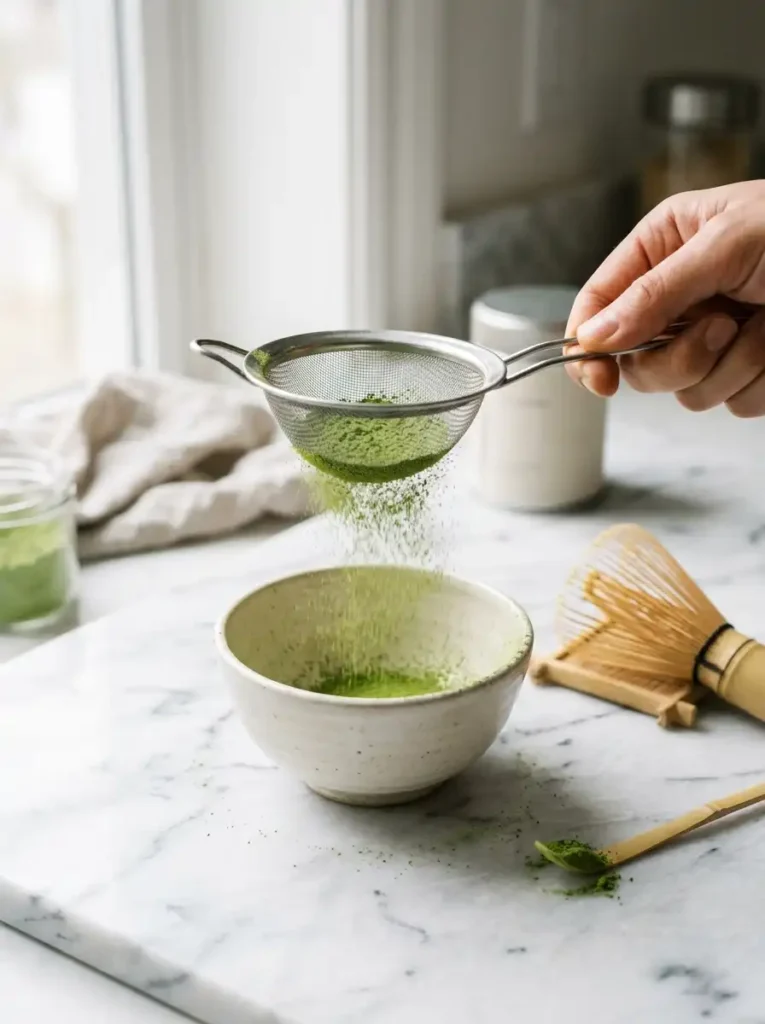
This hot version is the classic method for anyone searching how to make matcha latte with a warm, cozy, coffee-shop texture.
1. Sift the matcha
Add the matcha powder to a fine mesh strainer and sift it into a small bowl or wide mug. This step is important because matcha clumps very easily. Sifting breaks up the powder before it touches water, which gives you a smoother drink.
2. Add warm water
Pour 2 ounces of warm water over the sifted matcha. Do not use boiling water. Boiling water can burn the matcha and make it taste bitter. The best temperature is around 175°F or 80°C.
If you do not have a thermometer, boil water and let it cool for 3 to 5 minutes before using. This keeps the matcha fresh, green, and smooth instead of harsh.
3. Whisk until smooth
Whisk the matcha in a quick zigzag or “W” motion until it looks smooth and lightly foamy. A bamboo matcha whisk works best, but a small kitchen whisk or handheld frother also works well.
Do not only stir in slow circles. That often leaves dry powder at the bottom of the cup.
4. Warm the milk
Warm your milk on the stove or in the microwave until hot but not boiling. Froth it if you want a café-style texture. Warm milk makes the latte creamy and cozy, especially if you serve it with lemon cookies, because the bright citrus flavor balances the earthy matcha beautifully.
5. Combine and sweeten
Pour the warm milk into your mug, then add the whisked matcha. Stir gently and sweeten to taste. Serve immediately while the latte is warm, smooth, and creamy.
How to Make Matcha Latte Iced
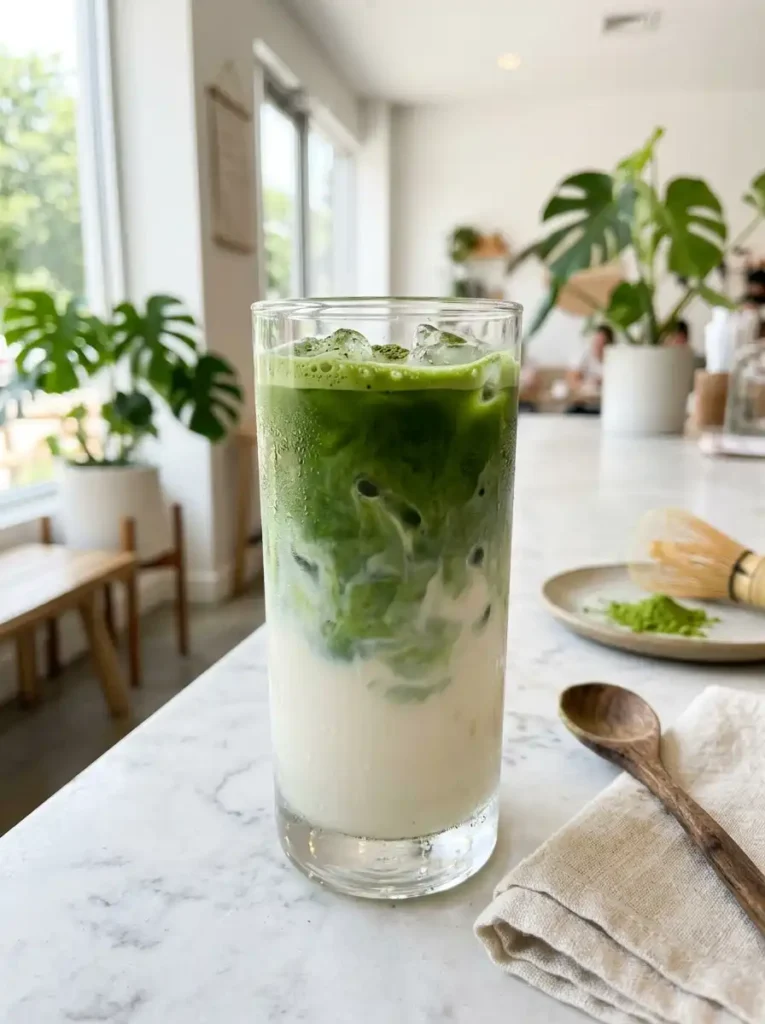
Once you understand how to make matcha latte hot, the iced version is very easy because the matcha base stays the same. The difference is that you use cold milk and ice.
To make an iced matcha latte, sift 1 teaspoon matcha into a bowl, add 2 ounces warm water, and whisk until smooth. Fill a tall glass with ice, pour in 6 to 8 ounces cold milk, then slowly pour the matcha over the top. Stir before drinking.
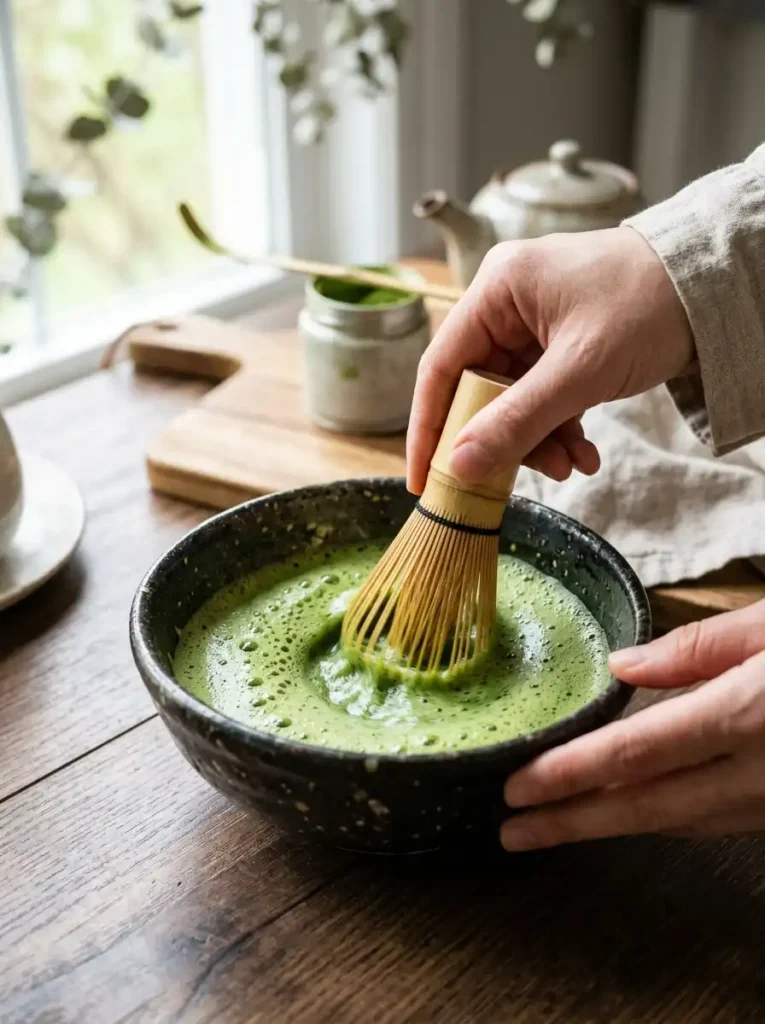
If you searched how to make iced matcha latte, this is the easiest method because the warm water helps the matcha dissolve first, while the cold milk keeps the drink refreshing.
For a beautiful layered drink, add homemade strawberry puree to the bottom of the glass first. Then add ice, milk, and matcha. This creates a strawberry iced matcha latte that looks like something from a café but takes only a few minutes.
Matcha Tea Latte: How to Make It Without a Whisk
If you are wondering matcha tea latte how to make without a bamboo whisk, you still have easy options. A bamboo whisk is traditional, but it is not required.
The easiest way to understand how to make matcha latte without a whisk is to remember that the goal is not tradition; the goal is smooth matcha with no dry powder.
A handheld frother is the easiest alternative. Add sifted matcha and warm water to a mug, then froth until smooth. You can also use a mason jar. Add matcha and warm water, close the lid tightly, and shake hard for 20 to 30 seconds.
For the creamiest texture, use a blender. Blend matcha, water, milk, and sweetener together for about 15 seconds. This method gives the latte a smooth texture, almost like a light shake. If you like thicker dessert-style drinks, you can use the same creamy texture idea from a homemade milkshake and blend matcha with milk and vanilla ice cream.
How to Avoid Clumps in Matcha Latte
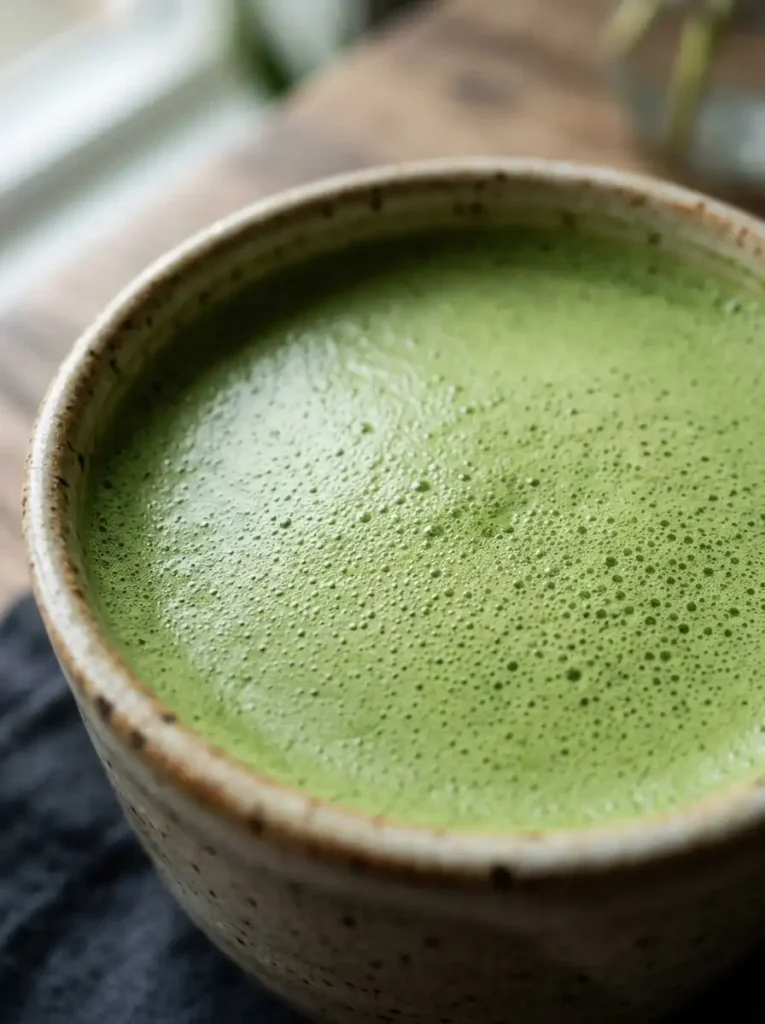
If you only remember one rule for how to make matcha latte without clumps, remember this: sift first, whisk with warm water, then add milk.
Clumps are the most common problem when making matcha at home. The good news is that they are easy to avoid. Always sift the matcha first. Then mix it with warm water before adding milk.
Do not add dry matcha directly to cold milk because it will float, stick together, and leave powdery clumps in the drink. This is one of the biggest mistakes people make when they are new to making matcha.
If your matcha is still clumpy, make a paste first. Add 1 tablespoon of warm water to the sifted matcha and mix until smooth. Then add the rest of the water and whisk again. This method helps the powder dissolve better and gives your latte a silky texture.
Best Milk for Matcha Latte
The best milk depends on the flavor and texture you want.
Oat milk is creamy, smooth, and naturally sweet, which makes it one of the best dairy-free options. Whole milk gives the richest and most classic latte. Almond milk is lighter and slightly nutty. Soy milk has good body and foams well. Coconut milk gives a sweeter tropical flavor.
For a hot matcha latte, oat milk or whole milk usually gives the best texture. For an iced matcha latte, oat milk and almond milk are both refreshing and easy to use.
If your matcha tastes too strong, use a creamier milk. If it tastes too sweet, use unsweetened milk and control the sweetness yourself.
Easy Matcha Latte Variations
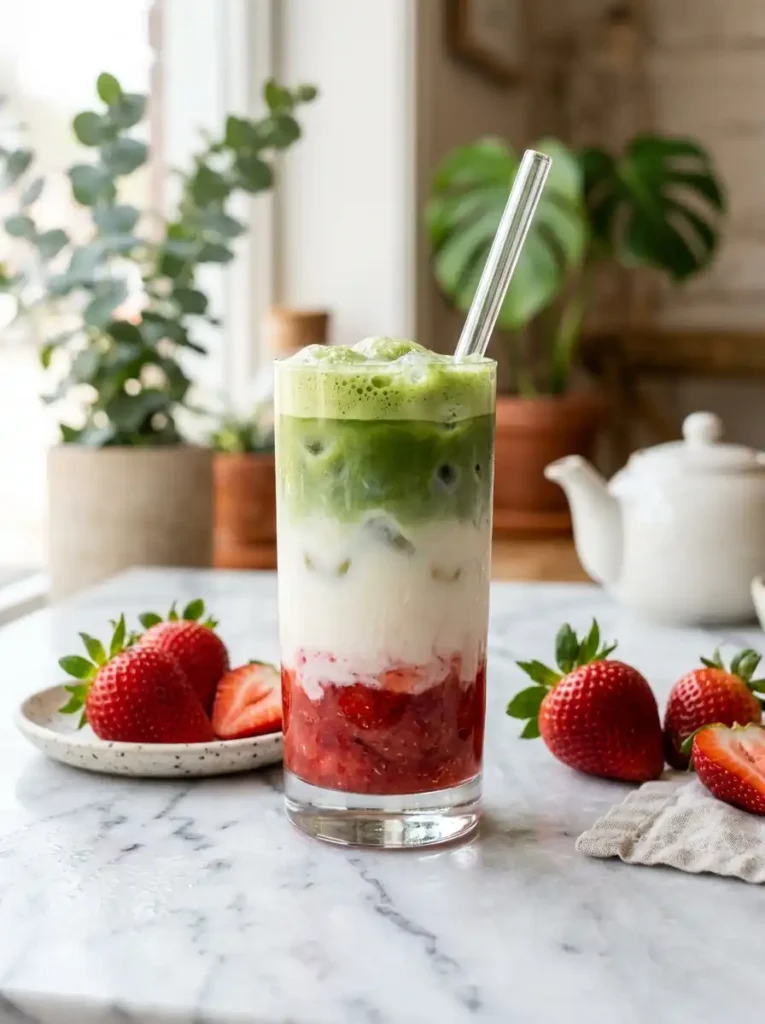
Once you know the basic method, you can make many different versions.
For a vanilla matcha latte, add vanilla syrup or a small splash of vanilla extract with your sweetener. For a honey matcha latte, use honey instead of sugar. For a dirty matcha latte, add one shot of espresso. The coffee flavor pairs especially well with creamy desserts like tiramisu cheesecake, especially if you enjoy coffee shop-style treats.
For a strawberry matcha latte, add strawberry puree to the bottom of the glass before adding ice and milk. For a dessert version, blend matcha into a vanilla ice cream base. You can even use the method from how to make ice cream without an ice cream maker and turn the same flavor into homemade matcha ice cream.
What to Serve with Matcha Latte
Matcha has an earthy green tea flavor, so it pairs best with sweet, buttery, fruity, or creamy desserts. A hot matcha latte tastes great with lemon cookies, vanilla cake, cheesecake, or shortbread.
An iced matcha latte pairs well with strawberries, chocolate, and soft cookies. If you want something sweeter, serve it with smores cookies. The chocolate and marshmallow flavor makes the matcha taste smoother and less bitter, especially if you are new to green tea drinks.
Common Mistakes
Even if you already know how to make matcha latte, these small mistakes can change the flavor, texture, and color of the drink.
The first mistake is using boiling water. Matcha needs warm water, not boiling water. Very hot water can make it taste bitter.
The second mistake is skipping the sifter. Unsifted matcha almost always creates clumps.
The third mistake is using too much matcha. More powder does not always mean better flavor. Start with 1 teaspoon and adjust from there.
Another common mistake is mixing matcha directly into milk. Matcha blends best with water first, then milk. Also, make sure your matcha is fresh. Good matcha should look bright green. If it looks dull yellow or brown, it may taste flat and bitter.
FAQ
What is the easiest way to learn how to make matcha latte?
The easiest way to learn how to make matcha latte is to start with 1 teaspoon matcha powder, 2 ounces warm water, and 6 to 8 ounces milk. Sift the matcha, whisk it with warm water until smooth, then add milk and sweetener.
Does a matcha latte have caffeine?
Yes. Matcha naturally contains caffeine because it is made from green tea leaves. It usually feels smoother than coffee because matcha also contains L-theanine.
Can I make a matcha latte vegan?
Yes. Use oat milk, almond milk, soy milk, or coconut milk, and sweeten with maple syrup or sugar instead of honey.
Why is my matcha latte bitter?
Your water may be too hot, your matcha may be low quality, or you may be using too much powder. Use warm water and start with 1 teaspoon or less.
Can I make it without sugar?
Yes. You can make a matcha latte without sugar. Oat milk adds natural sweetness if you want a smoother unsweetened drink.
Can I use culinary matcha?
Yes. Culinary matcha works well for lattes because it is mixed with milk. Ceremonial matcha is smoother, but it is not required.
Final Tips
The best way to master how to make matcha latte is to keep the method simple. Sift the powder, use warm water instead of boiling water, whisk before adding milk, and adjust the sweetness to your taste.
Once you learn how to make matcha latte with the basic method, you can make it hot, iced, vanilla, strawberry, or blended in just a few minutes.
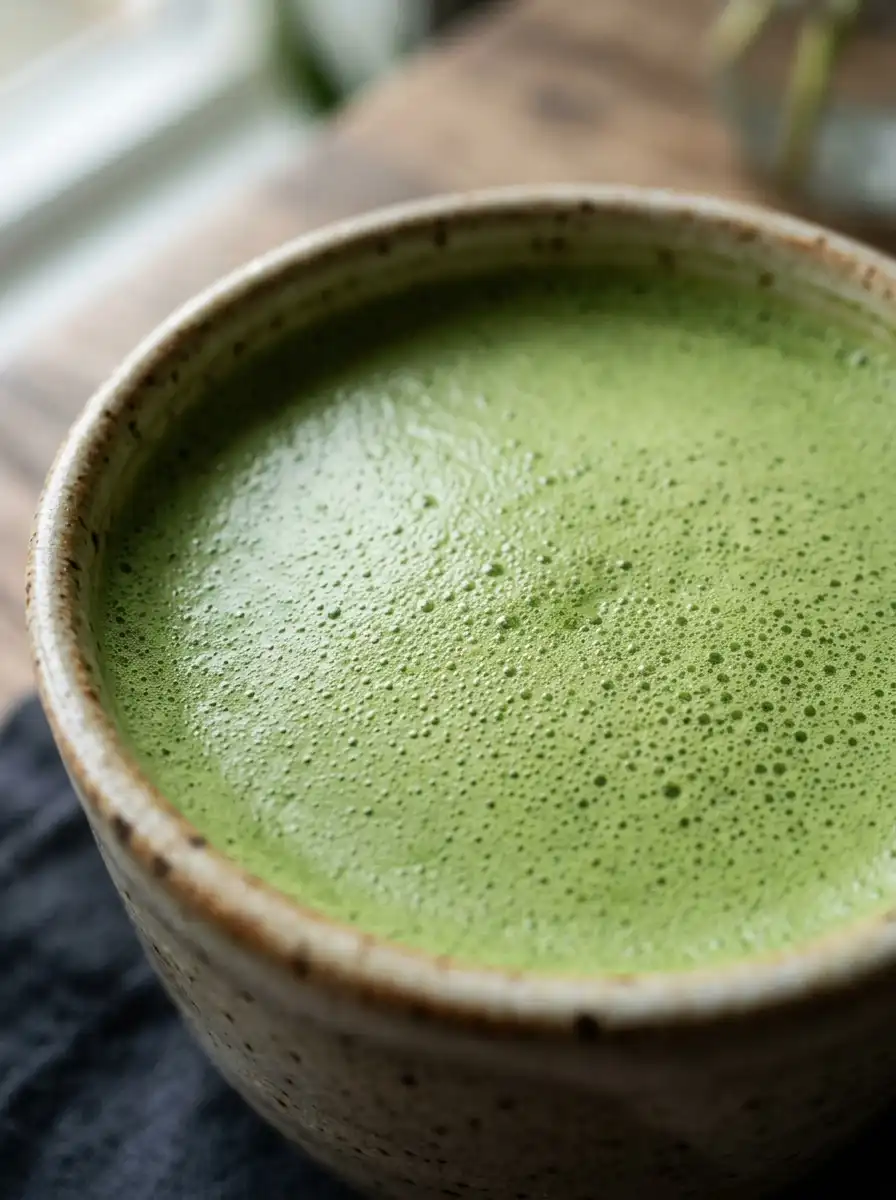
Easy Matcha Latte
Ingredients
Equipment
Method
- Sift the matcha powder into a small bowl or mug using a fine mesh strainer to remove clumps.
- Add the warm water to the sifted matcha. Whisk in a quick zigzag motion until the matcha is smooth, green, and lightly foamy.
- For a hot matcha latte, warm the milk until hot but not boiling. Froth it if desired, then pour it into the matcha and stir gently.
- For an iced matcha latte, fill a tall glass with ice, add cold milk, then pour the whisked matcha over the top. Stir before drinking.
- Sweeten to taste with honey, maple syrup, sugar, or vanilla syrup. Serve immediately.