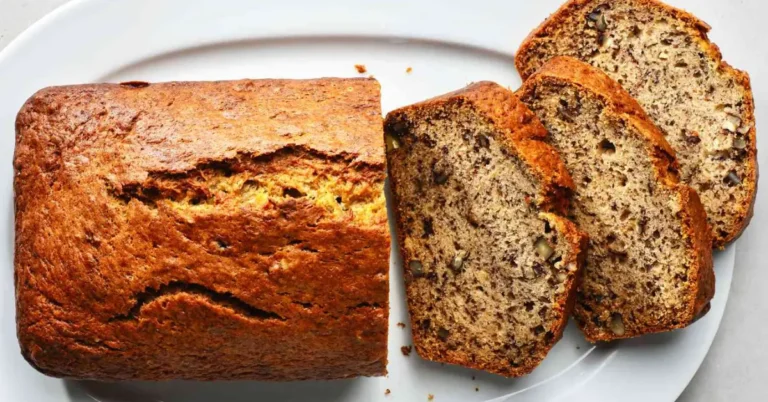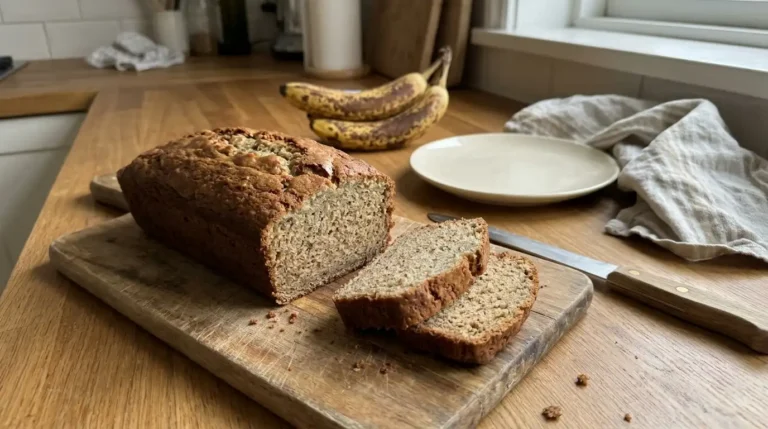
Easy Almond Flour Banana Bread (Soft & Tender)
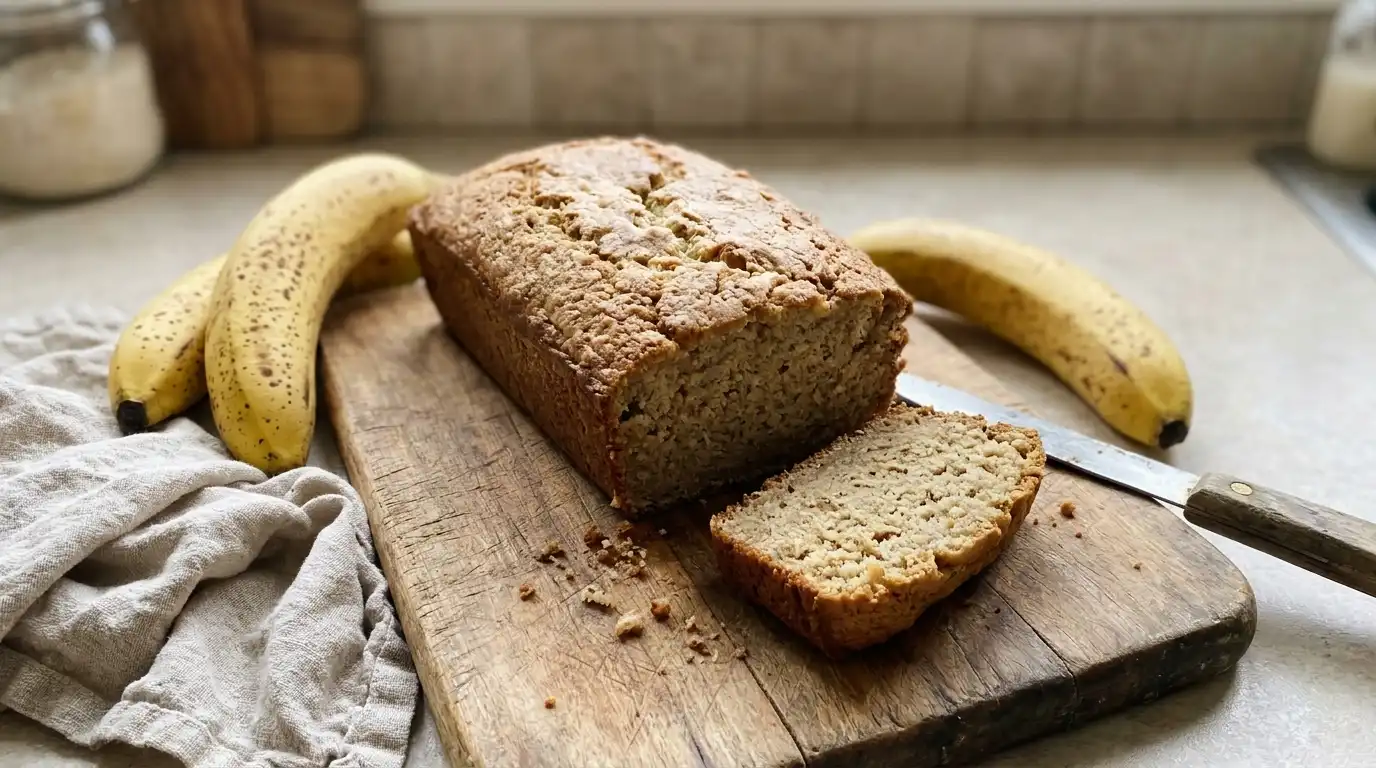
This almond flour banana bread is for bakers who want a banana loaf made specifically with almond flour—not a wheat-flour recipe with almond flour swapped in. It uses two very ripe bananas, eggs, and a measured amount of finely ground blanched almond flour for a tender, sliceable loaf.
Almond flour behaves differently from all-purpose flour: it has no gluten and contains more natural fat, so a cup-for-cup swap can leave banana bread greasy, dense, or crumbly. This almond flour banana bread is formulated specifically for almond flour. Weighing the bananas and flour, choosing the right grind, and cooling the loaf fully help it hold together for cleaner slices.
Why almond flour banana bread needs its own formula
A wheat-flour loaf gets structure from gluten. Almond flour banana bread depends more on eggs and careful moisture balance to hold together. Almond flour also browns quickly, so the top may look ready before the center is baked through.
| Main ingredient | Baker’s percentage (almond flour = 100%) |
|---|---|
| Superfine blanched almond flour | 100% |
| Mashed ripe banana | 83% |
| Eggs | 37% |
| Light brown sugar | 25% |
| Unsalted butter | 21% |
| Baking powder | 2.2% |
These ratios are for a dedicated almond flour banana bread, not a conversion ratio for wheat flour. Almond flour brands can vary in fineness, so weigh it when possible. For a loaf made with a cup-for-cup gluten-free blend, try our gluten-free banana bread recipe. If you want a conventional-flour loaf with yogurt, see our banana bread recipe with yogurt.
Ingredients that matter
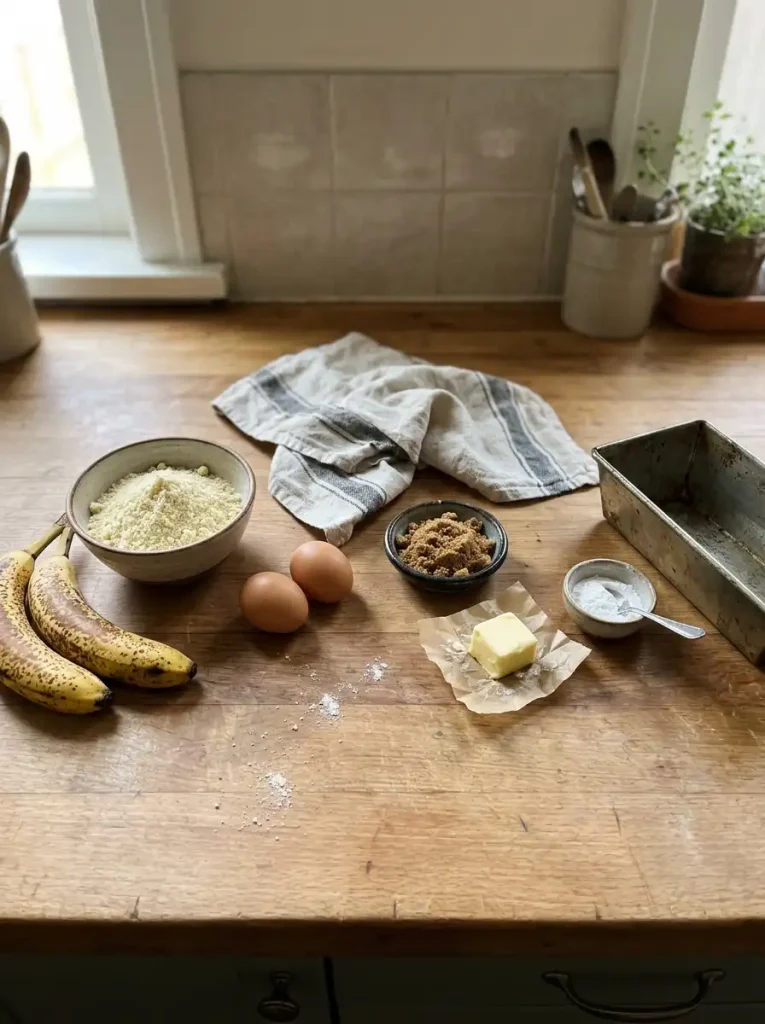
- Superfine blanched almond flour: Choose a finely ground flour made from blanched almonds. Almond meal is coarser and includes the skins, so it can make almond flour banana bread heavier or grainier.
- Ripe bananas: Use brown-spotted bananas and weigh them after peeling. Two bananas can differ a lot in size; aim for about 225 g (1 cup) mashed banana.
- Eggs: Eggs provide binding and lift in a loaf with no gluten. Keep the full amount in the base recipe; reducing the eggs can make the loaf more fragile.
- Light brown sugar: A modest amount balances the banana and almond flavor. Very ripe bananas will make the loaf sweeter.
- Melted butter: Adds richness and helps the crumb stay tender. Let it cool before mixing with the eggs.
- Baking powder and salt: Baking powder provides lift; salt makes the banana and almond flavors more pronounced.
How to make almond flour banana bread
- Prepare the pan. Heat the oven to 350°F (175°C). Line a light-colored 9-by-5-inch metal loaf pan with parchment, leaving overhang on the long sides.
- Mash and weigh the bananas. Mash the peeled bananas and weigh the mixture. Aim for about 225 g (1 cup); weighing gives a more reliable result than counting bananas alone.
- Mix the wet ingredients. Whisk the bananas with the eggs, brown sugar, cooled melted butter, and vanilla until combined.
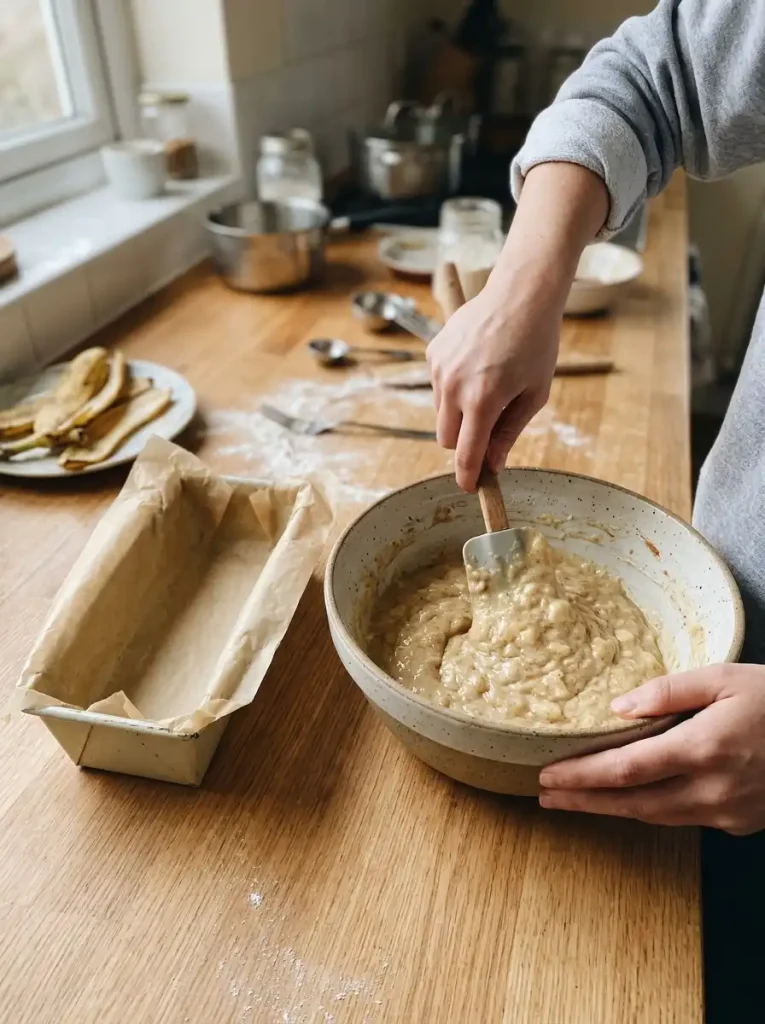
- Add the dry ingredients. Stir in the almond flour, baking powder, salt, and optional cinnamon just until no dry pockets remain. The batter will be thicker than a wheat-flour batter.
- Fill the pan. Scrape the batter into the prepared pan and smooth the top. Keep the first loaf plain so you can judge the base texture; try chocolate chips or chopped nuts in a later variation.
- Bake and check. Bake for 45–55 minutes, beginning to check near 45 minutes. A tester in the center should come out without wet batter. If the top gets deeply golden before the center is done, tent it loosely with foil.
- Cool completely. Rest the loaf in the pan for 15 minutes, then transfer it to a rack. Let it cool fully before slicing; almond flour banana bread firms as it cools.
Troubleshooting almond flour banana bread
- The loaf crumbles when sliced: It may have been cut warm, the almond flour may be too coarse, or the banana weight may be below the formula target. Cool fully and weigh the ingredients.
- The center is gummy: Check the center for wet batter before removing the loaf, use the specified metal pan, and let the bread cool completely before slicing.
- The loaf is dry: The bananas may be underripe or too light, or the flour may have been packed into the cup. Weigh the almond flour and banana mash instead of guessing.
- The top browns too quickly: Loosely tent the pan with foil and continue baking until the center is set. Almond flour can brown before the inside is ready.
- The texture feels gritty or heavy: Use superfine blanched almond flour, not coarse almond meal. Measure by weight and do not substitute another flour one-for-one.
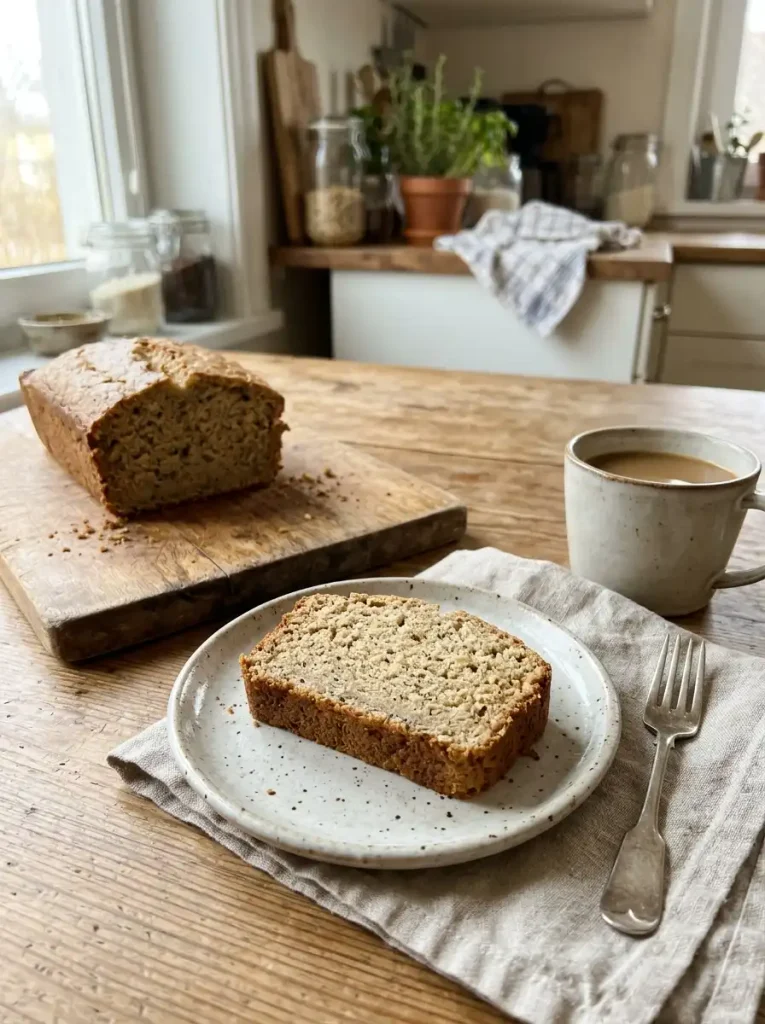
Frequently asked questions
Can I use almond flour instead of all-purpose flour in banana bread?
Not as a one-for-one swap. Almond flour banana bread needs its own balance of banana, eggs, flour, and leavening because almond flour has no gluten and behaves differently from wheat flour. Use a recipe written for almond flour.
Is almond flour the same as almond meal?
No. Almond flour is usually made from blanched almonds ground finely; almond meal is coarser and may include the skins. For a more tender, even crumb, choose superfine blanched almond flour.
Is almond flour banana bread gluten-free?
Almond flour and bananas do not contain wheat gluten, but packaged ingredients and shared equipment can introduce cross-contact. If baking for someone with celiac disease, check every label and use clean pans and utensils.
Does almond flour banana bread taste like regular banana bread?
No. Expect a nuttier flavor and a tender, somewhat denser crumb than a loaf made with wheat flour. Almond flour has its own texture and is best used in a recipe designed for it.
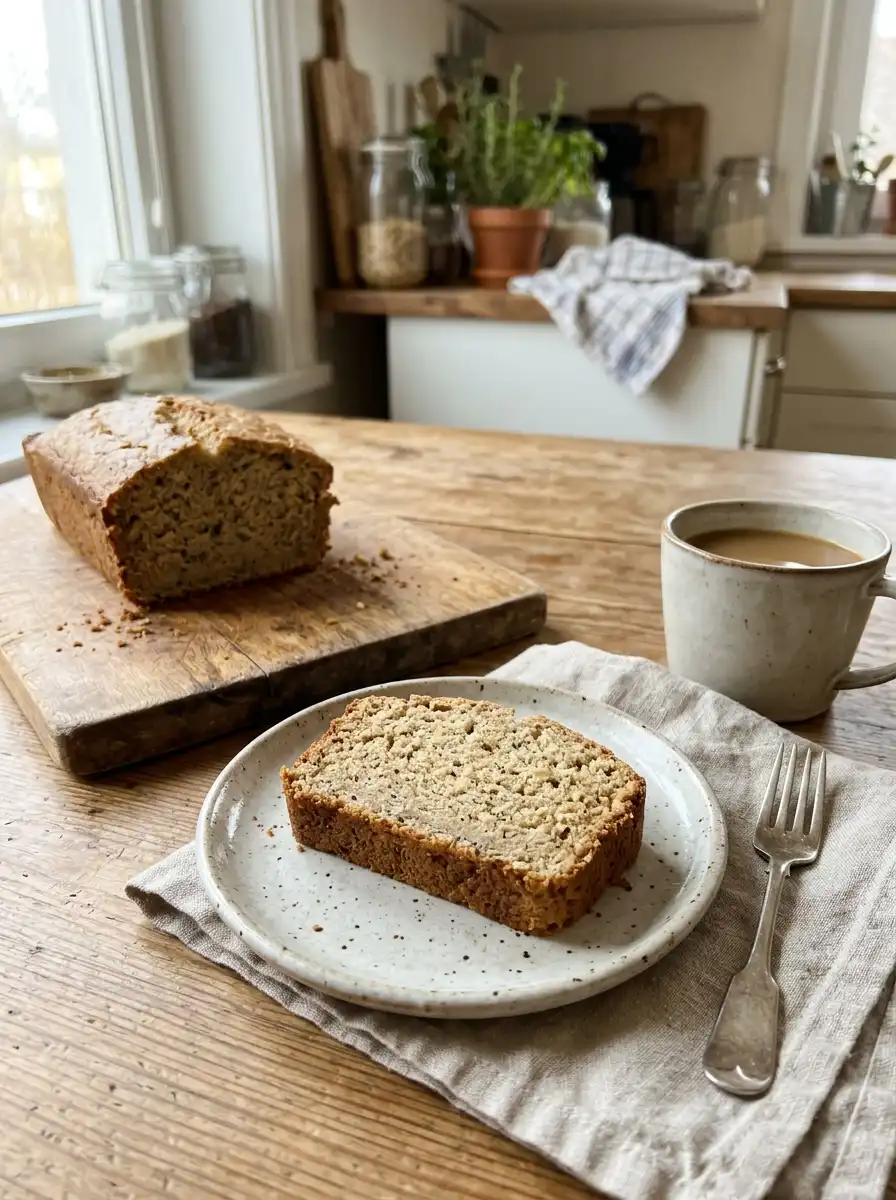
Easy Almond Flour Banana Bread
Ingredients
Equipment
Method
- Heat the oven to 350°F (175°C). Line a light-colored 9-by-5-inch metal loaf pan with parchment paper, leaving an overhang on the long sides.
- Peel and mash the bananas. Weigh the mash; the provisional formula targets about 225 g (1 cup). Record the actual amount.
- In a medium bowl, whisk together the superfine blanched almond flour, baking powder, salt, and optional cinnamon.
- In a large bowl, whisk together the mashed banana, eggs, brown sugar, cooled melted butter, and vanilla until combined.
- Add the dry ingredients to the wet ingredients. Stir just until no dry pockets remain; the batter will be thicker than a wheat-flour batter.
- Scrape the batter into the prepared pan and smooth the top. Keep the first test loaf plain so you can assess the base formula.
- Bake for a provisional 45–55 minutes, beginning to check near 45 minutes. A tester inserted in the center should come out without wet batter. If the top gets deeply golden before the center is done, tent it loosely with foil.
- Rest the loaf in the pan for 15 minutes. Transfer it to a wire rack and cool completely before slicing.