Chinese Donuts: The Ultimate Buffet-Style Recipe (3 Methods Compared)
Craving those pillowy, sugar-coated treats from the Chinese buffet? This comprehensive guide teaches you everything you need to know about Chinese donuts — from their fascinating history to three foolproof methods for making them at home, plus expert tips, troubleshooting advice, and creative serving ideas.
Table of Contents
What Are Chinese Donuts?
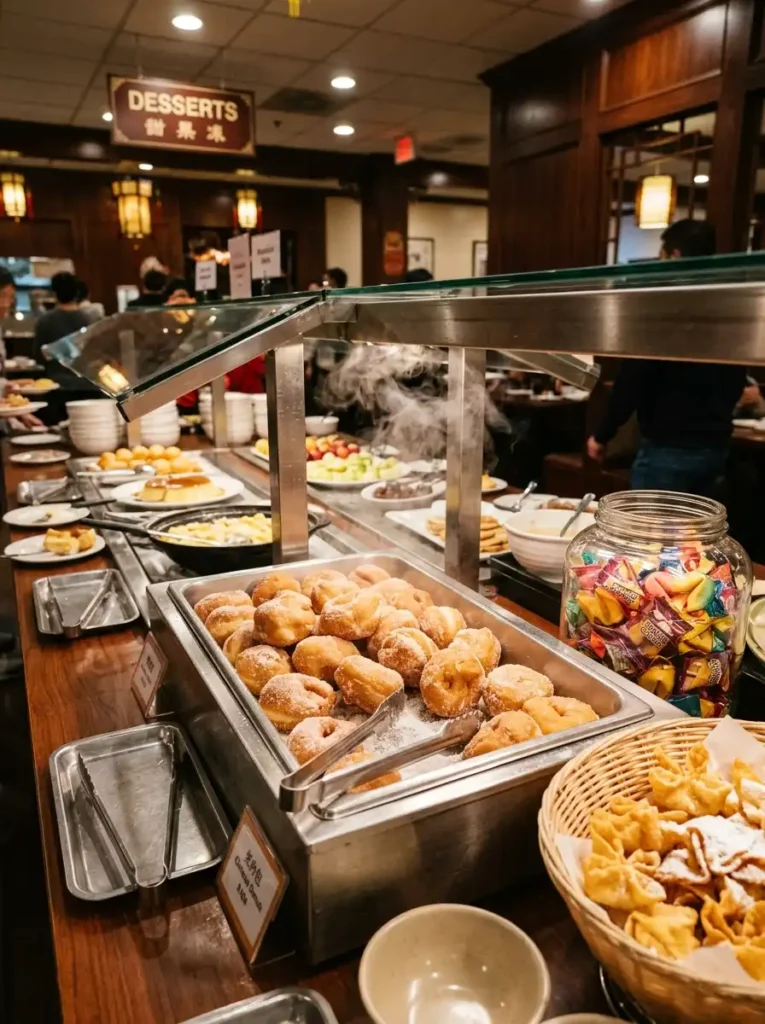
If you’ve ever walked past the dessert table at a Chinese buffet and spotted a tray of golden, sugar-dusted dough balls gleaming under the heat lamps, you already know the magic of Chinese donuts. These irresistible little puffs of fried dough are crispy on the outside, impossibly soft on the inside, and rolled in a generous coating of granulated sugar that crunches between your teeth with every bite.
But here’s what most people don’t realize: there are actually two completely different foods that people call “Chinese donuts,” and understanding the difference is the first step to making the perfect version at home.
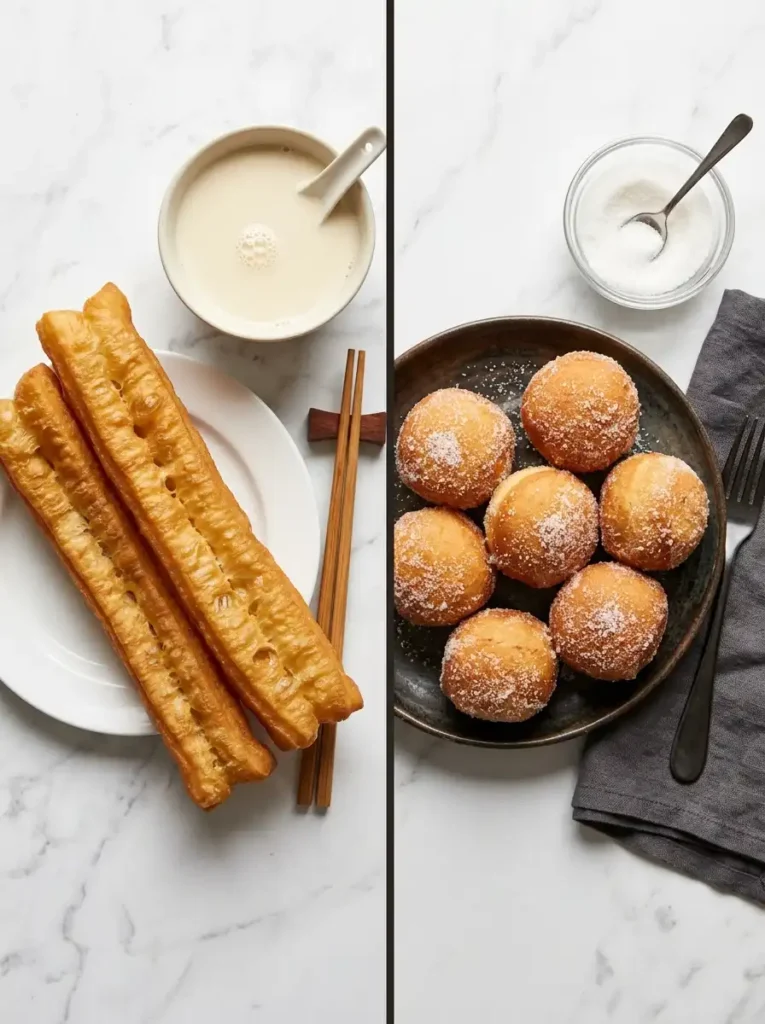
Youtiao vs. Chinese Buffet Donuts
| Feature | Youtiao (Traditional) | Chinese Buffet Donuts (Americanized) |
|---|---|---|
| Shape | Long strips (like a churro) | Round balls |
| Sweetness | Unsweetened, lightly salted | Sweet dough + sugar coating |
| Served with | Congee, soy milk, breakfast | Dessert table, after dinner |
| Origin | China (centuries old) | American Chinese restaurants |
| Texture | Chewy, airy, crunchy outside | Pillowy, fluffy, sugar-crusted |
| Also called | Chinese cruller, Chinese churro | Chinese sugar donuts, buffet donuts |
Youtiao (油条) is a traditional Chinese breakfast staple that dates back over a thousand years. These long, golden strips of deep-fried dough are typically paired with warm soy milk or rice congee and are savory rather than sweet. They’re a beloved street food across China, Vietnam (where they’re called dầu cháo quẩy), and throughout East and Southeast Asia.
Chinese Buffet Donuts, on the other hand, are the Americanized version you’ll find at Chinese restaurants across the United States. These round, bite-sized dough balls are sweet — both from sugar in the dough and the generous sugar coating on the outside. They’re purely a dessert, often found nestled between the fortune cookies and the fried wontons on the buffet table.
This article focuses on the beloved Chinese Buffet Donuts — the sugary, pillowy treats that keep you going back for “just one more.”
The History Behind Chinese Donuts
The story of Chinese donuts in America is a fascinating tale of culinary adaptation. When Chinese immigrants opened restaurants in the United States, they adapted traditional dishes to suit American palates. Just as General Tso’s Chicken and Crab Rangoon were American inventions inspired by Chinese flavors, the round, sugar-coated Chinese Buffet Donut evolved from the traditional Youtiao.
The transformation made sense: Americans loved sweets, and the airy texture of Youtiao translated beautifully into a dessert when shaped into balls and coated in sugar. By the 1980s and 1990s, as Chinese buffets became ubiquitous across suburban America, these sugar donuts became one of the most popular items on the dessert table — often the thing people looked forward to most.
Today, Chinese donuts hold a special place in American food culture. They’re a nostalgic treat that reminds people of family dinners, celebrations, and those irresistible trips to the buffet. And the best part? You don’t need a buffet ticket to enjoy them — you can make them right at home.
3 Ways to Make Chinese Donuts at Home
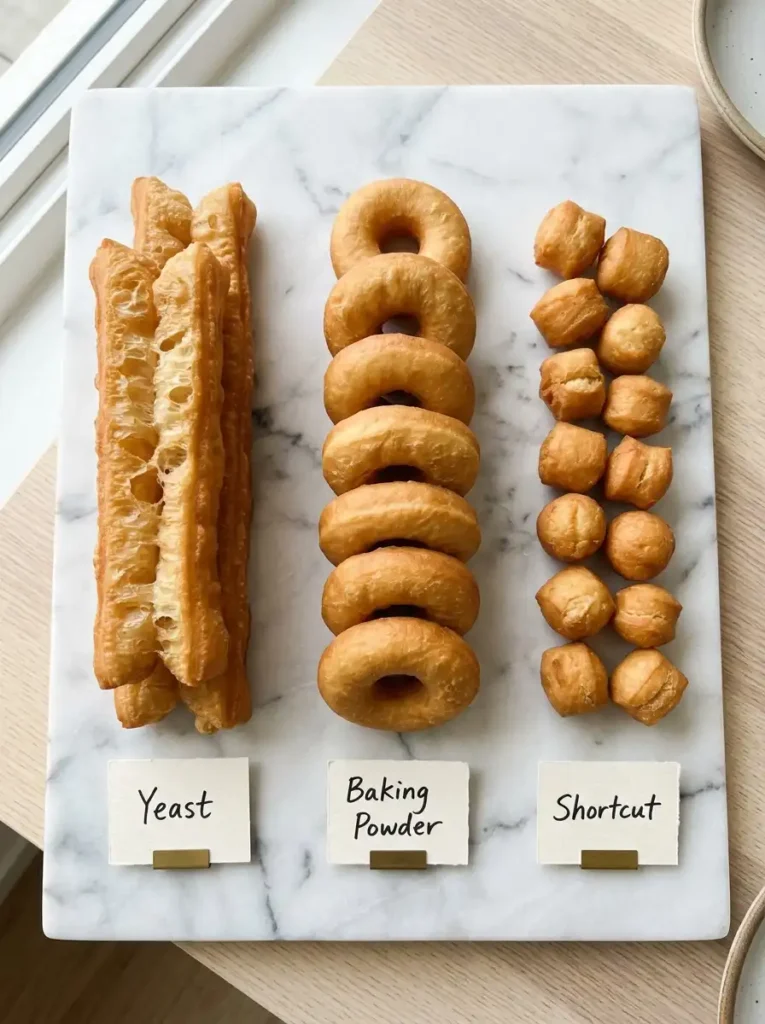
One of the great things about Chinese donuts is their versatility. Whether you’re an experienced baker who wants the most authentic from-scratch experience, or you need a quick treat in under 30 minutes, there’s a method for you.
| Method | Time | Difficulty | Texture | Best For |
|---|---|---|---|---|
| Yeast Dough (From Scratch) | 4–5 hours | Medium | Fluffiest, most authentic | Weekend projects, special occasions |
| Baking Powder Dough | 1 hour | Easy | Light, slightly biscuit-like | Quick cravings, weeknight desserts |
| Canned Biscuit Shortcut | 20–30 min | Easiest | Good but less fluffy | Beginners, last-minute treats |
Below, we’ll cover the traditional yeast dough method in full detail (since it produces the most authentic, buffet-quality results), with quick notes on the other two methods.
Chinese Donuts Recipe (Yeast Dough — From Scratch)
🧁 Chinese Donuts
This from-scratch recipe produces the fluffiest, most authentic Chinese buffet donuts you can make at home. The secret? A combination of yeast for lift, evaporated milk for richness, and a long chill in the refrigerator that develops flavor and makes the dough easy to work with.
⏱ Prep: 15 min🧊 Chill: 4 hours🔥 Cook: 15 min🧁 Yield: 24 donuts🍽 Cuisine: Chinese-American
Ingredients
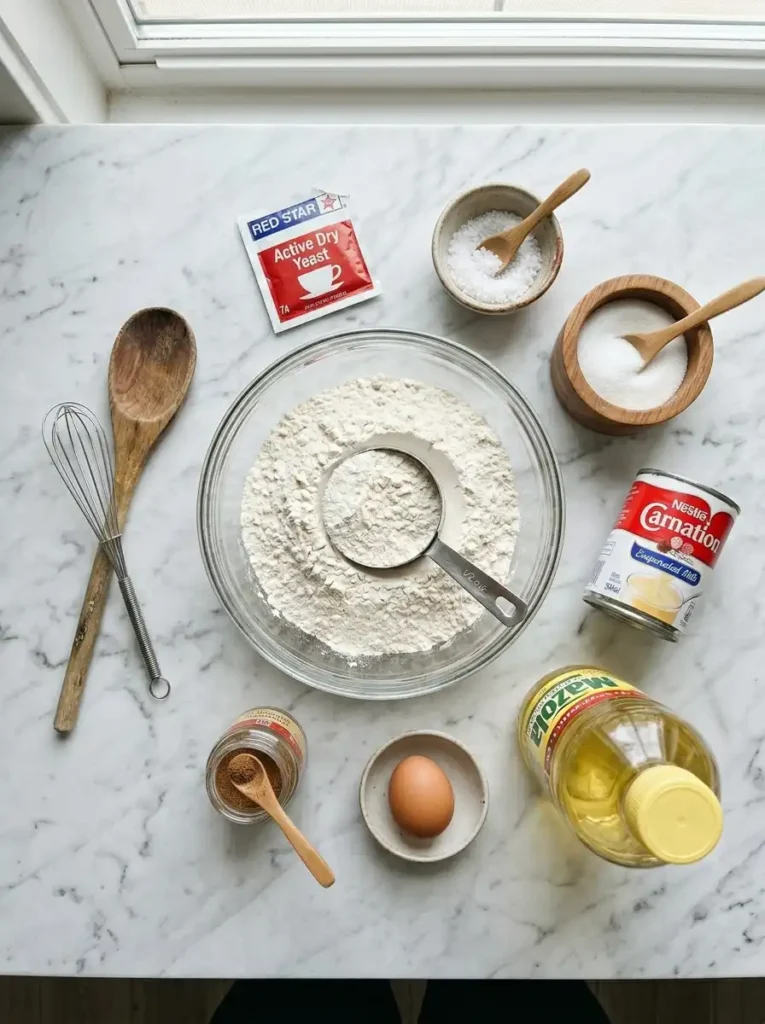
For the Dough:
- 1 packet (0.25 oz) active dry yeast
- ¼ cup warm water (105–115°F)
- ⅓ cup granulated sugar, divided
- 1 cup evaporated milk
- ½ cup vegetable oil
- 1 large egg
- 3 tablespoons baking powder
- ½ teaspoon ground nutmeg
- ¼ teaspoon salt
- 5 cups all-purpose flour
For Frying & Coating:
- Vegetable oil (enough for 2 inches in your pot)
- 1 cup granulated sugar
- ½ teaspoon ground nutmeg
Equipment You’ll Need
- Deep-fry thermometer — Non-negotiable for consistent results. Oil temperature is the single most important factor.
- Heavy-bottomed pot or Dutch oven — Holds oil temperature better than a thin pot. You need at least 2 inches of oil with room to spare.
- 3-inch biscuit cutter — For cutting perfectly round donuts. A drinking glass with a 3-inch rim works in a pinch.
- Slotted spoon or spider strainer — For safely removing donuts from hot oil.
- Wire cooling rack — Allows donuts to drain without getting soggy.
Step-by-Step Instructions
1 Activate the Yeast
In a large mixing bowl, combine the active dry yeast, warm water, and 1 teaspoon of the sugar. Stir gently and let sit for 5 minutes until the mixture becomes foamy and bubbly on top.
💡 Pro Tip: The water temperature is critical. Too hot (above 120°F) and you’ll kill the yeast. Too cold and it won’t activate. Aim for 105–115°F — it should feel like warm bath water on your wrist.
2 Make the Dough
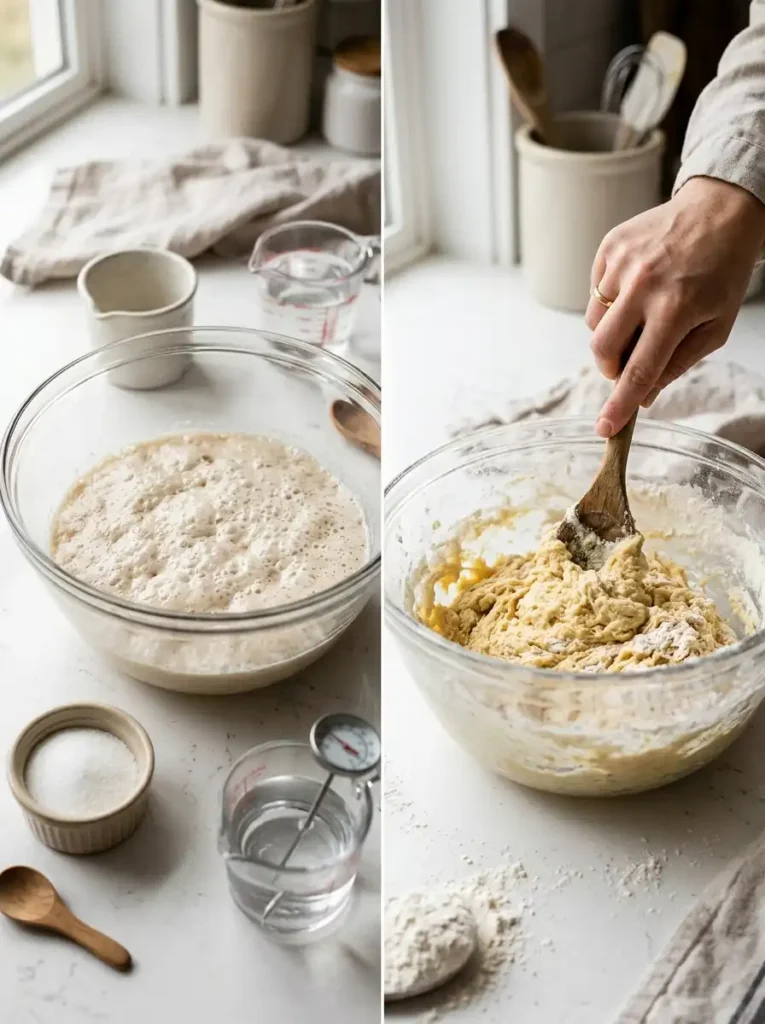
Once the yeast is foamy, add the evaporated milk, vegetable oil, the remaining sugar, and the egg. Stir to combine. Then whisk in the baking powder, nutmeg, and salt. Add the flour in ½-cup increments, whisking after each addition until all the flour is incorporated and you have a soft, slightly sticky dough.
💡 Pro Tip: Adding the flour gradually prevents lumps and ensures even mixing. The dough should be soft and tacky but not impossible to handle — if it’s too sticky, add flour 1 tablespoon at a time.
3 Chill the Dough
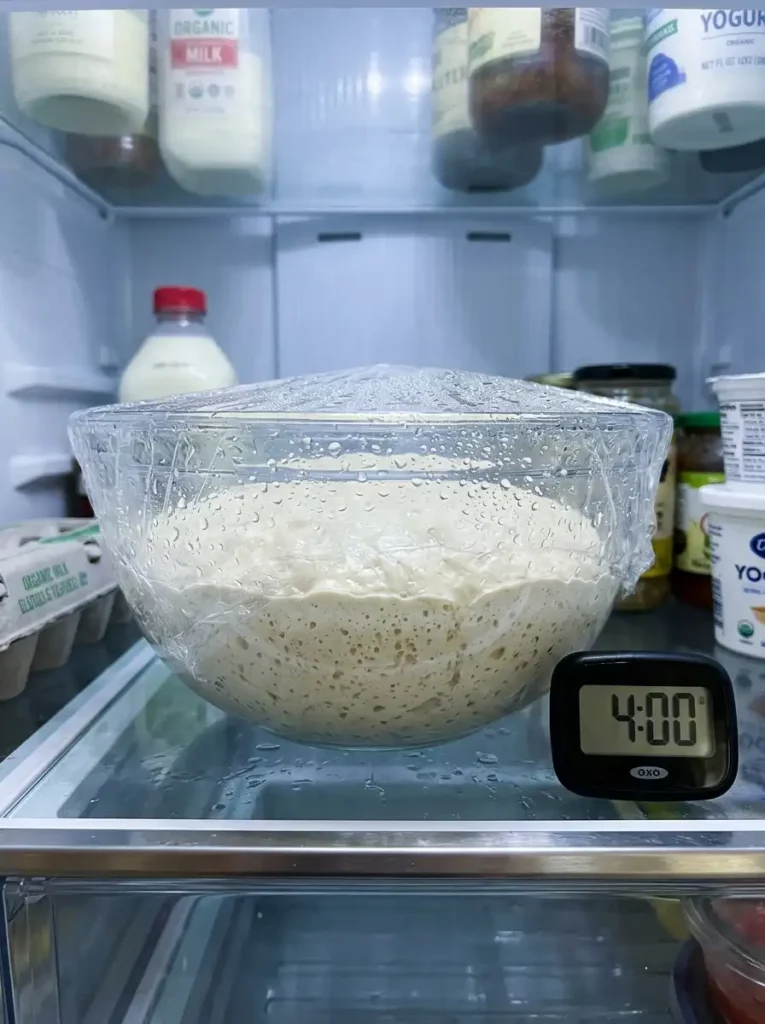
Cover the bowl tightly with plastic wrap (lightly spray the plastic wrap with cooking spray first so it doesn’t stick). Refrigerate for at least 4 hours, or overnight. This step is crucial — the cold firms up the dough, making it much easier to roll and cut, and the slow rise develops a deeper, more complex flavor.
💡 Pro Tip: You can make the dough the night before and fry the donuts fresh the next morning. This is actually the ideal approach for a weekend breakfast or brunch — just like making sourdough discard pancakes where the overnight rest improves the flavor.
4 Shape the Donuts
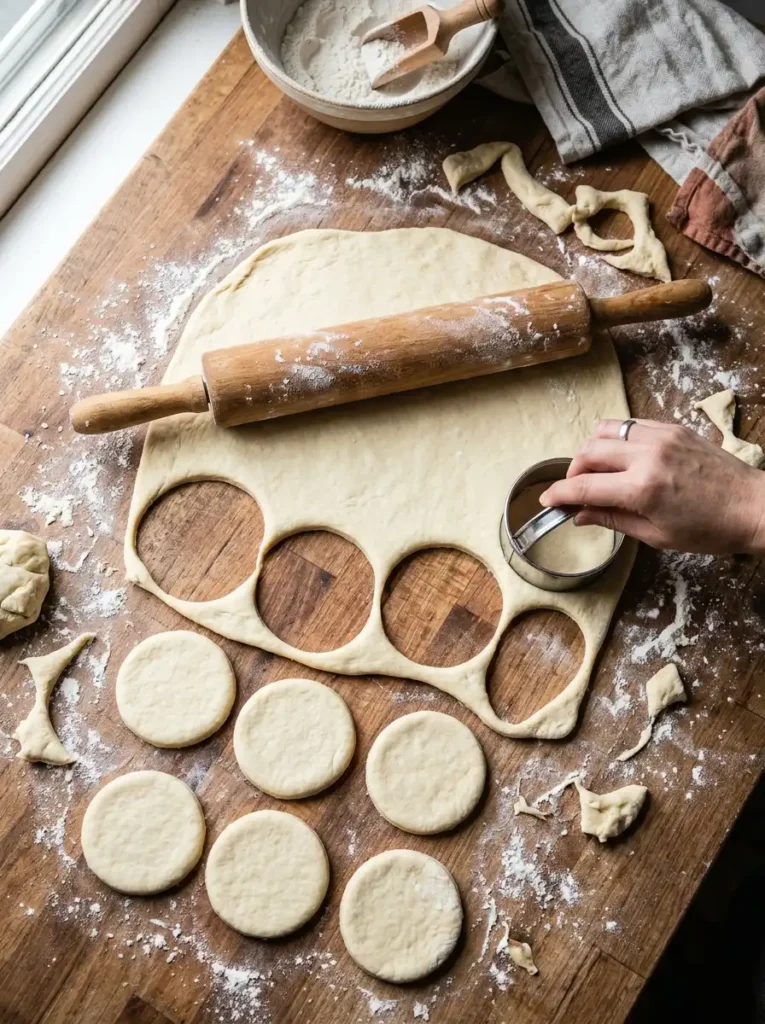
Remove the dough from the refrigerator and punch it down to release air bubbles. Turn it out onto a lightly floured surface and roll it into a large 12×12-inch square, approximately ¼ inch thick. Use a 3-inch biscuit cutter to cut out as many circles as possible. Gather the scraps, re-roll, and cut more circles.
💡 Pro Tip: Don’t twist the cutter when cutting — press straight down and lift. Twisting seals the edges and prevents the donuts from puffing up properly during frying. And yes, fry the leftover edge pieces! They’re the cook’s treat — just like the leftover scraps when making sour cream doughnuts.
5 Fry the Donuts
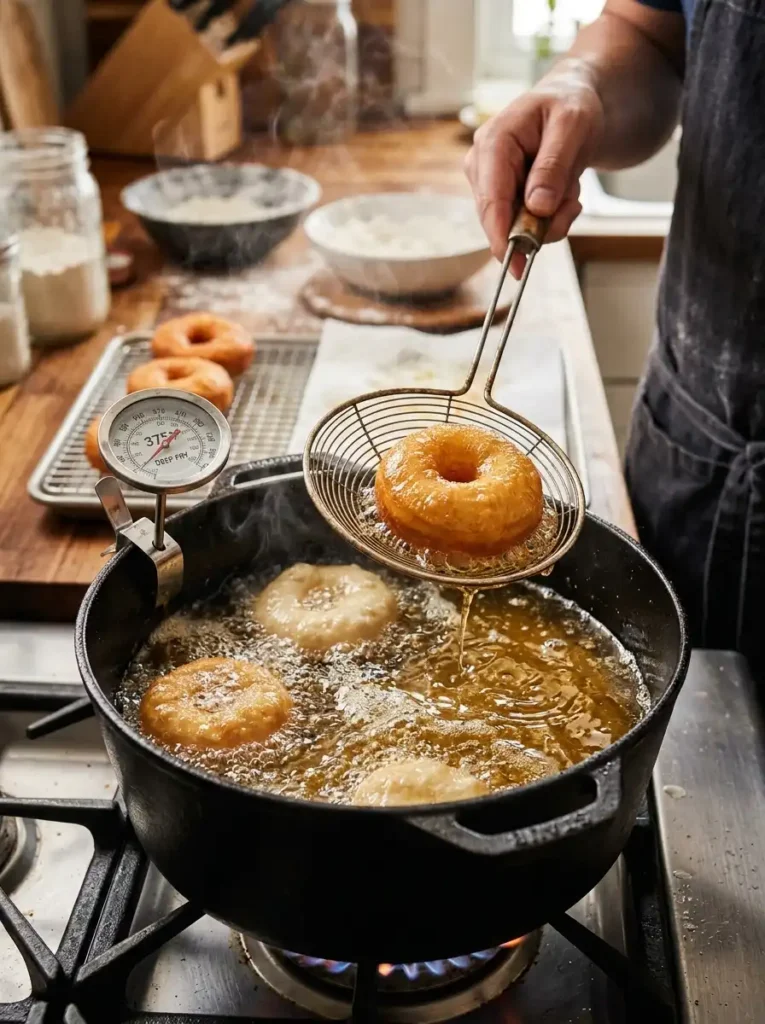
Pour 2 inches of vegetable oil into your heavy-bottomed pot and heat to 375°F. Use your deep-fry thermometer to monitor the temperature — this is essential. Carefully add the donuts in batches of 3–4 at a time, being careful not to overcrowd the pot (which causes the oil temperature to drop).
Fry for 1 to 1½ minutes per side, flipping once, until the donuts are a deep golden brown on both sides. Remove with a slotted spoon and place on a wire rack or paper towel-lined baking sheet to drain.
💡 Pro Tip: Preheat the oil to about 385°F before adding donuts — the temperature will drop when you add the dough. Aim to maintain 365–375°F throughout frying. If the oil is too cool, donuts absorb grease and become heavy. If too hot, they brown outside before cooking through — the same principle applies when making Timbits or any other fried dough.
6 Coat in Sugar
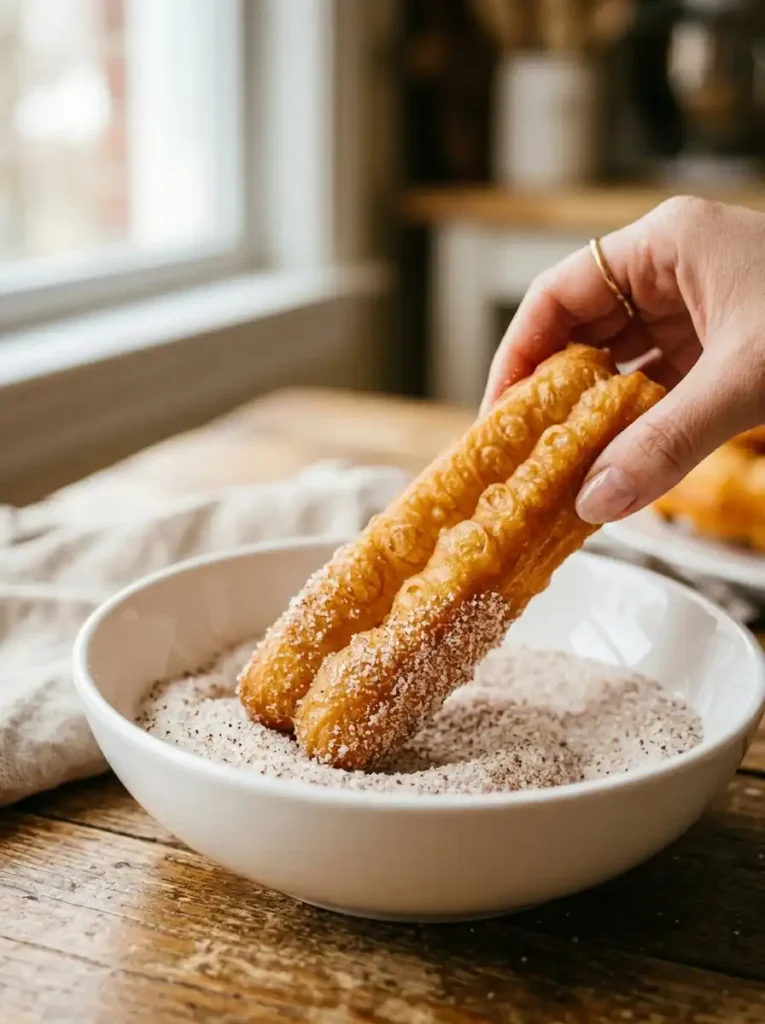
In a medium bowl, mix together the sugar and nutmeg for the coating. While the donuts are still warm (not hot, not cold), roll each one in the sugar mixture one at a time, pressing gently to ensure an even, generous coating on all sides. Place the coated donuts back on the wire rack.
💡 Pro Tip: The timing of the sugar coating matters. If donuts are too hot, the sugar melts and becomes sticky. If too cool, the sugar won’t adhere. The sweet spot is about 30–60 seconds after removing from the oil — warm enough for the sugar to stick, but not so hot that it dissolves.
7 Serve and Enjoy!
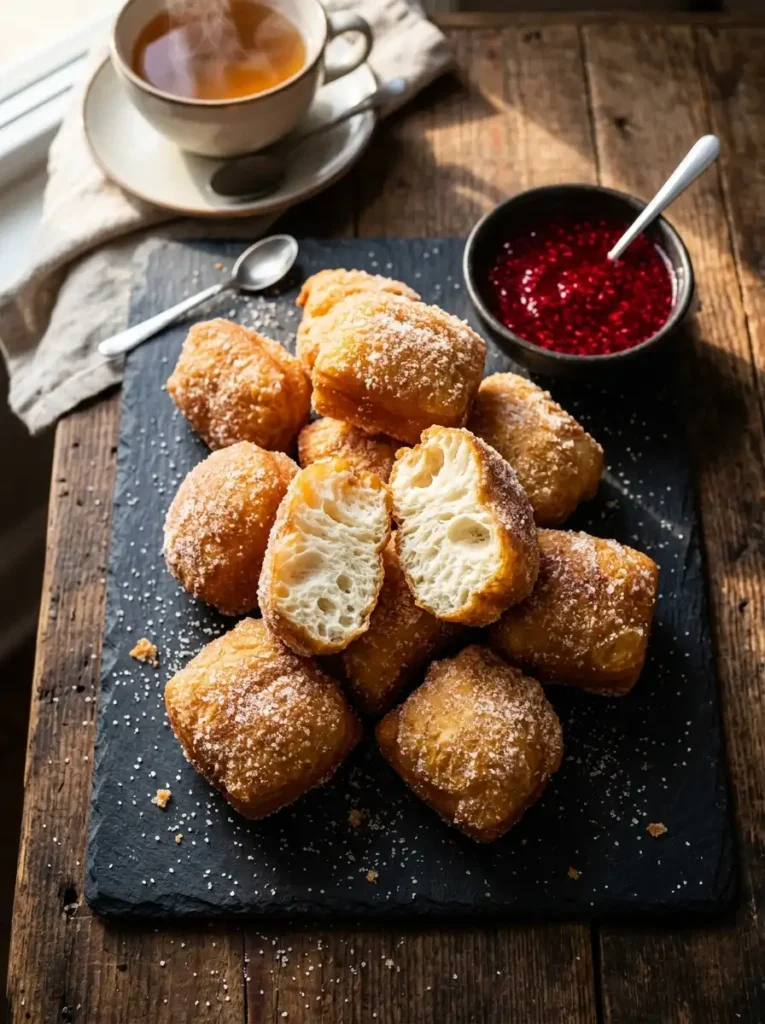
Serve your Chinese donuts immediately for the best experience. They’re incredible on their own, but even better with dipping sauces or a scoop of vanilla ice cream (see serving ideas below).
How to Make Chinese Donuts in the Air Fryer
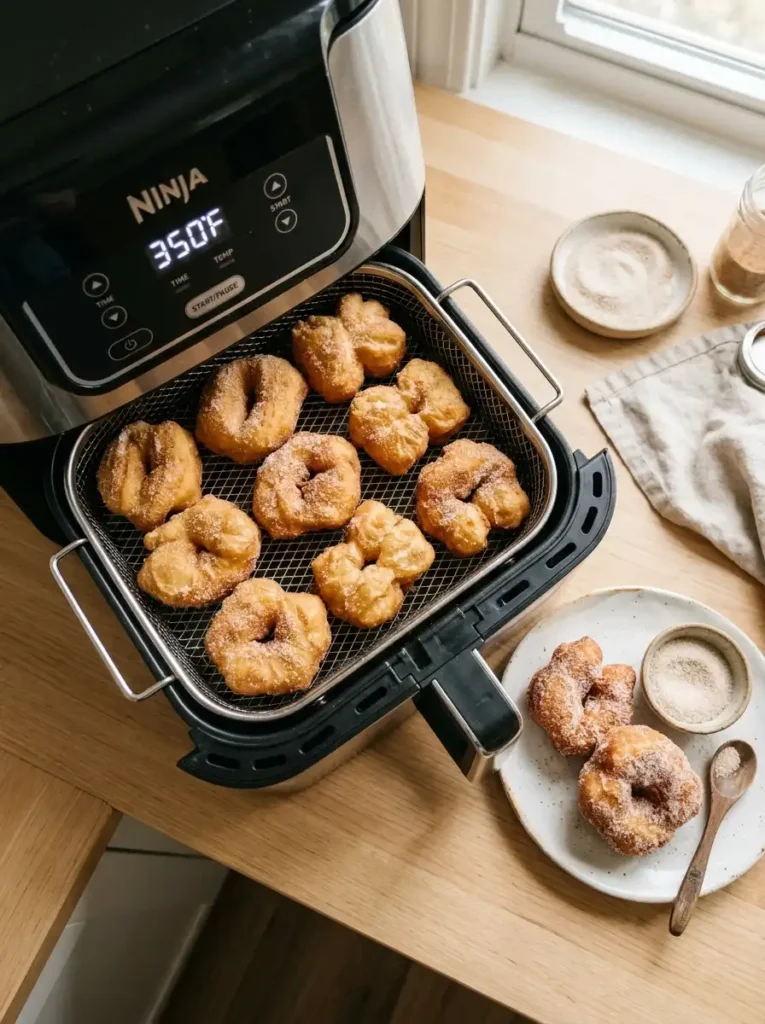
Want a lighter version? You can make these donuts in the air fryer with great results:
- Prepare the dough as directed above (including the 4-hour chill).
- Cut out the donut circles as usual.
- Place on a floured parchment-lined baking sheet, cover loosely with greased plastic wrap, and let rise at room temperature for 30 minutes.
- Preheat your air fryer to 350°F.
- Spray the basket generously with cooking spray. Add donuts in a single layer (don’t overcrowd).
- Spray the tops of the donuts with oil spray.
- Air fry for 3 minutes, flip, then air fry another 2–3 minutes until golden brown.
- Roll warm donuts in the sugar-nutmeg mixture.
⚠️ Note: Air-fried Chinese donuts will have a slightly different texture — more biscuit-like and less crispy than the deep-fried version. Still delicious, but different! For the most authentic results, deep frying is the way to go.
Quick Method: Baking Powder Dough (1 Hour)
Don’t have 4 hours? This no-yeast method uses baking powder for lift and comes together in just 1 hour. The texture is slightly more biscuit-like, but still delicious — and it’s completely egg-free.
Ingredients: 2 cups flour, 2 teaspoons sugar, ½ teaspoon salt, 2½ teaspoons baking powder, 6 tablespoons cold butter (cubed), ¾ cup whole milk, oil for frying, sugar for coating.
Method:
- Heat 2 inches of oil to 350°F in a heavy pot.
- In a food processor, combine flour, sugar, salt, and baking powder. Pulse in cold butter until mixture resembles coarse meal.
- Stir in milk until just combined.
- Turn onto floured surface, pat to ½-inch thick, and cut 2-inch circles.
- Fry 2 minutes per side until golden brown.
- Coat in sugar while warm.
💡 Key Difference: This method is egg-free and much faster, but the donuts are denser and less fluffy than the yeast version. The technique is similar to making sausage biscuits — a biscuit-style dough that gets fried instead of baked.
Quick Method: Canned Biscuit Shortcut (15 Minutes)
The fastest method of all uses refrigerated canned biscuits. While not from-scratch, it’s surprisingly close to the real thing.
Ingredients: 1 can refrigerated biscuits (the cheapest kind — NOT flaky layers), sugar for coating, vegetable oil for frying.
Method:
- Heat oil to 350°F.
- Separate biscuits and fry 1–1½ minutes per side until golden brown.
- Drain briefly on a wire rack, then roll in sugar while warm.
💡 Key Difference: Fastest and easiest, but the texture is less airy and the flavor is less complex than from-scratch versions. Great for beginners or when you’re short on time — like when you need a quick dessert to go with your pasta primavera.
Pro Tips for Perfect Chinese Donuts
Oil Temperature Guide
| Oil Temperature | Result |
|---|---|
| Below 325°F | ❌ Donuts absorb oil — greasy and heavy |
| 325–350°F | ⚠️ Donuts cook slowly, may be dense |
| 365–375°F | ✅ Perfect: golden, crispy outside, fluffy inside |
| Above 385°F | ❌ Outside burns before inside cooks through |
Always use a thermometer. The difference between 350°F and 375°F is the difference between a greasy donut and a perfect one. This is the same principle we emphasize in our sour cream doughnuts recipe — oil temperature is everything.
Dough Consistency Tips
- Too sticky? Add flour 1 tablespoon at a time. The dough should be tacky but not impossible to handle.
- Too dry? Add milk 1 teaspoon at a time. Dry dough produces crumbly, dense donuts.
- Just right? The dough should feel like a soft, pillowy earlobe — tacky to touch but not leaving residue on your fingers.
How to Tell When They’re Done
- Color: Deep golden brown (not pale, not dark brown)
- Time: 1–1½ minutes per side at 375°F
- Test: Insert a cake tester or toothpick into the center — it should come out clean with no wet dough
- Sound: The bubbling oil around the donuts will slow down as moisture evaporates
Troubleshooting Common Problems
❌ Donuts Are Dense and Heavy
Cause: Oil temperature too low, dough overworked, or yeast not activated properly.
Fix: Always verify oil temp with a thermometer. Knead dough gently — overworking develops too much gluten, just like when making focaccia bread, where gentle handling is key to an airy crumb. Ensure yeast foams before proceeding.
❌ Donuts Absorbing Too Much Oil
Cause: Oil temperature is too low, or you’re overcrowding the pot.
Fix: Fry in small batches and let the oil return to temperature between batches. The oil should actively bubble when donuts go in.
❌ Sugar Won’t Stick to the Donuts
Cause: Donuts are too cool when you try to coat them, or there’s excess oil on the surface.
Fix: Let donuts drain for 30 seconds on a wire rack, then roll in sugar while still warm. A very light dab with a paper towel removes excess surface oil.
❌ Dough Is Too Sticky to Roll
Cause: Not enough flour, or dough hasn’t chilled long enough.
Fix: The 4-hour refrigeration is key. If dough is still sticky after chilling, flour your surface and rolling pin generously.
❌ Donuts Not Puffing Up
Cause: Yeast was dead, or you twisted the cutter when cutting shapes.
Fix: Always proof yeast first (it should foam in 5 minutes). Cut straight down without twisting. And make sure your baking powder isn’t expired.
❌ Inside Is Raw While Outside Is Brown
Cause: Oil temperature too high, or donuts are too thick.
Fix: Lower oil temperature to 365°F. Roll dough to exactly ¼ inch thick. Don’t make donuts larger than 3 inches.
How to Store Chinese Donuts
Let’s be honest — Chinese donuts are best eaten fresh, right out of the fryer. But if you have leftovers (or want to plan ahead), here’s what you need to know:
At Room Temperature
- Store in an airtight container or ziplock bag
- Keep in a cool, dark place (not in direct sunlight)
- Best within 24 hours, acceptable up to 48 hours
- Let donuts cool completely before sealing to prevent condensation and sogginess
Freezing
- Place completely cooled donuts in a freezer-safe bag, squeezing out as much air as possible
- Freeze for up to 3 months
- Thaw at room temperature for 1–2 hours
- Reheat using one of the methods below
Reheating Methods
| Method | Instructions | Result |
|---|---|---|
| Air Fryer | 350°F for 60 seconds | Best: restores crispness |
| Microwave | 10–15 seconds | Quick but makes them softer |
| Oven | 350°F for 5 minutes | Good: gentle and even |
| Re-fry | 375°F for 30 seconds | Closest to fresh, but adds oil |
⚠️ Important: Do NOT refrigerate leftover Chinese donuts. Refrigeration makes them hard and tough. Room temperature or freezing are your best options.
Delicious Ways to Serve Chinese Donuts
While Chinese donuts are absolutely perfect on their own, these creative serving ideas take them to the next level:
Dipping Sauces (5 Irresistible Options)
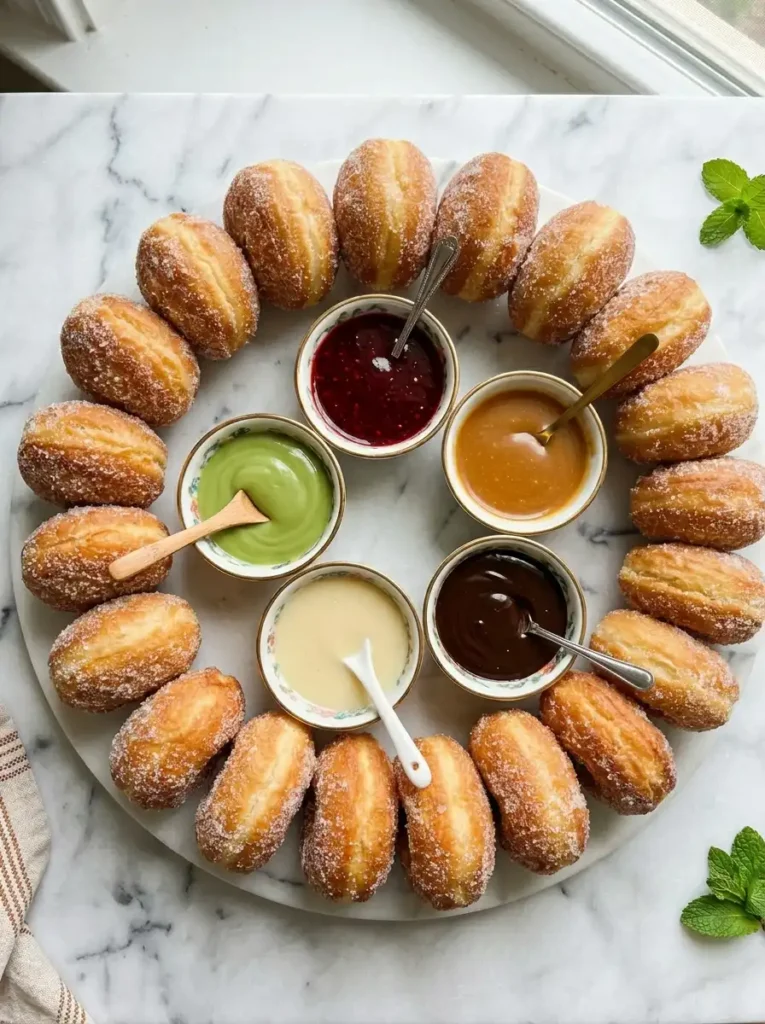
- Raspberry Sauce — The tartness cuts through the sweetness beautifully
- Caramel Sauce — Rich, buttery, and classic
- Hot Fudge Sauce — For the ultimate indulgence
- Sweetened Condensed Milk — A popular pairing in Asian dessert culture
- Coconut Caramel — Tropical twist that complements the nutmeg
Fillings & Toppings
- Fill with pastry cream using a piping bag and tip before coating in sugar
- Drizzle with melted chocolate and sprinkle with toasted sesame seeds
- Dust with cinnamon sugar instead of plain sugar for a warm-spiced variation
- Stuff with red bean paste for a more traditional Chinese dessert experience
- Top with matcha powder mixed into the sugar coating for a modern fusion twist — if you love matcha desserts, try our matcha tiramisu recipe too!
Drink Pairings
- Hot Jasmine Tea — The floral notes balance the sweetness perfectly
- Chai Tea — Warm spices complement the nutmeg in the dough
- Coffee — A classic pairing; the bitterness balances the sugar
- Hot Chocolate — For the ultimate comfort dessert experience
- Cold Soy Milk — Traditional pairing with Youtiao, works great here too
Make It a Dessert Spread
Chinese donuts pair beautifully with other desserts for an impressive spread. Serve them alongside biscoff brownies and cosmic brownies for a dessert table that will have everyone coming back for seconds.
Chinese Donuts FAQ
What are Chinese donuts made of?
Chinese donuts are made from a simple yeast dough consisting of flour, sugar, evaporated milk, vegetable oil, egg, baking powder, and a hint of nutmeg. After frying until golden brown, they’re rolled in a mixture of sugar and nutmeg.
Are Chinese donuts the same as Youtiao?
No. While they share a common ancestor, Chinese buffet donuts are the Americanized, sweet, round version, while Youtiao are traditional Chinese unsweetened, long strips of fried dough typically served for breakfast with congee or soy milk.
Can I make Chinese donuts without a deep fryer?
Absolutely! A heavy-bottomed pot or Dutch oven works perfectly. You just need 2 inches of oil and a deep-fry thermometer to monitor the temperature.
Can Chinese donuts be made ahead?
The dough can be made ahead and refrigerated overnight — in fact, this is the recommended approach! Fry the donuts fresh when you’re ready to serve. Already-fried donuts don’t keep well and should be eaten the same day.
Why are my Chinese donuts dense?
The most common causes are: oil temperature too low (causing the dough to absorb oil instead of puffing up), dead yeast (always proof yeast first), or overworking the dough (which develops too much gluten).
Can I make Chinese donuts in the air fryer?
Yes! After preparing and cutting the dough, let the cut circles rise for 30 minutes at room temperature, then air fry at 350°F for 3 minutes per side. The texture will be slightly different — more biscuit-like — but they’re still delicious and much lighter.
Are Chinese donuts vegan?
Traditional Chinese buffet donuts contain egg and evaporated milk, so they’re not vegan. However, the baking powder method (which is egg-free) can be made vegan by substituting the butter with vegan butter and the milk with a plant-based alternative. For more plant-based baking ideas, check out our best vegan cookie recipes.
Can I freeze Chinese donuts?
Yes! Let them cool completely, then store in a freezer-safe bag for up to 3 months. Thaw at room temperature and reheat in an air fryer at 350°F for 60 seconds, or microwave for 10–15 seconds.
What oil is best for frying Chinese donuts?
Use a neutral oil with a high smoke point. Vegetable oil and canola oil are the best choices. Avoid olive oil (low smoke point, strong flavor) and peanut oil unless you want a slight nutty flavor.
How long do Chinese donuts last?
Chinese donuts are best eaten the same day they’re made. Store leftovers in an airtight container at room temperature for up to 48 hours. You can freeze them for up to 3 months. Do not refrigerate — it makes them hard and tough.
Related Recipes
If you loved making Chinese donuts, try these other favorites from Total Tastes:
- Old-Fashioned Sour Cream Doughnuts — The craggy, glazed classic with a secret ingredient
- Homemade Timbits — Canadian donut holes, just like Tim Hortons
- Boston Cream Donut — Yeasted dough, vanilla pastry cream, and chocolate ganache
- Sourdough Discard Pancakes — The fluffiest pancakes with a tangy twist
- Homemade Focaccia Bread — Golden, crispy, and airy — another dough worth mastering
- Dubai Chocolate Kataifi — The viral pistachio chocolate bar you can make at home
- Biscoff Brownies — Fudgy, gooey, and swirled with cookie butter
- Cosmic Brownies — The childhood classic, made from scratch
- S’mores Cookies — Campfire flavor in a thick, chewy cookie
- 15+ Sourdough Discard Recipes — Never waste your discard again
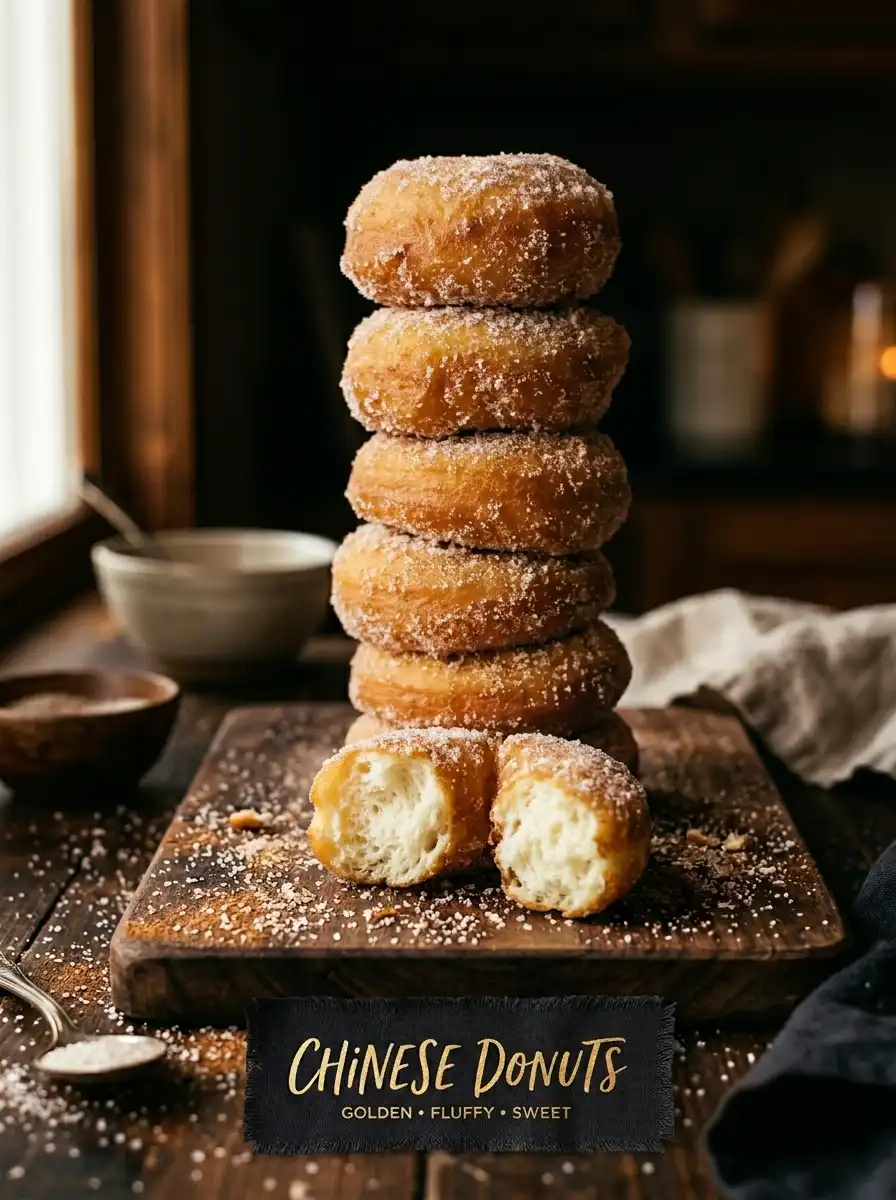
Chinese Donuts
Ingredients
Equipment
Method
- Activate the yeast: In a large mixing bowl, combine the active dry yeast, warm water, and 1 teaspoon of the sugar. Stir gently and let sit for 5 minutes until the mixture becomes foamy and bubbly on top. The water should be between 105-115°F — too hot will kill the yeast, too cold and it won’t activate.
- Make the dough: Add the evaporated milk, vegetable oil, the remaining sugar, and the egg to the foamy yeast mixture. Stir to combine. Then whisk in the baking powder, nutmeg, and salt. Add the flour in ½-cup increments, whisking after each addition, until all the flour is incorporated and you have a soft, slightly sticky dough.
- Chill the dough: Cover the bowl tightly with greased plastic wrap. Refrigerate for at least 4 hours, or overnight. The cold firms up the dough making it easier to roll and cut, and the slow rise develops deeper flavor.
- Shape the donuts: Remove the dough from the refrigerator and punch it down to release air bubbles. Turn onto a lightly floured surface and roll into a 12×12-inch square, approximately ¼ inch thick. Use a 3-inch biscuit cutter to cut out circles — press straight down without twisting. Gather scraps, re-roll, and cut more circles.
- Fry the donuts: Pour 2 inches of vegetable oil into a heavy-bottomed pot and heat to 375°F using a deep-fry thermometer. Carefully add donuts in batches of 3-4, without overcrowding. Fry for 1 to 1½ minutes per side until deep golden brown. Remove with a slotted spoon to a wire rack.
- Coat in sugar: In a medium bowl, mix together the sugar and ½ teaspoon nutmeg for the coating. While the donuts are still warm (about 30-60 seconds after frying), roll each one in the sugar mixture, pressing gently for an even coating on all sides. Place coated donuts on the wire rack.
- Serve: Serve immediately for the best experience. Chinese donuts are best enjoyed fresh and warm the same day they are made.