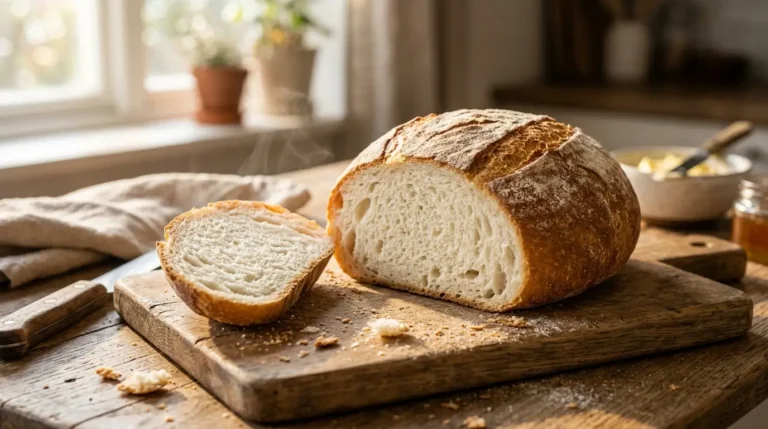
Gluten Free Gingerbread Cookies (Cut-Out Style)
These gluten free gingerbread cookies are planned as rolled, cut-out cookies with molasses and warm spices. Traditional gingerbread often contains wheat, so use a gluten-free flour blend and check ingredient labels if you need to avoid gluten. This is a provisional recipe draft: flour blends and molasses vary, and the formula and bake window still need kitchen testing.
The focus here is dough handling: mixing, chilling, rolling, cutting, and baking small shapes. If you prefer a drop cookie rolled in sugar instead, try our classic ginger snaps recipe; it has a different shape and method.
Why chilling matters for gluten free gingerbread cookies
Gluten-free dough can be delicate, and warm butter or molasses may make cutouts harder to handle. Chilling is included as a test step to firm the dough before rolling and to help the shapes stay distinct in the oven. The times below are starting points, not verified results.
For this gluten free gingerbread cookies test, the formula uses the 1:1 flour blend as the 100% reference. The percentages are for the test log, not a conversion chart.
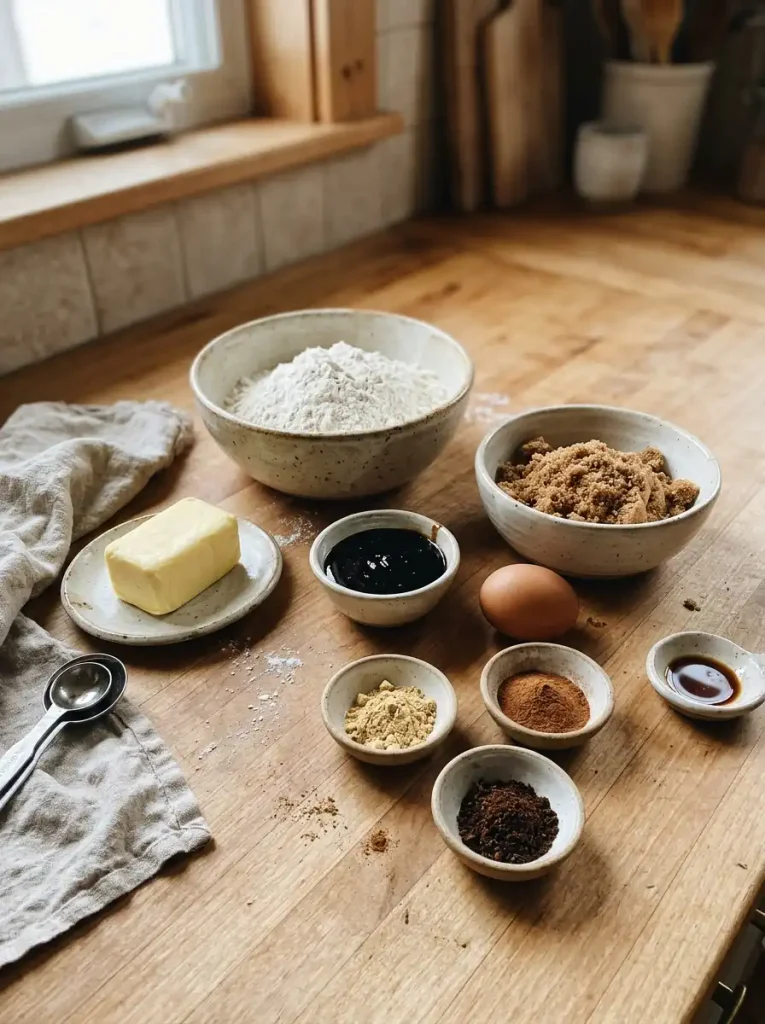
| Ingredient | Test weight | Baker’s percentage |
|---|---|---|
| 1:1 gluten-free flour blend | 400 g | 100% |
| Packed brown sugar | 110 g | 28% |
| Unsalted butter | 113 g | 28% |
| Molasses | 150 g | 38% |
| Egg, without shell | 50 g | 13% |
Ingredients for gluten free gingerbread cookies
- 1:1 gluten-free baking flour: Use one blend and record the brand. If the blend already contains xanthan gum, do not add extra; if it does not, the test formula includes a small optional amount.
- Molasses and brown sugar: These give the dough its dark color and characteristic flavor. Use regular unsulfured molasses for the first test; blackstrap can taste more bitter.
- Butter and egg: Softened butter helps the dough mix evenly, while the egg binds it. Keep both amounts fixed during the first test.
- Ginger, cinnamon, and cloves: The blend gives a classic warm-spice profile. Measure the ground spices rather than estimating.
- Baking soda and salt: These are small but important parts of the test formula. Measure level spoonfuls.
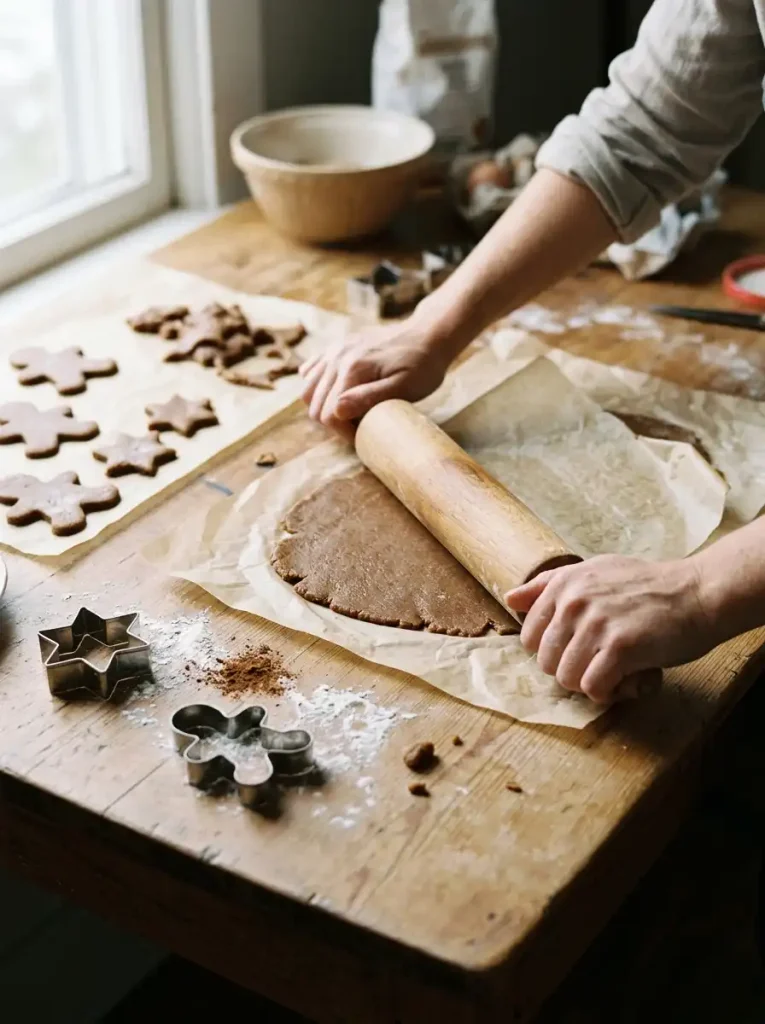
How to make gluten free gingerbread cookies
For gluten free gingerbread cookies, parchment keeps the dough from sticking as you roll; a second chill is included to test whether the cut shapes hold their definition.
- Mix the dry ingredients. Whisk the gluten-free flour blend, optional xanthan gum, baking soda, salt, ginger, cinnamon, and cloves in a bowl.
- Cream butter and sugar. Beat the softened butter and brown sugar until evenly combined and creamy; avoid whipping in lots of air.
- Add the wet ingredients. Mix in the egg, molasses, and vanilla until smooth. Add the dry mixture and mix just until a dough forms.
- Chill the dough. Divide it into two portions, press each into a flat disk, wrap, and chill for a provisional 1–2 hours. If it is still sticky, chill longer and note the time rather than adding unmeasured flour.
- Roll and cut. Roll one disk between parchment to about ¼ inch thick. Cut shapes close together to reduce scraps, then move the parchment and cutouts to a cool baking sheet.
- Chill the cutouts. Refrigerate the sheet for a provisional 15 minutes while the oven heats to 350°F (175°C). This second chill is a test step; record whether it improves shape retention.
- Bake and cool. Bake for a provisional 8–12 minutes, checking early because smaller shapes bake faster. Let the cookies firm on the sheet, then cool completely before decorating. Record the time, color, spread, and center texture.
If you want another gluten-free cookie for a holiday tray, see our gluten-free shortbread cookies. If the cutouts spread, our guide to why cookies turn flat explains the common causes; test any adjustment on one cookie before changing the whole batch.
Troubleshooting gluten free gingerbread cookies
- The dough sticks to the parchment: Chill it longer and work with one disk at a time. Avoid dusting heavily with extra flour, which changes the formula.
- The dough cracks while rolling: Let it rest at room temperature for a few minutes, then press cracks together. Record the dough temperature and flour brand.
- The shapes lose definition: Check the thickness and chill the cutouts before baking. Use a cool baking sheet; do not place fresh dough on a warm pan.
- The edges brown before the centers bake: Check the oven temperature and cookie thickness. Use a small test piece to compare the lower and upper ends of the provisional bake window.
- The cookies seem soft after baking: Let them cool completely before judging. The final texture and storage guidance are not established until the formula is tested.
Frequently asked questions
Are gingerbread cookies gluten-free?
Many traditional gingerbread recipes use wheat flour. These gluten free gingerbread cookies are drafted with a gluten-free flour blend, but check every ingredient label and prevent cross-contact if baking for someone who must avoid gluten.
Can I make gluten free gingerbread cookies without xanthan gum?
Use a 1:1 blend that already contains xanthan gum and do not add more. If the chosen blend has no binder, the provisional formula lists a small optional amount; verify that version separately before publishing a firm substitution.
Can I make gluten free gingerbread cookies without molasses?
Molasses gives gingerbread its characteristic flavor and affects the dough. A replacement has not been tested in this formula, so do not promise a one-to-one swap. Test a separate batch before adding a substitution note.
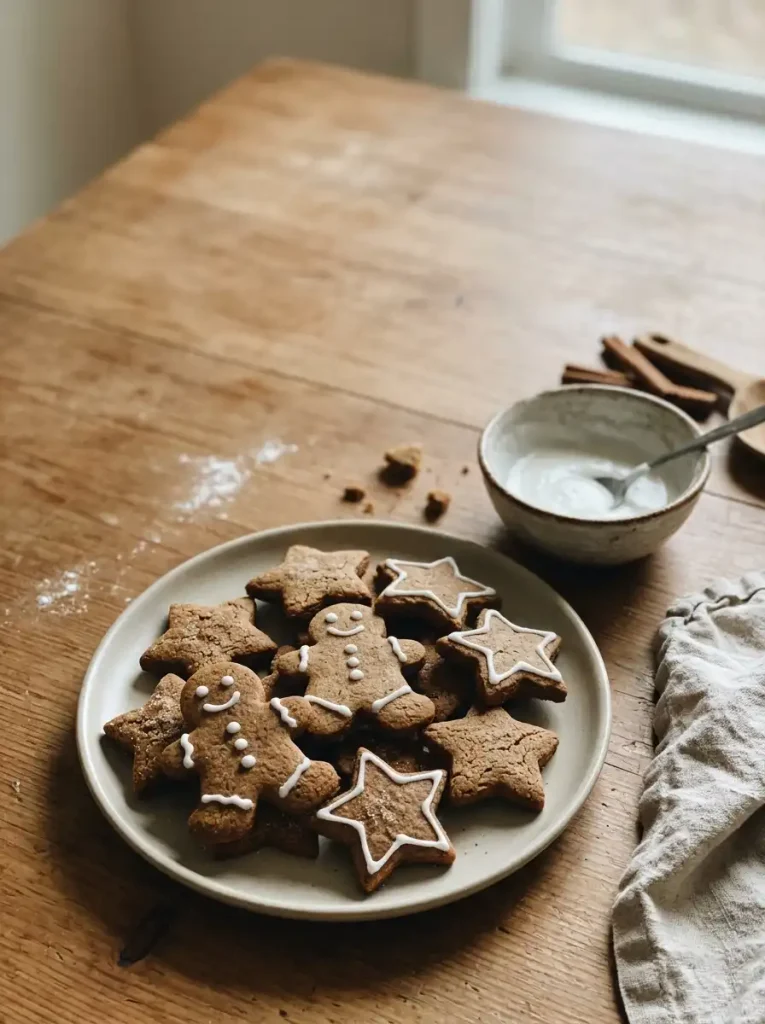
How do I decorate gluten free gingerbread cookies?
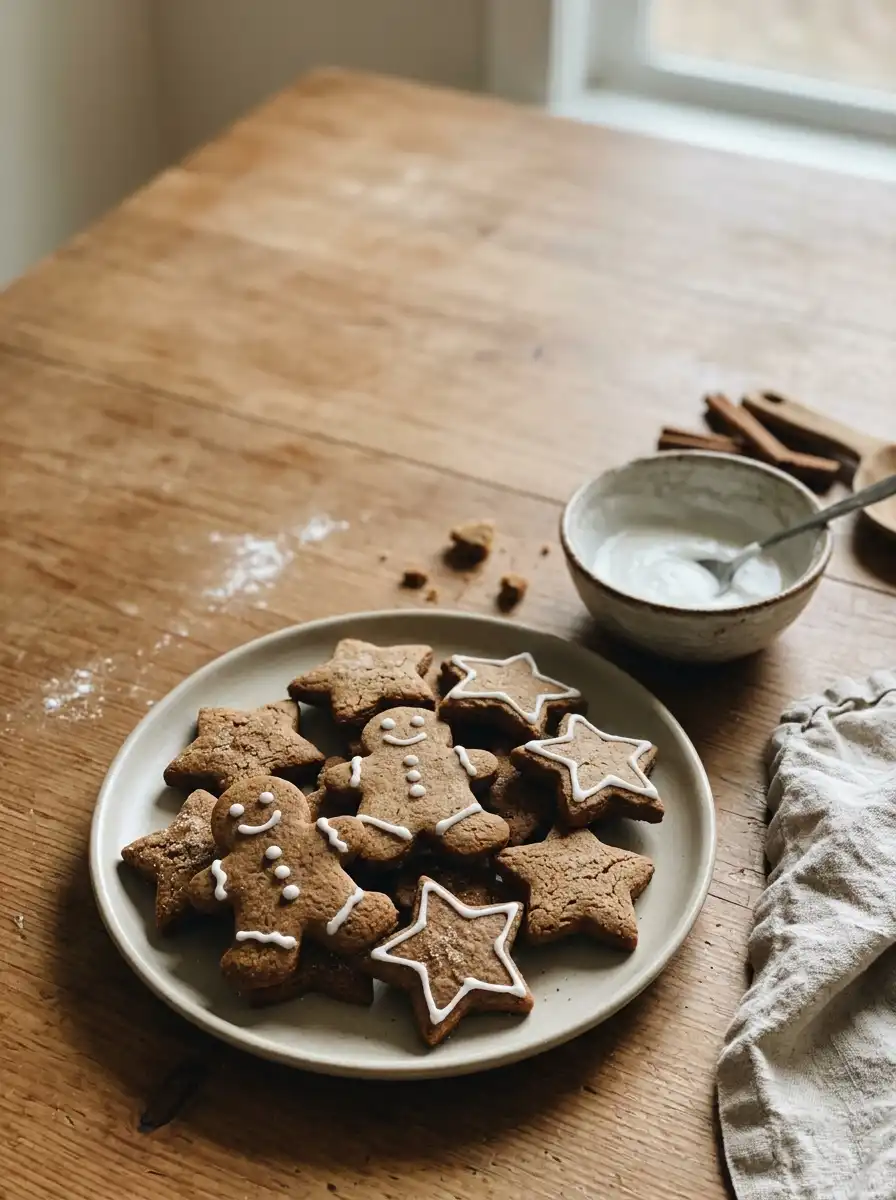
Wait until the cookies are completely cool before adding icing. The dough and bake have not been tested for detailed decorating, so check that the cookies hold their shape before making that claim.
How should I store gluten free gingerbread cookies?
Storage time has not been established for this test formula. After baking, check the texture the next day and add storage instructions only after that check.
Gluten Free Gingerbread Cookies (Cut-Out Style)
Ingredients
Equipment
Method
- Whisk together the gluten-free flour blend, xanthan gum if needed, baking soda, salt, ground ginger, cinnamon, and cloves.
- In a separate bowl, beat the softened butter and brown sugar until evenly combined and creamy; avoid whipping in excess air.
- Add the egg, molasses, and vanilla. Mix until smooth.
- Add the dry ingredients and mix just until a dough forms. Record whether the dough is sticky, crumbly, or workable; do not adjust the first test batch without noting the change.
- Divide the dough into two portions. Press each into a flat disk, wrap, and chill for a provisional 1 to 2 hours.
- Roll one disk between parchment to a provisional 1/4-inch thickness. Cut shapes close together to reduce scraps.
- Transfer the parchment and cutouts to a cool baking sheet. Gather scraps gently and re-roll once if needed.
- Chill the cutouts for a provisional 15 minutes while the oven heats to 350°F (175°C).
- Bake for a provisional 8 to 12 minutes, checking small cookies early. Record spread, color, edge set, and center texture.
- Let the cookies firm on the baking sheet, then cool completely on a rack before decorating. Confirm texture and shape retention before publishing.