Ingredients
Equipment
Method
- Heat the oven to 350°F (177°C). Line the base of a 9-inch springform pan with parchment and lightly grease the sides; use a pan at least 2 1/2 inches deep.
- Mix the crumbs, crust sugar, 1/8 teaspoon salt, and melted butter until evenly damp. Press firmly over the base and about 1 inch up the sides. Bake for 10 minutes, cool the crust, and lower the oven to 325°F (163°C).
- Wrap the outside of the springform pan in two broad layers of heavy-duty foil with no gaps. Set it inside a roasting pan. Bring a kettle of water to a boil; after the pans are on the oven rack, pour hot water into the roasting pan to halfway up the springform pan.
- Beat the softened cream cheese on low speed just until smooth, scraping the bowl. Mix in the filling sugar, sour cream, cornstarch, vanilla, 1/4 teaspoon salt, and optional lemon zest. Add the eggs one at a time, mixing only until each disappears.
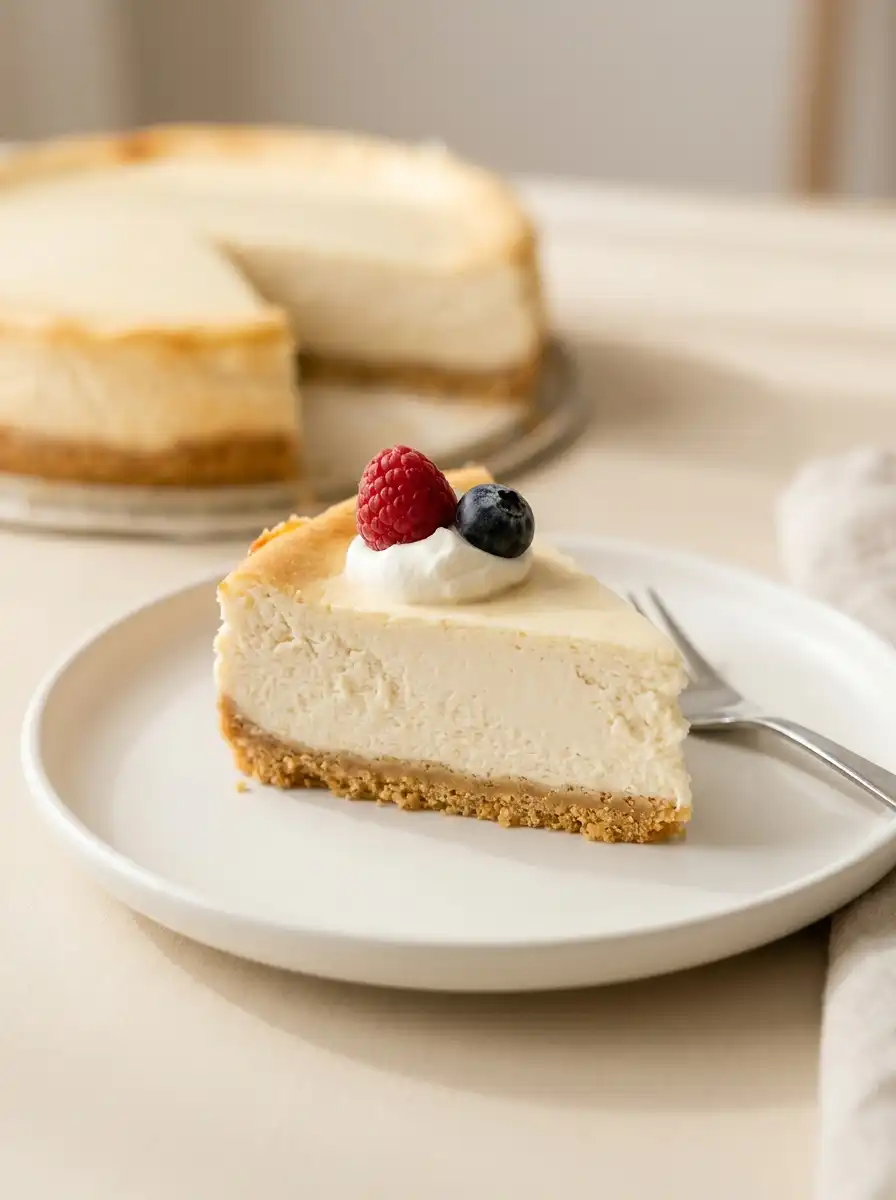
- Pour the filling over the cooled crust. Bake at 325°F (163°C) for about 55 to 70 minutes. The outer 2 inches should look set while the center wobbles softly as one area; it should not look liquid.
- Turn off the oven, crack the door open about 1 inch, and leave the cheesecake inside for 45 minutes. Move it to a rack and run a thin knife around the warm edge, leaving the springform ring on.
- Once the cheesecake stops steaming, refrigerate it loosely covered for at least 6 hours, preferably overnight. Release the ring when cold. Slice with a warm, clean knife, wiping between cuts.
Notes
Pan and crust: Use a 9-inch springform pan at least 2 1/2 inches deep. Press the crumb base firmly and prebake it so it stays crisp under the filling. Wrap the springform well before using the water bath.
Mixing: Bring cream cheese, sour cream, and eggs to room temperature. Beat the cream cheese until smooth, then mix on low after adding eggs. Stop as soon as each egg is incorporated; do not whip the batter fluffy.
Doneness: Start checking at 55 minutes. The edges should be set and the center should wobble gently as one soft area. A toothpick is not a useful test for custard-style cheesecake.
Cooling: Leave the cheesecake in the switched-off oven with the door cracked for 45 minutes, then move it to a rack. Refrigerate once it stops steaming; do not leave this dairy-and-egg dessert out for hours. Chill at least 6 hours for neat slices.
Storage: Keep covered in the refrigerator for 3 to 4 days. Freeze well-wrapped slices for up to 2 months and thaw in the refrigerator. This formula and its exact baking range still need a real kitchen test before calling it tested.