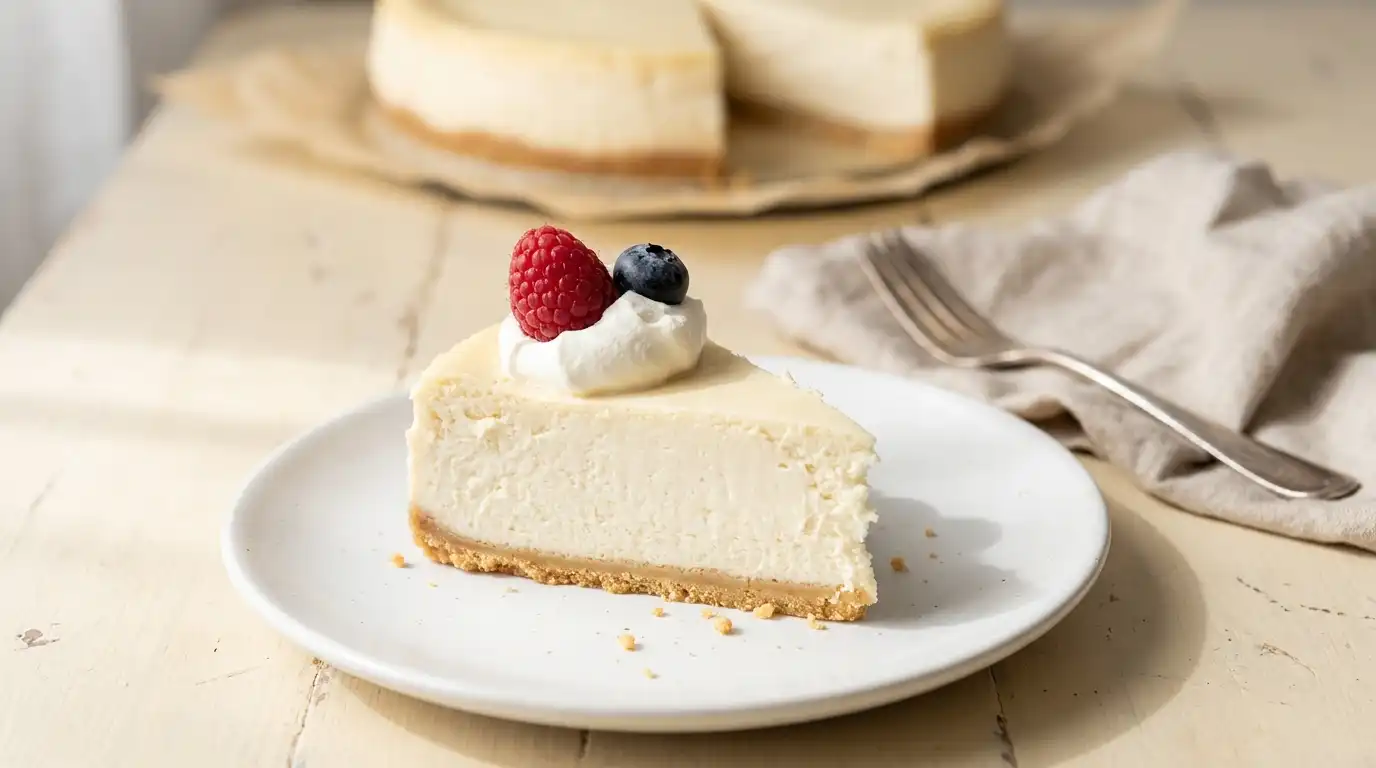
How to Bake a Cheesecake: Easy Temperature, Time & Doneness
Quick answer: How to bake a cheesecake evenly: pre-bake the crust, bake the filling at 325°F (163°C) in a water bath until the edges set and the center softly wobbles, cool gradually, then chill at least 6 hours.
That’s the key to how to bake a cheesecake: stop while the center still moves and let gradual cooling finish the set.
This guide shows you how to bake a cheesecake without treating it like sponge cake. It’s a custard: excess heat or whipped-in air can cause cracks or graininess. For a no-oven dessert, try our no-bake peanut butter cheesecake.
This example of how to bake a cheesecake uses a 9-inch springform and makes 8 generous slices. Bring cream cheese and eggs to room temperature; plan for a long chill.
How to Bake a Cheesecake at the Right Temperature
Bake the crust at 350°F (177°C) for 10 minutes, then lower the oven to 325°F (163°C) for the filling. When learning how to bake a cheesecake, keep the filling at moderate heat; 400°F is too hot for this slow-bake method.
| Stage | Temperature | Time or cue |
|---|---|---|
| Crust | 350°F (177°C) | 10 minutes |
| Filling | 325°F (163°C) | About 55–70 minutes; use the wobble cue |
| 400°F | Not for this recipe | Too hot for this slow-bake method |
A direct water bath buffers abrupt heat. King Arthur Baking’s comparison found it the most reliable tested method for reducing cracks; it cannot rescue an overbake.
How long to bake a cheesecake at 350°F?
There is no universal time. This recipe bakes the filling at 325°F; 350°F is just for the crust. When learning how to bake a cheesecake, follow its stated temperature and stop when the edges are set and the center jiggles softly—not when a toothpick comes out clean. The most useful answer to “how to bake a cheesecake” is to trust that wobble, not the clock alone.
Ingredients for a Classic Baked Cheesecake
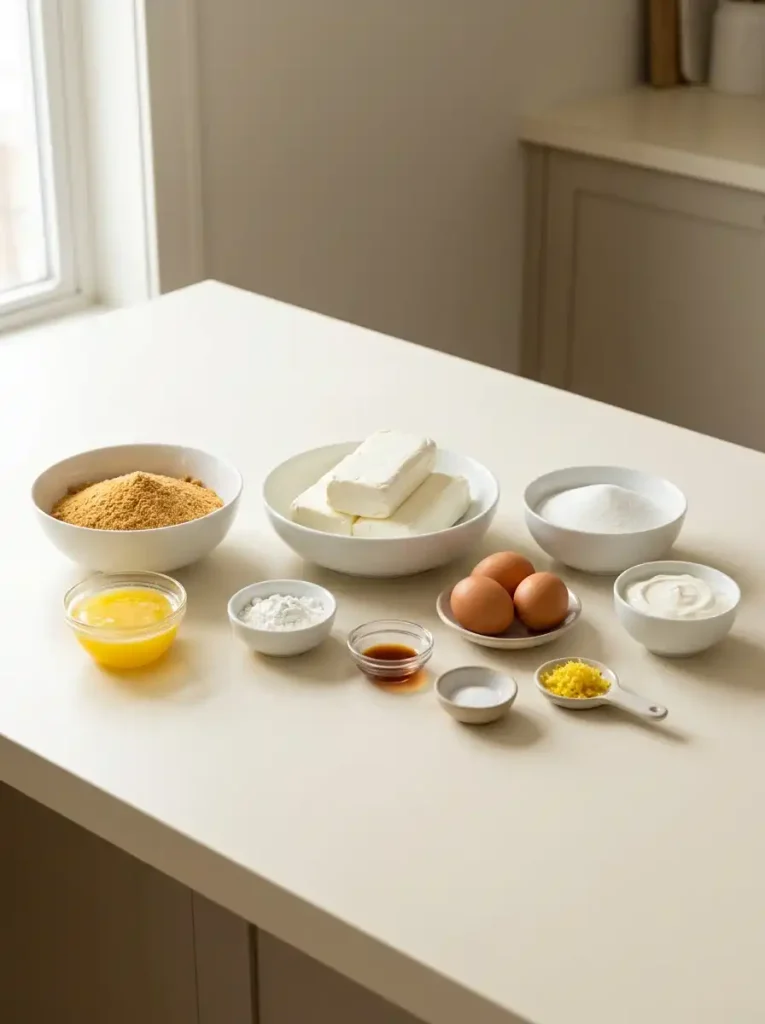
| Ingredient | Amount | Why it matters |
|---|---|---|
| Graham cracker or digestive-biscuit crumbs | 2 cups (200 g) | Fine crumbs make a firm, sliceable base |
| Unsalted butter, melted | 6 tbsp (85 g) | Binds the crust without making it greasy |
| Granulated sugar | 2 tbsp (25 g) for crust; 1 cup (200 g) for filling | Sweetens both layers |
| Full-fat brick cream cheese, softened | 3 blocks (24 oz / 680 g) | Gives the filling structure and richness |
| Full-fat sour cream, room temperature | ¾ cup (180 g) | Adds tang and a smooth texture |
| Large eggs, room temperature | 3 | Set the custard; add one at a time |
| Cornstarch | 1 tbsp (8 g) | Helps the chilled slices hold together |
| Vanilla, fine salt | 1 tsp; ⅛ tsp crust + ¼ tsp filling | Flavor and balance |
| Lemon zest, optional | 1 tsp | Brightens the rich filling without adding much liquid |
Use these weights for a standard 9-inch springform. For an Oreo-style crust, use the base from our Oreo cheesecake, but keep the filling and bake method separate.
How to Bake a Cheesecake Step by Step
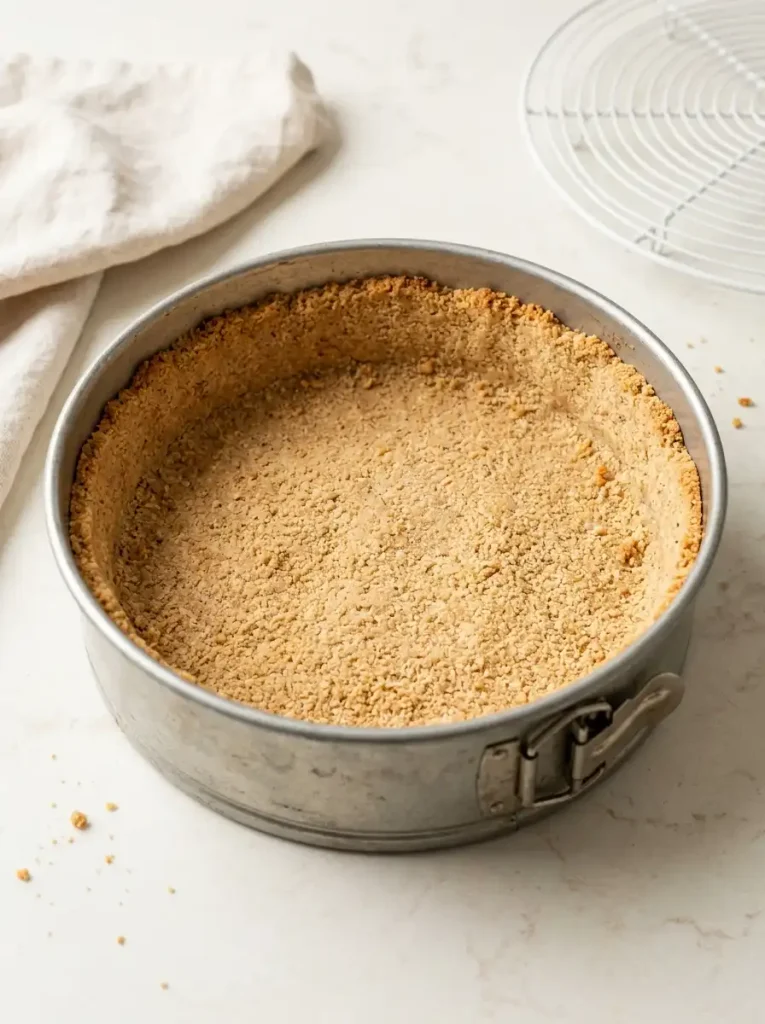
For how to bake a cheesecake with a creamy center, follow this order: crust, filling, bath, bake, slow cool.
- Prepare the pan and oven. Heat to 350°F. Line the base of a 9-inch springform pan with parchment; grease the sides. Use a pan at least 2½ inches deep. Pan depth changes how to bake a cheesecake: a shallower pan will finish sooner than this timing range.
- Bake the crust. Mix crumbs, crust sugar, ⅛ teaspoon salt, and melted butter. Press firmly over the base and 1 inch up the sides. Bake 10 minutes; cool and lower the oven to 325°F.
- Set up the water bath. Wrap the springform pan in two broad layers of heavy-duty foil with no gaps. Set it in a roasting pan. On the oven rack, pour in hot water to halfway up the springform pan.
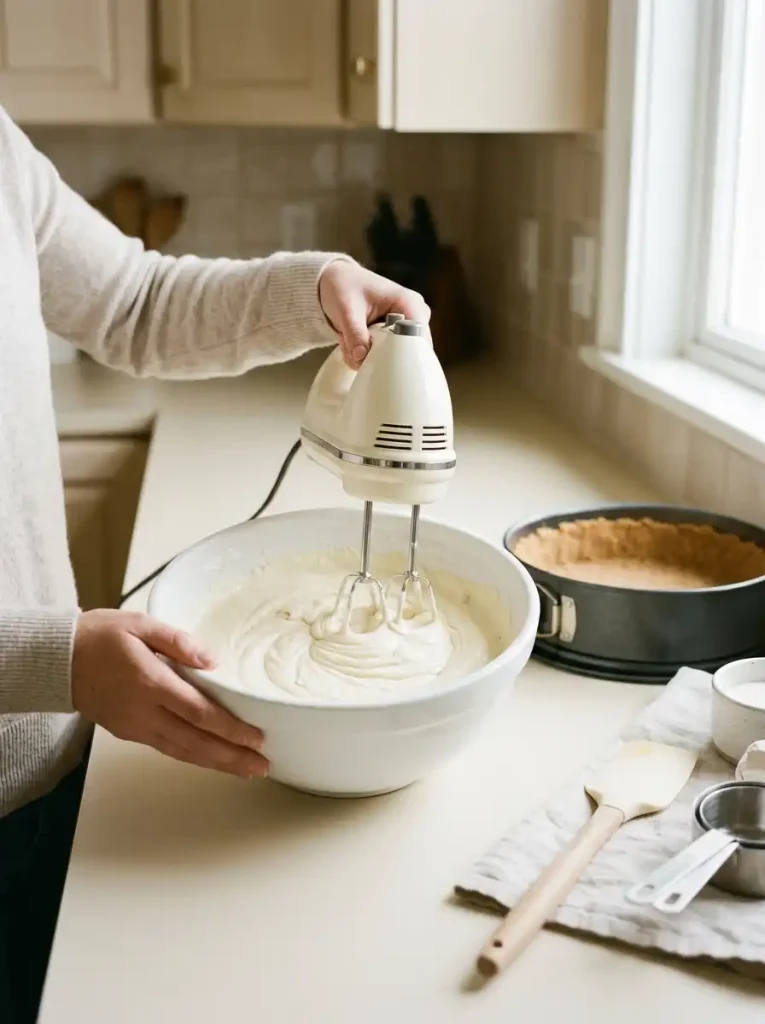
- Mix the filling gently. Beat softened cream cheese on low until smooth, scraping the bowl. Mix in filling sugar, sour cream, cornstarch, vanilla, ¼ teaspoon salt, and optional zest. Add eggs one at a time, mixing only until each disappears.
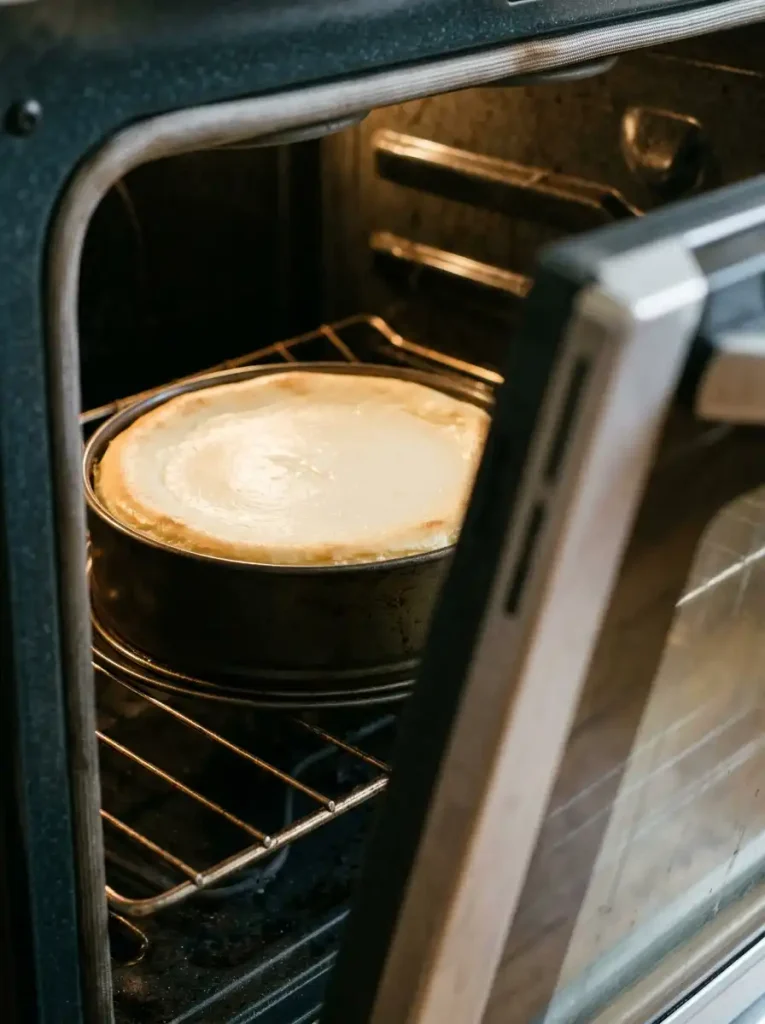
- Fill and bake. Pour filling over the crust. Bake at 325°F for about 55–70 minutes. The outer 2 inches should look set; the center should wobble as one soft area, not look liquid. That cue helps you bake a cheesecake without drying it out.
- Cool slowly. Turn off the oven, crack the door 1 inch, and leave the cake inside for 45 minutes. Move it to a rack and run a thin knife around the warm edge, leaving the ring on.
- Chill before slicing. Once it stops steaming, refrigerate loosely covered for at least 6 hours, preferably overnight. Release the ring when cold. Slice with a warm, clean knife, wiping between cuts.
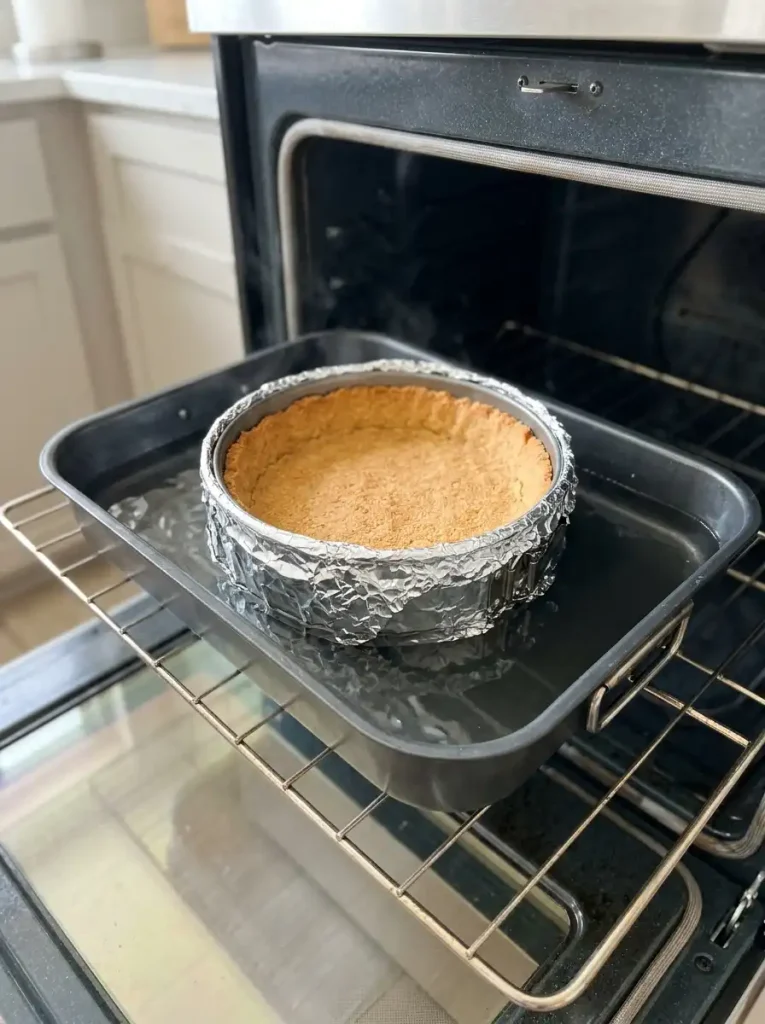
To keep the bath from flooding the crust, keep water below the roasting-pan rim and pour carefully. If your pan leaks, use an oven-safe bag over the foil. A lower-rack steam pan is an alternative, but it is not the same heat buffer as a direct bath.
Troubleshooting: How to Bake a Cheesecake Without Common Failures
For how to bake a cheesecake with fewer cracks, control the three variables you can: temperature, air in the batter, and cooling speed. Use this chart to diagnose a problem before changing the formula.
| What you see | Likely cause | What to do |
|---|---|---|
| Deep crack | Overbaking, too much air, or a sudden temperature change | Mix eggs gently; stop while the center still wobbles; cool gradually |
| Lumpy filling | Cream cheese was cold or the bowl wasn’t scraped | Soften it fully and beat smooth before adding eggs |
| Soggy crust | Water leaked through the springform or crust wasn’t pre-baked | Seal the foil carefully; bake the crust before adding filling |
| Center looks liquid | Cheesecake needs more oven time or has not chilled | Bake in 5-minute increments until the wobble is soft, then chill fully |
A surface crack is cosmetic. Cover it with berries or lemon curd, or try our chocolate chip cheesecake. For smaller portions, bake our cheesecake bars instead.
FAQ: How to Bake a Cheesecake
Can you explain how to bake a cheesecake without a water bath?
Yes, but use a recipe designed for it. A pan of hot water on the lower rack adds steam, but does not surround the springform or buffer heat the same way. For a separate no-bath method, use our chocolate chip cheesecake instead of changing this formula.
How do I know when the cheesecake is done?
The edges should be set and the middle should move like soft gelatin—not ripple like liquid. Don’t use a toothpick: a custard cheesecake can be done while the center still looks slightly under-set. It firms as it cools and chills.
Can I put cheesecake in the fridge while it is warm?
After the gradual oven rest, move the pan to a rack and refrigerate once it is no longer steaming; don’t leave it out for hours. To bake a cheesecake safely, follow FDA’s two-hour refrigeration guidance: refrigerate perishables within 2 hours, or within 1 hour if the room is above 90°F. Store covered in the refrigerator for 3–4 days; freeze well-wrapped slices for up to 2 months.
Why does cheesecake need to chill overnight?
It does not have to be exactly overnight, but it needs at least 6 hours to finish setting. A longer chill makes cleaner slices and gives the filling time to become uniformly creamy.
Can I bake cheesecake without a springform pan?
Yes. Use a deep cake pan lined with parchment strips to lift it out, but expect a trickier release. Pan depth changes bake time, so judge doneness by the center wobble rather than the clock.
This is the core of how to bake a cheesecake successfully: moderate heat, little air in the batter, the wobble cue, gradual cooling, and enough fridge time. Once you know how to bake a cheesecake with that cue, the long chill is the easy part. Test this formula in your own oven before relying on its exact timing.
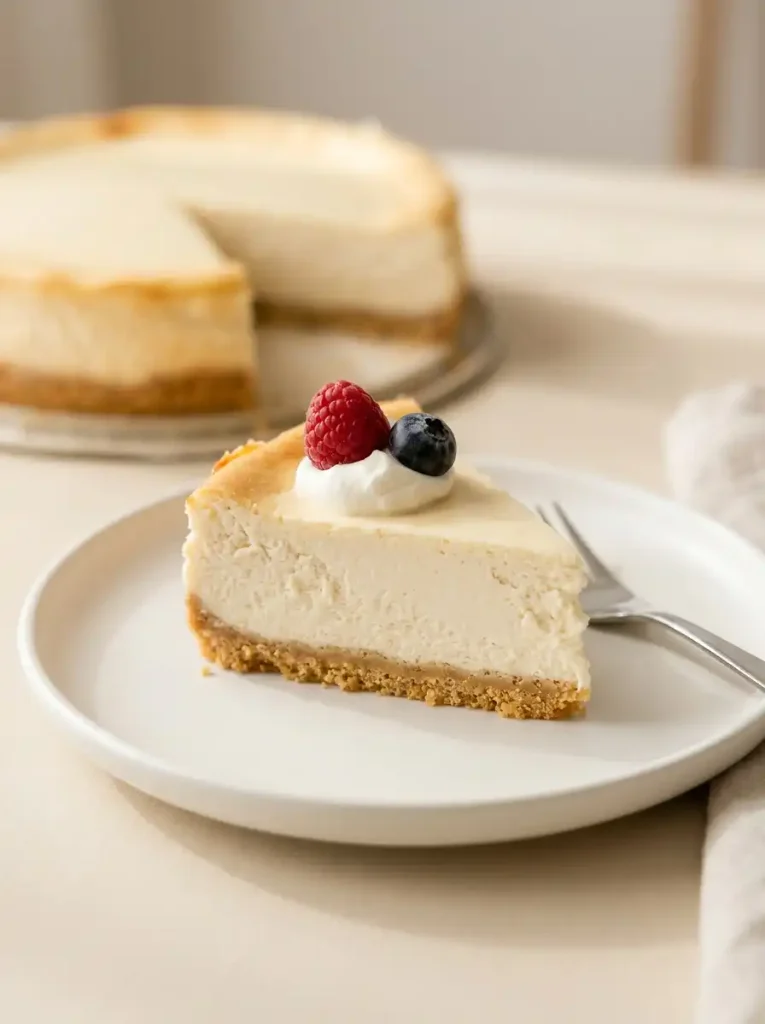
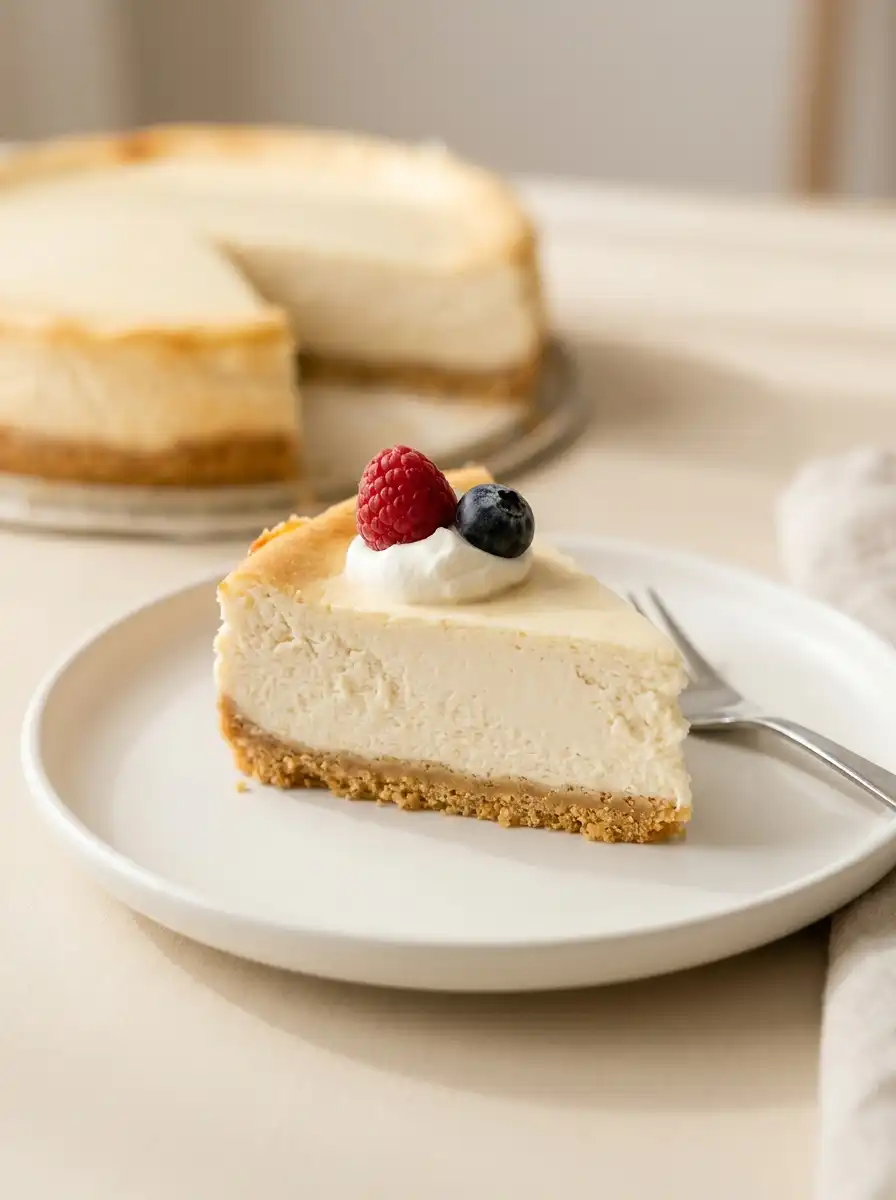
Classic Baked Cheesecake
Ingredients
Equipment
Method
- Heat the oven to 350°F (177°C). Line the base of a 9-inch springform pan with parchment and lightly grease the sides; use a pan at least 2 1/2 inches deep.
- Mix the crumbs, crust sugar, 1/8 teaspoon salt, and melted butter until evenly damp. Press firmly over the base and about 1 inch up the sides. Bake for 10 minutes, cool the crust, and lower the oven to 325°F (163°C).
- Wrap the outside of the springform pan in two broad layers of heavy-duty foil with no gaps. Set it inside a roasting pan. Bring a kettle of water to a boil; after the pans are on the oven rack, pour hot water into the roasting pan to halfway up the springform pan.
- Beat the softened cream cheese on low speed just until smooth, scraping the bowl. Mix in the filling sugar, sour cream, cornstarch, vanilla, 1/4 teaspoon salt, and optional lemon zest. Add the eggs one at a time, mixing only until each disappears.
- Pour the filling over the cooled crust. Bake at 325°F (163°C) for about 55 to 70 minutes. The outer 2 inches should look set while the center wobbles softly as one area; it should not look liquid.
- Turn off the oven, crack the door open about 1 inch, and leave the cheesecake inside for 45 minutes. Move it to a rack and run a thin knife around the warm edge, leaving the springform ring on.
- Once the cheesecake stops steaming, refrigerate it loosely covered for at least 6 hours, preferably overnight. Release the ring when cold. Slice with a warm, clean knife, wiping between cuts.